
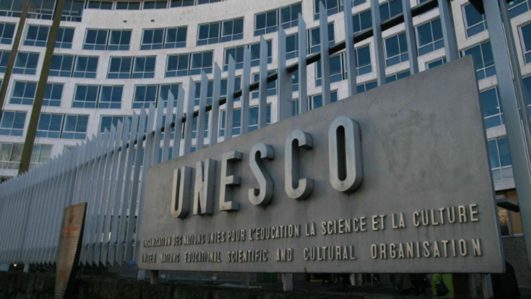

The United Nations Educational, Scientific and Cultural Organization (UNESCO) has warned that 113 countries now spend more on servicing debt than on education, raising concerns over the future of global learning and the achievement of the Sustainable Development Goals (SDGs).
The warning was issued during the Transforming Education Summit +4, held four years after the landmark summit convened by the United Nations Secretary-General to accelerate progress towards quality education for all.

UNESCO also projected that global aid to education could decline by as much as 30 percent between 2023 and 2027, further worsening an already significant education financing gap in low- and lower-middle-income countries.
Speaking at the summit, UNESCO Director-General Khaled El-Enany described education as the most powerful investment countries can make but lamented that it continues to suffer from chronic underfunding.
“Our projections show that global aid to education will decline by up to 30 percent between 2023 and 2027, perpetuating a cycle of underinvestment, inequality and stalled development. Innovative financing mechanisms such as debt-for-education swaps already exist—they only need political will to be scaled up,” he said.
According to new research by UNESCO’s Global Education Monitoring (GEM) Report, international aid to education fell by 8 percent in 2024 compared to the previous year, while aid specifically targeted at basic education declined by 15 percent.
The report noted that low- and lower-middle-income countries have already lost more than one-fifth (21 percent) of the education aid they received in 2023. Countries including Afghanistan, Liberia, Mali and Niger have experienced declines exceeding 40 percent.
UNESCO also revealed that education’s share of global development assistance has dropped to 7.5 percent in 2024, its lowest level in two decades. It added that the world spent in just 37 hours on military expenditure what is allocated to education aid over an entire year.
The organisation estimates that low- and lower-middle-income countries face an annual education financing gap of approximately 97 billion US dollars.
Beyond shrinking international aid, UNESCO said rising debt burdens are increasingly forcing governments to prioritise debt servicing over investments in education.
Read Also:
According to its newly released Debt and Education report, 113 countries, representing about 6.1 billion people, now spend more on debt repayments than on education. In low-income countries, debt servicing is nearly four times higher than education spending, while in 18 heavily indebted nations, debt payments exceed education expenditure by at least five times.
UNESCO warned that education budgets are particularly vulnerable because they account for a significant share of government spending and largely finance recurring costs such as teachers’ salaries. The organisation stressed that reducing education investment undermines long-term economic growth and development.
To help countries address the challenge, UNESCO launched a technical guide on debt-for-education swaps, a financing mechanism that enables governments to convert part of their external debt into investments in education.
The organisation highlighted successful examples, including a 2023 agreement between Côte d’Ivoire and France that enabled the construction of more than 30 schools serving about 30,000 students. In Egypt, a €29 million debt swap with Germany in 2024 supported school feeding programmes, nutrition initiatives and improved access to basic services.
Between 2006 and 2017, Spain and Peru implemented a US$20 million debt swap that financed 50 education projects across eight vulnerable regions, benefiting approximately 174,000 students, teachers and community members.
The Transforming Education Summit +4 brought together South African President Cyril Ramaphosa, United Nations Deputy Secretary-General Amina Mohammed, more than 30 education ministers, representatives of development banks, civil society organisations, youth leaders, academia and the private sector.
The summit also examined the growing role of artificial intelligence in education, climate resilience and the impact of global crises on learning systems, while laying the groundwork for the global education agenda beyond 2030.
Addressing participants, Amina Mohammed said the next five years would be decisive in determining how much of the promise of Sustainable Development Goal 4—ensuring inclusive, equitable and quality education for all—is achieved before 2030. She stressed that education would remain central to sustainable development well beyond the current global targets.