
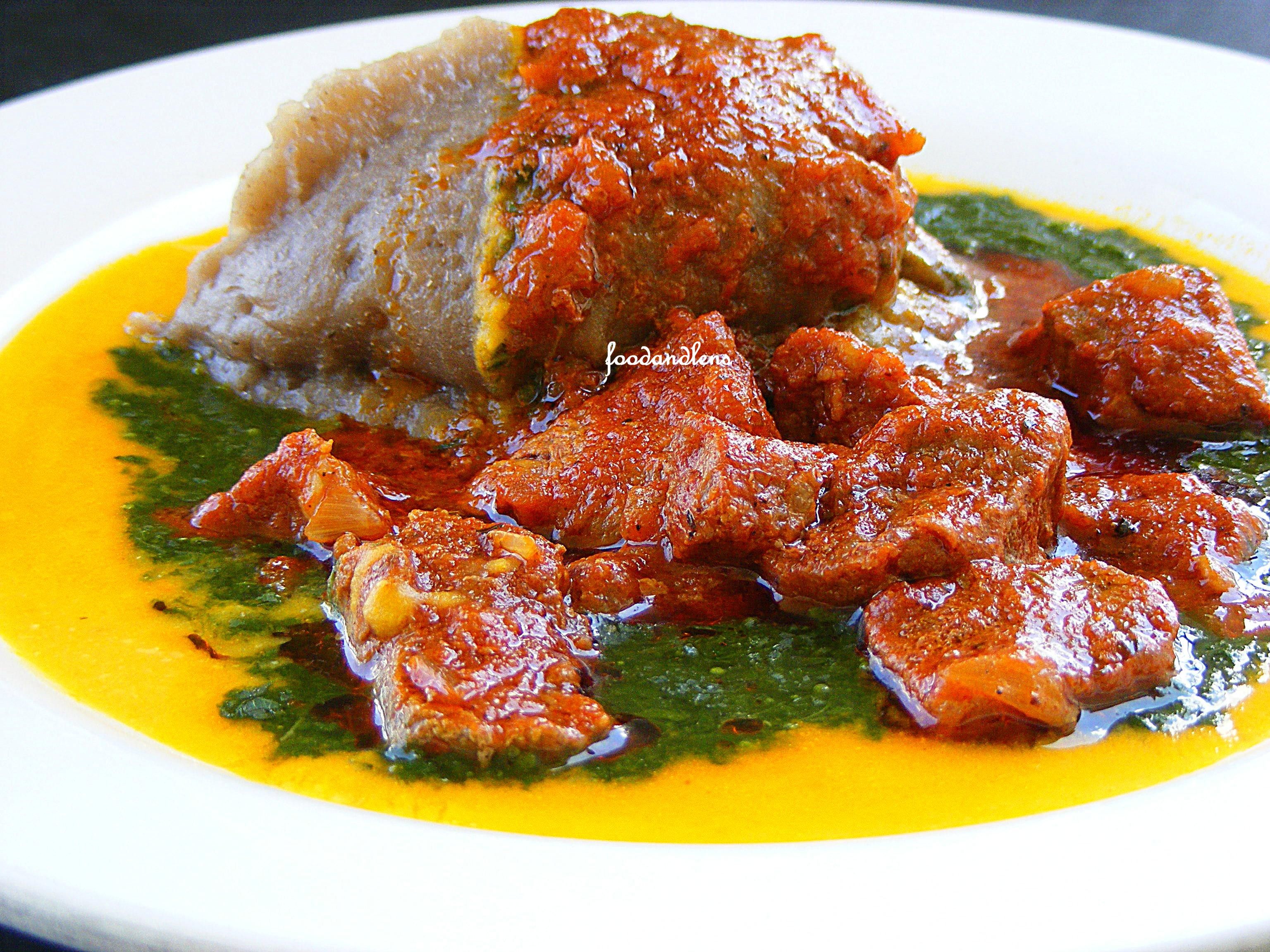

2 sacks of Amala Flour, 3 bags of ewedu leaves, a butchered live goat will feed 200 customers at Iwe Iroyin Buka Restaurant, Abeokuta Ogun state.
Here in this City, food acts as a tool to bring together people from all walks of life, communities, and traditions. Food is powerful through that we can better understand the lifestyle and culture of the people – the way they eat, the food they love, the history of the community and how it connects the past to the present and possibly see the future in such a fast evolving city.

Every time we visit a new community and we eat a piece of food we take a chunk of the world.
Having a piece of Amala-dudu and Amala pupa with Ewedu or Gbegiri all digging up several sources of Yam tubers pilled, dried and grinded, green leaves boiled and mashed to paste, Brown beans mashed and cooked as sauce, all tells stories of the hierarchy of each food and how they come into being, which brings the local farmers and factories into play.
In this state on an average, every compound with 5 tenants has at least a farmer and 2traders all working towards feeding a stomach. According to Rasak Ayinla journalist with Business and a son of the soil, “the people of Ogun state (Egba) are majorly farmers while the Ijebus are focused on Trading.” Food is a serious matter in this state.
The buzzling nature of bukkas an entourage of people of all professions, no segregation, those in suites or singlet and even shirtless wait on the queue. It takes 10minutes for a customer to be attended to due to a large number of hungry workers.
Read Also:
Seat in a Bukka and watch a man devour one wrap of Amala and two plates filled with assorted goat meats, cow leg with another bowl of a catfish. “The people of Egba are lovers of white Amala and loads of protein,” says Mrs. Folarin the Manager of Iwe Iroyin restaurant in Abeokuta.
Mobile food fixers (hawkers) is another level of food providers in this state – On labour grounds are men too weak to run down to nearby restaurants, to their service is this Ofada rice hawker, quick service and pocket-friendly.
Festivity tells the story of food better in this part of the world, it is no joke. Ewedu, gbegiri, and efo-riro (a type of vegetable soup) other popular dishes include ekuru and aro, stews, corn, cassava, and flours. These people are vast in cuisine.
There are a number of farmers’ market in Abeokuta the most popular is the Lafenwa market lively and bustling courtesy of the railway station of the 19th century. For every visitor witnessing this, there is always a conclusion of things being perfect in the state’s agenda of feeding all stomach.
In spite of the thriving industrial and rich food culture in this part of the state lies beggers at most parks stretching arms for food, picking remnants from the ground and worse still a mother with a starving baby and then the physically overweight kid on the other side of the story.
All these food shortages according to locals could be linked to lack of government assistance to local farmers and importantly the issue of climate change, lack of Bioversity. It is a stick in the mud but these people are optimistic.