


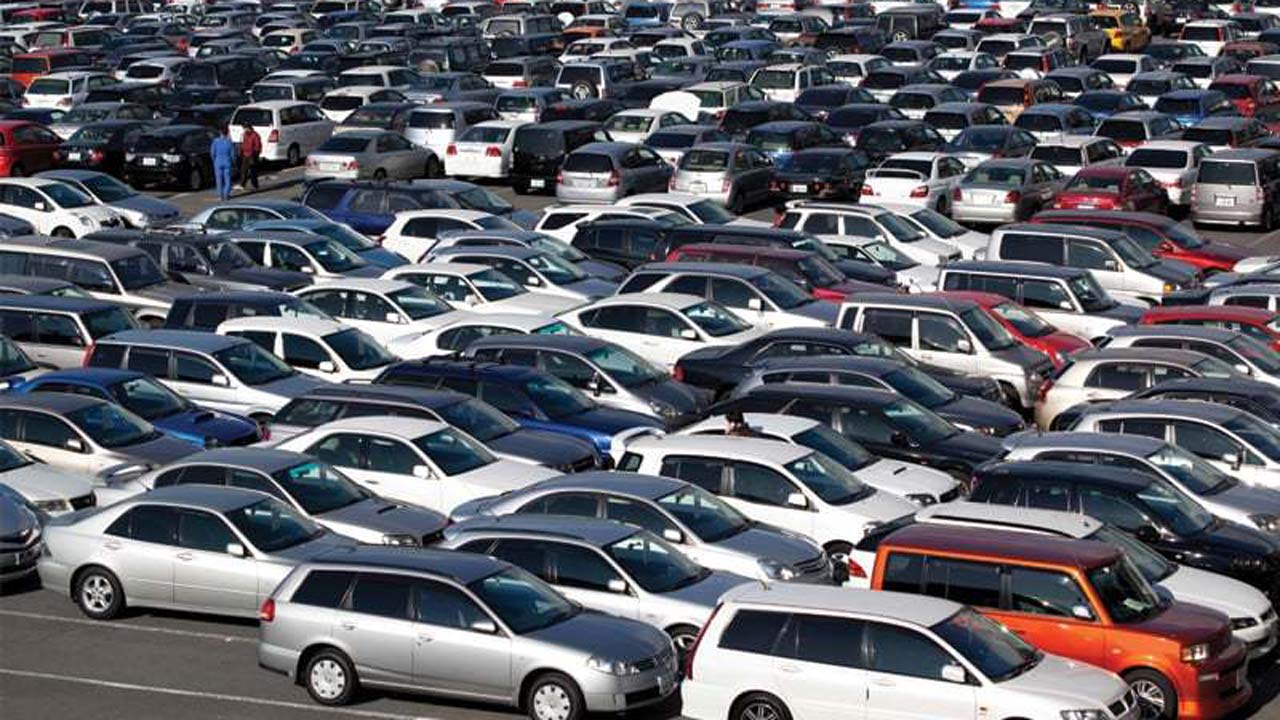
Nigeria’s import duty on imported vehicles remains astronomically high at 35 per cent, and another 35 per cent surcharge amounting to a total of 70 per cent on a cargo.

Federal Government efforts to discourage importation of vehicles through neighbouring countries may remain a mirage, as importers appear to have taken solace in the range of incentives offered by the Port of Cotonou in Benin Republic.
The Guardian gathered that the Autonomous Port of Cotonou has recently slashed its transit vehicle charges from CFA399,920 (N257,000) to CFA290,000 (N186,000) effective from July 1, 2017.
Meanwhile, Nigeria’s import duty on imported vehicles remains astronomically high at 35 per cent, and another 35 per cent surcharge amounting to a total of 70 per cent on a cargo.
Experts have described this as one of the highest in the world, thereby discouraging the use of Nigerian ports. The Guardian investigations revealed that importers of Nigerian-bound vehicles and other cargoes prefer landing them at Cotonou and other neighbouring ports, and smuggling them into Nigeria through the porous borders, in order to avoid prohibitive tariffs charged by the Nigeria Customs Service (NCS).
Despite Nigerian government’s ban on importation of vehicles through land borders, the volume of cars smuggled into the country from Cotonou through Seme, Idiroko, and other land borders has risen astronomically in the past four months.
This is even as the government of Benin Republic last month approved the reduction of charges on transit vehicles by 27 per cent, which happened six months after the Nigerian Government banned the importation of vehicles through the land borders.
Read Also:
Data obtained from the Autonomous Port of Cotonou showed that while the importation of cars in Cotonou reached an all-time low of just 3,500 units in January 2017, the volume of cars discharged there last month was well over 10,000 units.
Investigations showed that the volume of cars imported through the Autonomous Port of Cotonou in transit to Nigeria also recorded significant growth since March 2017.
A Senior Staff of a Shipping Line in Cotonou, Elisee Dieudonne, said: “We expect this reduction in prices in Cotonou will divert even more vehicles to Benin Republic, while the volumes in Lagos will remain stagnant. From all indications, this figure is going to grow in the next month, as the naira is re-valued against the CFA, and more traders are patronising the port of Cotonou.”
She added: “The trend we’re seeing is that the old and crashed vehicles, which are paying comparatively low level of duties, are discharged in Lagos, while the newer and more expensive second hand cars are discharged in Cotonou.”
President, National Association of Government Approved Freight Forwarders (NAGAFF), Increase Uche, said the port of Cotonou has slashed transit cost to attract Nigerian importers, as such, the Nigerian Government should also review the import duties, if they are serious about making the seaports competitive.
According to him, about 80 per cent of those vehicle imported through Cotonou are smuggled into Nigeria without paying duty. “It is left for Nigeria to also reduce their duty in order to make it competitive, as we keep saying, the Customs duty is on the high side, they over value imports.
“Besides, the inconsistent policies are not helping matters. Importers will place order for consignment and before it comes here, government policy may have created one problem or another and such importer might have borrowed the money from a bank to finance the transaction. The goods will incur demurrage, and the burden is too much and people continue to lose investment.
“All these are not good for our economy, we should also reduce the cost of importing through Nigerian seaports, if actually we want to make the ports competitive,” he said.
Source: G Business