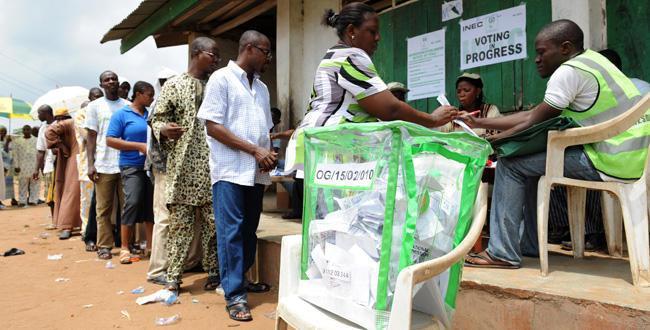

As Nigerians head to the polls to elect their gubernatorial and House of Assembly members, a report has identified inadequate finance and funding as major threats to youth candidates’ campaigns and their eventual success at the polls.
The Report, titled Strengths, Weaknesses, Opportunities and Threats (SWOT Analysis) of Youth Candidates in the 2019 elections in Nigeria, was conducted by YIAGA Africa and presented to the public in Abuja, yesterday.

The Report, presented by the coordinator, YIAGA Africa Centre For Legislative Engagement, Dr Ernest Ereke and the Organisation’s Senior Research Officer, Safiya Bichi, revealed that, “the Report was taken from 334 purposively sampled youth candidates on YIAGA Africa Ready to Run Online Platform, five interest group leaders and 37 field researchers trained and deployed to 34 states of the federation to study the campaigns of 99 candidates from 36 political parties”.
The Report identified, “the popularity of youth candidates, projects undertaken by the youth candidates in their various constituencies, personal leadership qualities, candidates’ visibilities, financial backing and strong party structures, as strengths of youth candidates.’
Read Also:
It also identified, “inadequate funding/inability to access enough funds, unpopularity of youth candidates’ party platforms, political inexperience, gender and ethnic discrimination as weaknesses of youth candidates”.
The Report identified “availability and access to social media as a tool of mass communication, unpopularity of incumbents, popularity of youth candidates’ platforms as opportunities.”
It, however, identified “electoral malpractices, destruction of candidates’ billboards, posters, violence and conflicts between candidates and leadership of their political parties as threats to youth candidates.”
The Report indicated 26.6 per cent of the Interest Group Leaders (IGLs) as very likely to win, 63.7 per cent as having favourable assessment of the youth candidates to win and only 19 per cent of the IGLs saying youth candidates were unlikely to win.
YIAGA Africa, in its recommendation advocated that interpersonal engagements are valuable for political campaigns; political parties should demonstrate commitment to youth inclusion and stakeholders should develop leadership capital development strategy.
They also advocated that NGOs and Development Partners should focus on interventions on youth candidates with defined campaign structures in their constituencies while urging that youth candidates and NGOs should be realistic about threats to Youth candidates’ campaigns posed by unknown party platforms, popular and wealthy opponents and election malfeasance by opponents among others.