

Rice (farm produce)

Following plans to establish additional 14 rice mills in the country, investors have committed additional N250billion into Nigeria’s rice production. This is in addition to the current N300billion invested by processors
The Minister of Agriculture Audi Ogbeh, who disclosed this during a Rice Conference organised by Agro Nigeria in Abuja, said the country would save $300million from import substitution through local processing.
He disclosed that there are presently 21 large integrated rice mills with a total processing capacity of 1.22 million metric tonnes yearly spreading across the country, including Kano, Enugu, Ebonyi, Kebbi, Anambra, Edo, Nasarawa, Benue, Kwara, Jigawa, Niger, and Kogi states.
He said: “Today, many integrated local mills have their milled rice in the Nigerian market, and consumer demand and preference for local rice has risen due to better quality and taste compared to imported rice. Home-grown international grade rice can be found across Nigerian markets, and a total of 14 mills will soon come on board.”
Ogbeh noted that members of the Rice Producers Association of Nigeria (RIFAN), currently have a direct workforce of 5,000 skilled Nigerians including women as off-takers of rice paddy, and have created jobs for over five million rice farmers out of the existing 11 million rice farmers in Nigeria.
He said the integrated rice mills have also employed about two million unskilled workers, while Nigeria’s rice import bill has dropped appreciably by over 90 per cent.
The minister observed that in the past three years, paddy production had seen exponential growth, reaching 6.9 million MT in 2016, or 4.14 million MT of milled rice, and 8.019 million MT, or 4.81 million MT of milled rice in 2017.
Read Also:
According to him, Nigeria is moving towards self sufficiency in rice production, and is on track to achieving this by the year 2020.
He recalled that in 2009, Nigeria could boast of only one integrated rice mill, and by 2017, the country had over 17 integrated rice processing mills with a milling capacity of 600,000MT a year.
“Presently, we have 21 large scale mills with a capacity of 1.2 million MT, while additional mills are springing up,” Ogbeh told participants at the inaugural Agro Nigeria rice event.
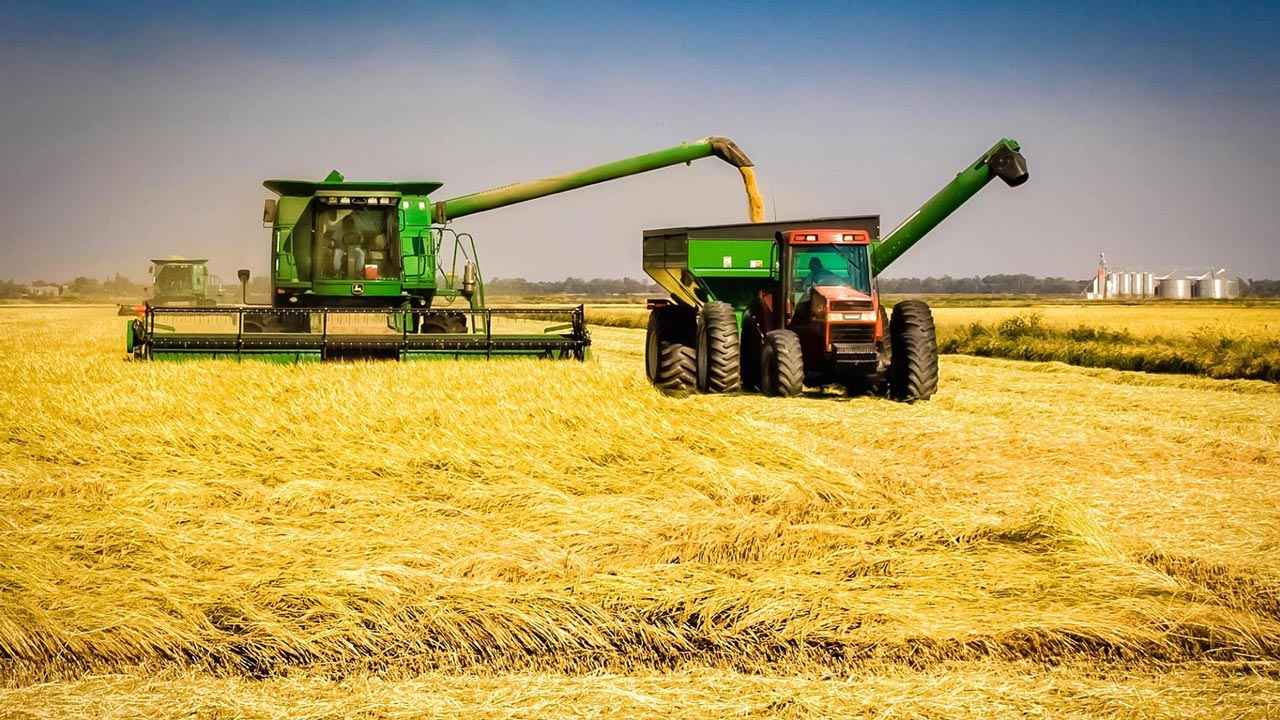
He said: “Estimated crop area of rice in 2017 was 3.9 million hectares, which represent an increase of about 6.9 per cent over the 3.17 million hectares cultivated in 2016. All the states of the federation recorded an increase in rice production, with Kebbi and Lagos having the highest increase. Over the last three years, we’ve recorded increase in production from an average of 2.5 tonnes to five tonnes per hectare.”
The minister said based on per capita consumption, Nigeria’s demand for rice stands at 9.5 million MT of paddy, representing 6.8 million MT of milled rice, adding that the deficit, which used to stand at between three to four million MT had been reduced to 1.99 million MT.
To sustain the momentum of the present growth, Ogbeh said: “Government would continue to provide conducive environment to rice farmers and millers in the area of ensuring adequate agro-chemicals, fertilisers, land development and irrigation facilities, mechanisation, modern extension services, power supply, access to good roads, farmlands and favourable pricing. Essentially, forestalling the illegal activities of smugglers across Nigeria’s borders remain a priority.”
The Governor of Kebbi State, who doubles as Chairman, Presidential Initiative on Rice, Abubakar Bagudu, said operators in the rice value chain “must appreciate the fact that the cost of production in countries we are competing with is cheaper than the production cost for the same commodity in Nigeria. This needs to be addressed in order to ensure sustainability.”
Source: G Business