

TOPE FAYEHUN, in this report, looks at the factors that contributed to the poor performance of the fringe political parties in the just-concluded 2019 general elections
The predictions of some political analysts on the relevance of fringe political parties ahead of the just-concluded 2019 general elections have come to past with the outcome of the elections which shows that the fringe parties have little or no significant results to show for their participation in the polls.

Prior to the election, pundits believed that other political parties apart from the two giants, the ruling All Progressives Congress (APC) and the major opposition Peoples Democratic Party (PDP) might just be wasting their time and resources because they lack the political structure, finances, and manpower to challenge both the APC and PDP.
Nobody would initially doubt their strength with the way they saturated the political landscape of the country then, as the electoral umpire, the Independent National Electoral Commission (INEC) registered as many as parties as possible before the polls.
From three in 1999, the number of parties rose to 91 prior to the conduct of the last general elections. Although, more than 95 per cent of them exist on paper.
The parties which were added to the existing ones are: All Blending Party (ABP); All Grassroots Alliance (AGA); Alliance for New Nigeria (ANN); Abundant Nigeria Renewal Party (ANRP); Coalition for Change (C4C); Freedom and Justice Party (FJP); Grassroots Development Party of Nigeria (GDPN); Justice Must Prevail Party (JMPP); Legacy Party of Nigeria (LPN); Mass Action Joint Alliance (MAJA); Modern Democratic Party (MDP); National Interest Party (NIP); National Rescue Mission (NRM); and New Progressive Mission (NPM).
Others include: New Progressive Movement (NPM); Nigeria Democratic Congress Party (NDCP); People’s Alliance for Development and Liberty (PANDEL); People’s Trust (PT); Providence People’s Congress (PPC); the Re-build Nigeria Party (RBNP); Restoration Party of Nigeria (RP); and Sustainable National Party (SNP), among others.
However, despite having risen to this unimaginable level, such that the electorate can hardly keep track of the identity of political platforms, their logos, what they stand for and those behind them, they still failed woefully to make any appreciable impact in the polls.
President Muhammadu Buhari of the APC, who some of them during the electioneering campaign, said lacked skills on how to address the problems of the country, polled more votes than his challengers from 72 other political parties to retain the ultimate prize in Nigerian politics for a second term of four years.
Buhari was followed by the former Vice President Atiku Abubakar, who ran on the platform of PDP. Abubakar and his party are currently challenging the declaration of the president in the court.
The two political parties also won governorship elections across the states where they were conducted.
When these parties were coming out, there was an expectation that they would soon merge to produce a formidable candidate that would challenge the dominance two main political parties in the country. Pundits who are not pleased with the way the two dominant parties run the affair of the country and had very high hope of “Third Force” were also disappointed in the performance of the fringe parties after the polls.
Pointedly, analysts averred that since they could not make any significant impact in the elections, they must have learned one or two lessons that would help them to give both the APC and PDP a good fight in the next general elections.
It was believed then that they must have begun the process of fusing their thoughts, activities, and resources together with the aim of taking advantage of the perennial crisis in the PDP and the uncertainty that pervades the ruling APC.
Then, pundits believe that if it was possible for the APC to emerge in 2014 and shortly after defeated the PDP, nothing would stop them from achieving similar feat if they had come together to present a common candidate for the election.
However, all the expectations of the observers were cut short as many of the parties were not properly organised and structured to challenge the status quo that had been in existence since the country returned to the democratic rule in 1999.
Notwithstanding, some analysts observed that a good number of fringe party candidates were aware that the variables and the zoning arrangement as being practiced in the country did not favour them as far as the contest was concerned, but they still summoned the courage to make an impact.
According to analysts, most of the fringe parties, being new, have weak party structures apart from the fact that they also lack the ground game required to give the established parties a run for their money.
Political watchers also commended them for pushing for a paradigm shift in the mode of politics in the country, even at the risk of recording embarrassing votes at their various polling units and their respective states.
However, pundits posited that so many issues contributed to their unimpressive show in the 2019 general elections. They are of the view that heavy monetization of Nigeria politics was one of the reasons for their failure in the elections.
They noted that the history of the party system in Nigeria has several examples of fringe parties formed by self-absorbed individuals for selfish purposes and 2019 is not an exception.
Apart from that, lack of organisation was also identified as the basis for their failure in the 2019 general elections. Analysts questioned the rationale behind the reasons why they all put themselves forward to be a presidential candidate without giving coalition a thought ahead of the crucial elections.
They noted that some of the fringe parties and their candidates were greedy and not even serious with the mandate given them by the various political parties. According to analysts, this contributed to the fragmentation of the opposing camps in the election.
One of the political observers said: “Some of them don’t have good intentions. Are they serious at all? Some of them intended to use the platform of their parties to lunch themselves to the political system. Some of them are seeking popularity and are out for monetary gain. If not, nothing stops them from coming together to pick someone. They were so unrealistic. Most of them knew that they could not win election individually.”
Analysts also identified infighting within some of the parties as reasons for their failure. For instance, in Social Democratic Party (SDP), Donald Duke, who was the candidate of the party was involved in the last-minute struggle for the presidential ticket of his party.
Duke was caught between judicial somersaults over whether it was Prof. Jerry Gana or himself that won the primary election of the party. The issue of which person should legitimately hold the ticket lingered for weeks and consequently paralysed the campaign and equally tarnished the image of the party in the election.
The stakeholders who were supposed to hold forte for him, including the National Working Committee of the party, were divided to the extent of attacking themselves. The party fought until after the presidential election when the Supreme Court ruled that it was Duke that actually won the primary election.
Despite that, Duke still managed to place ninth of the election results standing with 34,746 votes.
Read Also:
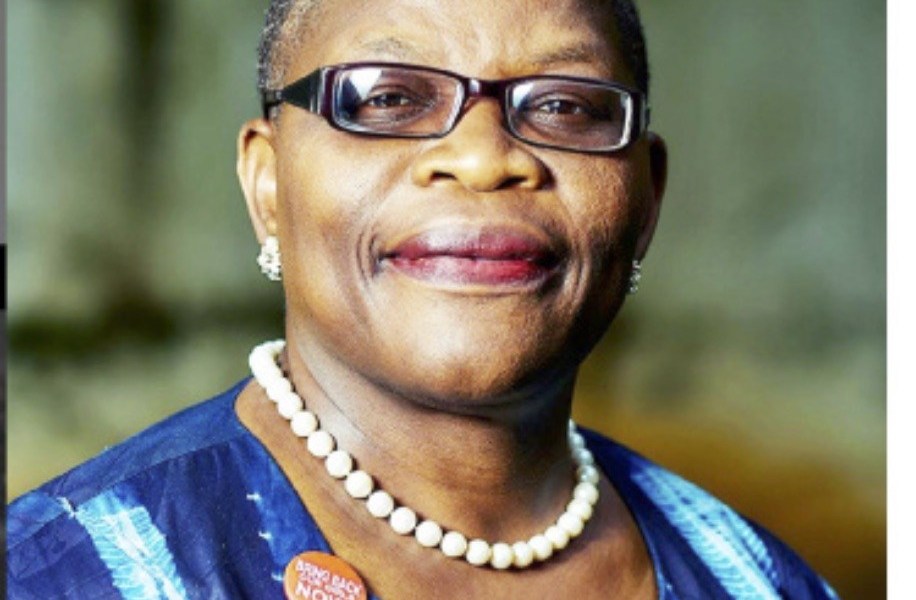
Also, the issue that led to the withdrawal of the candidate of the Allied Congress Party of Nigeria (ACPN), Dr. Obiageli Ezekwesili, from the presidential race, is another issue of concern. Initially, it was believed that she was stepping down to build a coalition that would defeat the candidates of PDP and APC.
According to her statement then: “This decision followed extensive consultations with leaders from various walks of life across the country over the past few days. I deem it necessary for me to focus on helping to build a veritable coalition to ensure a viable alternative to the #APCPDP in the forthcoming elections.
“It is my ardent belief that this broad coalition for a viable alternative has now become more than ever before, an urgent mission for and on behalf of Nigerian citizens. I have therefore chosen to lead the way in demonstrating the much-needed patriotic sacrifice for our national revival and redirection.
“I wish to state that over the past three months, I have been in private, but extended talks with other candidates to birth a coalition that would allow Nigerians to exercise their choice without feeling helplessly encumbered by the evil twins of #APCPDP.
“While the deliberations continued, I never hesitated for a moment in my willingness and determination to sacrifice my candidacy in order to facilitate the emergence of the envisaged strong and viable alternative that Nigerians could identify within our collective search for a new beginning.
“My commitment to this promising political recalibration has been consistent and in consonance with my agreement, at the request of candidates under the Presidential Aspirants Coming Together arrangement in 2018, when I consented to supervise the internal selection process as an outside observer passionate about building an alternative force.
“However, despite resistance from the ACPN on these and other issues, I have decided that it is now necessary to show by action and example my determination on this issue by stepping down my candidacy so as to focus squarely on building the coalition to a logical conclusion.
“We have no right to allow citizens to give in to despair. We will #Fight4Naija together and prove to all that the mess, which the political class has now become, should not be allowed to destroy our spirits and nation. We are also determined to ensure that the message keeps resonating that our beloved country deserves better and that we will get the best that we deserve.
“From last year, when I joined the presidential race, I made it clear to Nigerians that the country has always had a 20-year cycle of change – 1958, 1979, and 1999. As such, 2019 begins another 20-year cycle, and together with all Nigerians of good will, I stand ready to play my part to ensure that we do not miss this golden opportunity to sing a new song. There is no more time to waste. Let’s get to work!”
Few days later, she explained that she withdrew from the race because of the desperation of the leadership of the party to get money from her foreign contacts.
She also described as “more laughable moments”, allegations that her presidential candidacy was a scheme to negotiate for a ministerial position. She said the claim was “the height of political comedy.”
The former minister of Education described the party’s endorsement of Buhari and the APC as “a classic somersault.” She said, “At one point, we were supposed to have a meeting with all the state coordinators of the party. Instead of the ACPN leadership to be honest about the strengths of the party and explain that some states did not have coordinators at the time, they hired fake coordinators and asked the campaign to fly them into Abuja.
“You all saw how they demonstrated their preferred brand of politics by endorsing the ruling APC in a classic summersault. Deceptive politics of transactions at its worst! God forbid that I should in any way participate in such.
“Their actions last week did not surprise me one bit. My relationship with the ACPN became problematic once they faced the reality of my modest financial means that I had transparently disclosed to them from the beginning. Their mistake was that they harboured two wrong assumptions about me.
“First, they assumed that I was one of those who served in government and had a stash of looted public funds hidden somewhere to expend on the elections. When they realized that was not the case, they made a second wrong assumption by believing that I would be willing to go and obtain foreign cash to prosecute my campaign.
“The leadership of the party became frustrated that I was not using my global network to get some countries, organisations, and foreigners to donate money to their party as the APC and Peoples Democratic Party do.”
In a swift reaction, the national chairman of the party, Alhaji Ganiyu Galadima, told the former education minister that a political party was different from a charity organisation or the #BringBackOurGirls movement.
Galadima said, “So, we wanted to know all the contents of the accounts and see the accounts because, at the end of the day, it is not the presidential candidate that the Independent National Electoral Commission will hold responsible, but the party, and whatever any candidate generated for his or her campaign belongs to the party.
“We are expecting that she will respond at the appropriate time but if she doesn’t, we may be compelled to go to court.”
Galadima claimed that from all indications, Ezekwesili did not have the capacity to contest a presidential election, saying, “For somebody who wants to contest for the presidency, all you could generate for a period of three months was just N43m and she spent everything. She did not disclose the sources of the fund and how much she generated.
“Look at Omoyele Sowore, he publicly disclosed on a national TV recently that his campaign and the party had been able to generate N99m. In addition, he also told the world how the money could be traced. So why is there no transparency in Madam Ezekwesili’s project? That is the bone of contention.
“We are expecting that she will respond at the appropriate time but if she doesn’t, we may be compelled to go to court to seek for an order of Mandamus.”
However, some of the candidates of the fringe parties who spoke after the election lamented that various issues marred the presidential election.
The candidate of African Action Congress (AAC), Omoyele Sowore, alleged that the Nigerian military used drones to disenfranchise the electorate.
Sowore said, “The elections were not free and fair. And that has been established by all voters across the country. In my village, military men came and were shooting at the drone that was used in monitoring the election; they are still in possession of the drone until today.
“There were voter suppression, intimidation. There were outright rigging and allocation of votes. It cannot determine the credibility of the election when those parameters are not wrong. So that’s the truth.
“Whatever figure they have out there does not represent the aspirations of our people.”
Going forward, analysts posited that the fringe parties would have to rethink, including how to re-organize themselves ahead of the 2023 general elections, if truly they are interested in retiring the two dominant parties.
They advised that since they have supporters across the six geo-political zones, they should start mobilising their supporters and ensure that the structure of their parties are properly erected before the next general elections.