
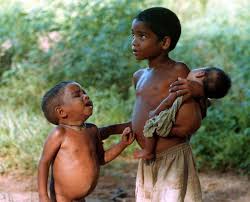

Hunger in the Near East and North Africa region (NENA) continues to rise as conflicts and protracted crises have spread and worsened since 2011, threatening the region’s efforts to achieve the 2030 Agenda for Sustainable Development, including Zero Hunger.
The Regional Overview of Food Security and Nutrition in the Near East and North Africa, published today by the Food and Agriculture Organization of the United Nations (FAO), indicates that 52 million people in the region are suffering from chronic undernourishment.

Conflict continues to be the main driver of hunger across the region. More than two-thirds of hungry people in NENA, approximately 34 million people, live in conflict-affected countries, compared to 18 million hungry people in countries that are not impacted directly by conflict.
Stunting, wasting, and undernutrition are also far worse in conflict countries than in the other countries.
“Conflicts and civil instability have long-lasting impacts on the food and nutrition security of both affected and surrounding countries in the regions” said Abdessalam Ould Ahmed, FAO Assistant Director-General and Regional Representative for the Near East and North Africa.
“The impact of conflict has been disrupting food and livestock production in some countries and consequently affecting the availability of food across the region,” he added.
“Rising hunger is also compounded by rapid population growth, scarce and fragile natural resources, the growing threat of climate change, increasing unemployment rates, and diminished rural infrastructure and services” Ould Ahmed underscored.
The report highlights that the region is not facing just a hunger crisis as some of the highest rates of obesity are also found in countries within the region, putting pressure on people’s health, lifestyles and national health systems and economies. Addressing obesity requires food systems that ensure that people have access to healthy nutritious food and also increased public awareness and information on the risks associated with overweight and obesity.
Inadequate rural transformation hampers efforts to eradicate hunger and malnutrition by 2030
The report shows that not only do conflicts undermine the region’s Zero Hunger efforts, but also the degree of rural transformation.
Read Also:
“Countries that are not in conflict and have gone furthest in transforming rural areas in a sustainable way including through better management of water resources, have achieved better food security and nutrition outcomes than those in conflict or with lower levels of rural transformation,” Ould Ahmed said, noting how the report stresses that more efforts are needed to boost rural employment, stimulate economic growth in rural areas, reduce urban-rural gaps, and improve agricultural productivity and rural infrastructure and services.
The report highlights how unemployment, particularly for young people and women across all age groups is a significant challenge in the NENA region and is often higher than in others regions of the world. This is aggravated by rural-urban gaps – with significant disparities in living standards and poverty rates between rural and urban areas – and differences in labour productivity between traditional agriculture and industry and services. This gap is deepened by differences in access to education, health as well as other public services and housing.
At the same time, rural areas accommodate around 40 percent of the population, where the majority of poor are living.
The report shows that the average wages for those employed in agriculture are likely to be far below those of workers outside the sector. Partially as a result of lower wages in agriculture, rural areas in the NENA region generally have higher income poverty rates than urban areas. On average, rural poverty is about twice as high as poverty in urban areas.
Transforming agriculture to achieve Zero Hunger
At a regional level, there are significant opportunities for transforming agriculture in a sustainable way, starting with the provision of improved access to markets for farmers, promoting investments in agriculture, transfer of technology and other innovations, more efficient and effective management of water resources, as well as key policy changes that support the shift from subsistence farming to commercial and diversified production systems.
“There is a great need to encourage our region’s farmers to produce according to the comparative advantage of the region,” Ould Ahmed said, highlighting that the NENA region has a great potential in the production of crops and livestock products that are least intensive in arable land and water and more intensive in use of labour.
The report highlights that greater efforts and actions are needed to support the development and implementation of policies and programmes to abolish rural-urban differences.