

The House of Representatives yesterday moved to reduce waivers and increase taxes on luxury goods and services.
The House also approved the Medium Term Expenditure Framework and Fiscal Strategy Paper 2019-2021 with a benchmark of 2.3 million barrels of crude oil production as daily production target.

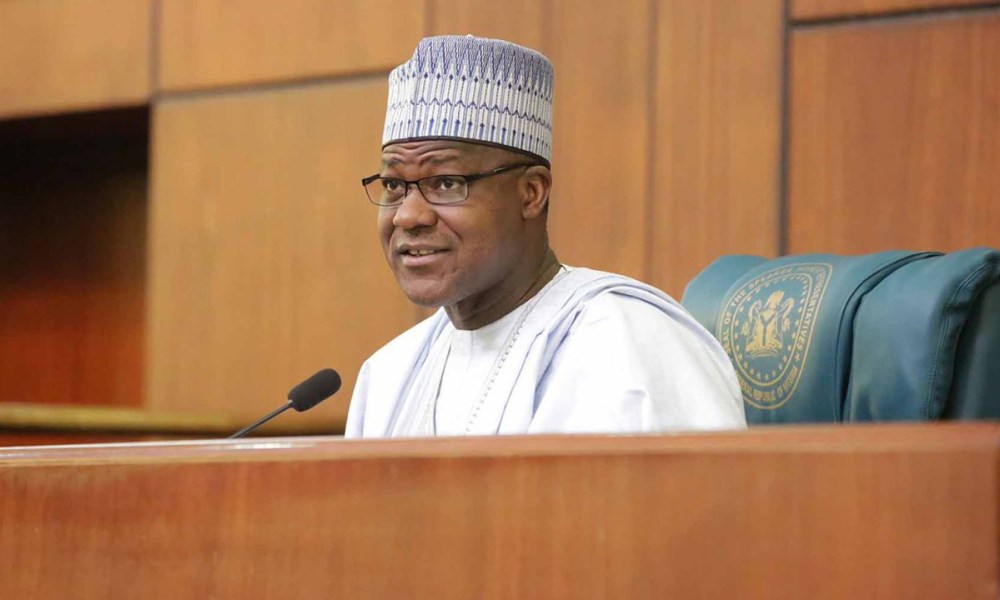
This is just as the House Speaker, Yakubu Dogara, who chaired the Committee on Supply, urged the federal government to shelve the idea of heavy taxation of Small and Medium Enterprises (SMEs) if employment generation is a factor for economic development.
Dogara, in his remarks, said the government should rather consider lowering tax on SMEs to boost the economy.
According to him, increasing tax on SMEs would lead to unemployment as the sectors have the capacity to create more employment if the economic environment is conducive.
He stated that lowering tax would lead to more employment that would translate to more taxable people for the government, thereby boosting government revenue and economic activities.
Other benchmarks adopted by the House include $60 per barrel of crude oil, N305 to $1 as official exchange rate, while new borrowing to fund Bbdget deficit for 2019 was fixed for N1.6 trillion.
The adoption is consequent upon the receipt of the report of joint Committees on Finance, Appropriations, Aids, Loans and Debt Management, Legislative Budget and Research and National Planning and Economic Development on the MTEF and FSP documents.
Read Also:
Presenting the report, chairman of the House Committee on Finance, Babangida Ibrahim, revealed that the joint Committee recommended that government reduce waivers and increase taxes on luxury goods and services, as well as increase the tempo of collectable revenues in all its Ministries, Departments and Agencies (MDAs) with a view to reducing budget deficit.
“The federal government should consider reducing the granting of waivers and exemptions while ensuring that the Nigerian Customs Service personnel at all oil terminals are for accountability, and the Federal Inland Revenue Service (FIRS) should consider increasing tax on luxury goods and services.
“Twenty per cent operating surplus to be remitted by government-owned enterprises should be deducted at source.
“Also, the federal government should harness the full optimal potential of the Federal Ministry of Mines and Steel Development in terms of revenue generation to minimise the level of new borrowing,” Ibrahim said.
On the N305 to $1 exchange rate, he advised that “the CBN be encouraged to vigorously develop strategies that would strengthen the Naira and bridge the gap between the official and parallel market rates.
On debt management/new borrowing, the joint Committee adopted the recommendation of N1.64 trillion as new borrowing to fund the budget deficit and advised relevant agencies to continue exploring ways of generating additional revenues for government to bring down the fiscal deficit.
On the Special Intervention sum of N500 billion which it adopted, the House enjoined the cooperation of relevant committees and other relevant MDAs to ensure that the funds are judiciously utilised to provide a positive and tangible impact on the Nigerian people.