
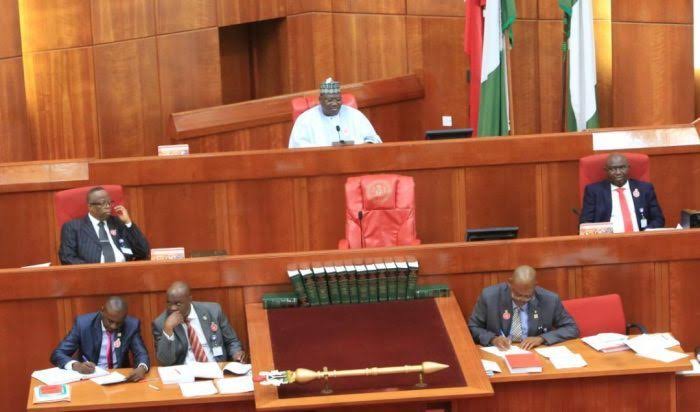

The Senate has asked its committee on customs to summon the Comptroller General of the Nigerian Customs Service, Hameed Ali, over the recent suspension of fuel supply to border towns.
Mr Ali is expected to appear with a view to working out a viable economic policy that could mitigate the sufferings of the people, and communities in the border areas.

The Nigerian Customs Service on Thursday announced the cutting of petroleum products to Nigerians living within 20 kilometres of an international border.
This is after 57 borders were shut across Nigeria in August as the government intensified steps to limit foreign products into Nigeria.
The Customs said petroleum tankers can no longer go beyond 20 kilometres inwards an international border.
Mr Ali’s summon comes a day after the House of Representatives invited the Minister of Interior, Rauf Aregbesola; the Minister of State for Petroleum, Timipre Sylva; and the Group Managing Director of the Nigerian National Petroleum Corporation, Mele Kyari; with a view to reviewing the situation and ameliorating the suffering of Nigerians living in the border towns.
The lawmakers described the Customs’ suspension of the sale of fuel to areas within 20 kilometres to the country’s land borders as draconian.
The Senate, on Wednesday, summoned Mr Ali after debating a motion on “The need to revisit the Suspension Order placed on the Supply of petroleum products to Border Towns by the Comptroller General of Nigerian Customs Service (NCS)” sponsored by Tolu Odebiyi (Ogun West) and Francis Fadahunsi (Osun East).
Read Also:
In his debate, Mr Odebiyi said the directive was a knee jerk approach to a modern-day problem, as it is obsolete when compared to the array of technological solutions that can be explored to rid the country of the menace.
He said many filling stations within 20 kilometres have been shut forcefully by the Federal Government’s task force on border closure, brutalising and illegally harassing residents in the process
“There are a number of proven technological innovations that can be explored to check, manage and curtail this acts without resulting in manual blanket approaches as it is being the practice at the moment.
“If this situation is not properly addressed as soon as possible, it would further compound an already bad situation created by the prolonged border closure and thus, exerting more hardship on the people.”
He also expressed worry that if measures were not put in place, the problems that will result from the ban will most certainly affect every aspect of businesses, transactions, as health centres are already being grounded by the relative scarcity of petroleum products occasioned by this suspension.
Besides inviting him, the lawmakers asked Mr Ali to urgently explore the use of modern technological devices in the tracking, management, and scheduling of petroleum trucks that undertake business along the border towns.
The Senate also resolved to initiate a comprehensive audit of all petroleum stations and suppliers across the border communities, in a bid to closely monitor their movement by mandating each moving truck to have a tracking device that is monitored by the Customs in a wholesome manner.
Another resolution is to ensure a steady supply of petroleum products through the identified suppliers and registered filing stations in all the border towns and communities as a temporary palliative measure.