
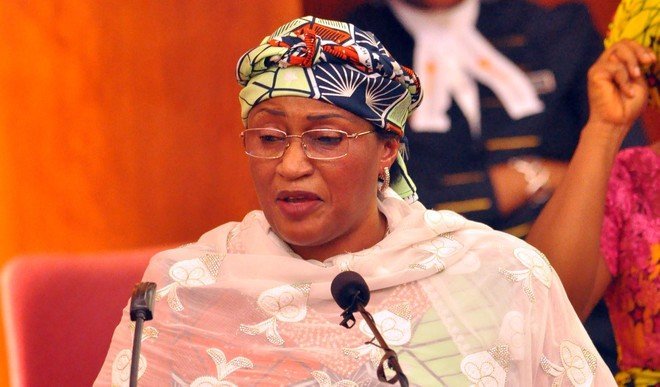

Since Nigerian women couldn’t get the desired percentage to represent the female folk in the new political dispensation, there is a strong desire that issues that concern them be put at the front burner owing to the massive support they gave to their male counterparts during the general elections. JOY YESUFU, in this write up, looks at some of the challenges that need to be addressed.
Several years after independence, the fundamental problems of the average Nigerian woman is yet to be addressed properly. Women account for half of the world’s population yet continue to face extreme hardships that affect their wellbeing and livelihood.

Many women have been marginalised, suppressed, abused over the years without commensurate response from adequate authority and of a truth, Nigerian women deserve better than what is obtained at the moment.
Some are of the opinion that these issues have been over flogged but nothing has really changed over time as it can be said that most of the situations outlined have, over time, grown from bad to worse.
Below are some of the issues that need to be tackled to address the situation permanently.
Out of school girls: Several reports have had it that Nigeria has a very high rate of school dropouts and most of these are girls. Issues that concern young girls should be of utmost concern to any nation as they (young girls) are the ones that metamorphose into women.
The director general of the National Institute for Educational Planning and Administration (NIEPA), Prof Lilian Salami, during the opening ceremony of a five-day 2018 Sustainable Development Goals (SDG) training for head teachers and policy makers on girl education at the headquarters of the institute in Ondo town, Ondo State, lamented that over 5.5 million school age girls are out of school in Nigeria.
She said: “The education sector is bedeviled with a lot of challenges, revealing that, “one third of all girls are out of school in Nigeria, amounting to over 5.5 million school age girls, not in school.
“Net enrollment rates for girls at primary level are five per cent lower than for boys; gross enrollments at junior secondary school level follow this trend. Both figures hover around 50 per cent. This falls far short of the targets of SDGs.”
Salami also noted that data reveals very little progress in universal access to primary schooling in the last decade. She listed series of factors militating against the achievements of the continental and global goals to include, “Gender disparities in access to basic education, which are compounded by interrelated regional, wealth and residence inequalities in access and completion.”
Nigerians and those in government should, as a matter of urgency, put in place stronger policies as we enter a new political dispensation that would reduce to its barest minimum, the number of out of school girls in Nigeria.
Early marriage: Child marriage in Nigeria is one very painful and disturbing problem in the country. Usually, it is done in the poor regions, where people force their young children, especially daughters, to get married, quite often to a total stranger.
According to the Child’s Rights Act of 2003, it is pointed out that the age of consent for a child is 18 years.
In Nigeria, a lot of 10-12-year-old girls, whose reproductive systems are not yet ready for intimate activities and child birth, are forced by their parents into marriage. They are stopped from going to school and getting an education and are compelled to serve their husbands and give birth to children. Considering that they are still children themselves, it is absolutely unacceptable, as it kills their future and entire life, exposing them to adulthood so early.
Though statistics has it that child marriage has been reduced, it is still a problem. Nigeria has to get rid of this issue, once and for all.
A lot needs to be done on this to create serious awareness on the dangers of this malady that has destroyed a lot of potentials in their prime.
Read Also:
Maternal mortality: Maternal mortality ratio (MMRatio) is the annual number of female deaths per 100,000 live births from any cause related to or aggravated by pregnancy or its management (excluding accidental or incidental causes). The MMRatio includes deaths during pregnancy, childbirth, or within 42 days of termination of pregnancy, irrespective of the duration and site of the pregnancy, for a specified year.
According to the World Bank estimates, Nigeria’s Maternal Mortality Rate (MMR) is still as high as 821 per 100,000 live births. Worse still, is the fact that, of the 303,000 women that died globally due to complications of pregnancy and child births in 2015, 58,000 women died in Nigeria.
The report revealed that in sub-Sahara Africa, Nigeria has a modeled estimate Maternal Mortality Ratio of 821 per 100,000 live births, which led other countries with wide margin. The closest was Kenya with 540 per 100,000 live births and 8,000 maternal deaths in 2015, followed by Tazania and Uganda.
This is a dangerous trend that has cut down lots of women and their young ones in their prime. This incoming administration can put more funding in place in health care centres to improve on the services given to women.
Human trafficking: The rise in the scourge of human trafficking in Nigeria, over the years, is quite alarming and calls for more attention from authorities concerned to checkmate perpetrators of these dastard acts.
Out of 700,000 persons trafficked across the world every year; Nigeria’s notoriety in the act has become an issue of international concern. Thousands of young Nigerian girls are routinely trafficked to Europe and Asia for sexual exploitation.
Trafficked victims are forced to swear to oaths that they would deposit all their earnings with their traffickers once they start working.
International Office of Migration (IOM) has spent huge sums of money over time to evacuate back home, hundreds of Nigerians, most of whom were trafficked to Libya enroute Europe with promises of better life. Several of them lost their lives while those who survived went through anguish and trauma before the federal government came to their rescue.
These traumatic experiences can be avoided if adequate measures are put in place to punish both traffickers and their victims to serve as deterrent to others who intend to venture into such barbaric acts.
Rape: Rape is a conscious process of intimidation wherein perpetrators keep women and children especially, in a state of constant fear. Rape devalues the victim. It is a crime, which stigmatises the emotions, a crime of insult, oppression, and revenge that needs to be punished because a rapist is a criminal and all crimes and their beneficiaries must be punished.
Perpetrators of these evil and devilish acts sometimes claim they were seduced by the way their victim dressed. And we ask, how about those who rape toddlers, six months olds, three year olds? What seduced these set of dangerous species?
There must be a strong conscious effort as we tilt towards a new political dispensation. The 9th National Assembly must rise and ensure that rapists in this country are brought to justice at every point as a means of deterrence, they must be punished.
They should work hand in hand with the judiciary to intensify efforts in removing delay in prosecuting rapists, being fully aware that rape cases are hard to prove. The law should not, at any point, be lenient with rapists and perpetrators at all levels in the community so as to deter others.
Domestic violence: This takes many forms including physical, sexual, emotional, and mental. Traditionally, domestic violence is committed against females. Common forms of violence against women in Nigeria include rape, acid attacks, molestation, wife beating, and corporal punishment.
While domestic violence is a global problem, in Nigeria particularly, the epidemic has assumed a disturbing dimension that even current penalties have not been able to serve as deterrents; endless stories of pain and sorrow accompany it.
Often, we have woken up to read of murder and violence. Domestic violence happens across every sector of society. It cuts across the educated and the illiterate, the religious and the freethinkers, classes of career women and stay-at-home wives, the married and the single as well as all ages.
Key players in the second term of All Progressives Congress (APC) and the 9th National Assembly can write their names in the sand of time that during their administration, all forms of crime against women and young girls were reduced to the barest minimum through policies they enacted and the fact that they went all the way to ensure their implementation.