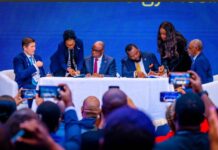


A former Director-General of the Nigerian Communications Satellite, better known as NigComSat, Mr. Ahmed Rufai, on Thursday, gave the reason why the $470m Abuja, Lagos Closed Circuit Television cameras project was non-functional.
He said the reason was the Federal Government’s failure to provide “operational funds” for the running of the system after it was successfully completed and tested in 2012.

Rufai disclosed that the required monthly operational budget for the security project as of 2012 was about N11bn, an amount the government was apparently unwilling to release.
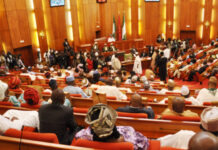
Rufai spoke on the details just as he made a presentation to the ad hoc committee of the House of Representatives, which is investigating the project.
The committee, which is chaired by Mr. Ahmed Yerima, is of the view that Nigeria was short-changed in the execution of the project and gave the assurance that the investigation would be carried to a logical conclusion.
But, the former NigComSat DG explained, “About N11bn was required as operational funding.
“I learnt it was later reviewed to about N5bn after I left office, but the funding still did not come.
“The situation with the project is like buying a new car and refusing to provide money to buy fuel. How will the car function? Nothing is wrong with the project, but a lot of people are not aware that this is the simple reason.
Read Also:
“When this project was tested and inaugurated, you could see the whole of Lagos from Abuja.”
He claimed that the situation became so embarrassing that the contractor, ZTE Nigeria, had to provide operational funding for six months upon delivery of the project.
Rufai, who served as a member of a Project Management Team the government set up to supervise the project, added that, the video surveillance cameras, the only physical component easily seen by people, was just 8.5 per cent of the entire project.
He told the committee that the entire project was completed and delivered, while he signed the $399.5m part cost of the project in the form of a loan by the China EXIM Bank. The Federal Government provided the balance as counter-part funding.
But, the DG of the Bureau of Public Procurement, Mr. Emeka Eze, told the committee that any project not processed by his office was “illegal”, with the exception of a project “considered to be a national security project.”
Eze stated that no certificate of objection was issued by the BPP because it did not pass through the office.
“All payments made with respect to this project are illegal, null and void, except if it is a national security project”, he added.
When the committee asked Rufai to respond to the position of the BPP, he replied that the caveat was a “national security project”, which was directly authorised by only the President.
“The DG of the BPP was very careful with his choice of words; he said it was a national security project,” he said.