

In the past week, at least, seven states in the federation rolled out the drums in celebration of their 40 years of creation Ogun State, one of such states, was virtually shut down last week with pomp and celebration as President Muhammadu Buhari and the Vice President, Yemi Osinbajo left the cosy Aso Rock Villa for the Gateway State to celebrate with government and the people of the state on the occasion of the 40th year anniversary of its creation on February 3, 1976. The high octane celebrants in Ogun State, however, took the shine off of the historical precedence of the epoch making event and the personality behind the state creation even as many Nigerians, who were born in the 80’s and 90’s may not grasp the real historical background of the country 40 years ago It is however exactly 40 years today when the bell tolled for Nigeria’s third Military Head of State and Commander-in-Chief of the Armed Forces, General Murtala Ramat Mohammed, who was assassinated in a coup de tat by some ambitious military officers on February 13, 1976.
It is not often remembered that Muhammed was in power for just six months – a mere two hundred days before his leadership was tragically cut short by assassins’ bullets. But the late military leader’s six months in office was believed to be a turning point in the making of modern Nigeria and a positive proof that the most important thing is not how long one rules but how well. In other words, a leader’s legacy is not defined by the duration of his tenure in office but the quality of his actions while in power. Muhammed would be remembered as a decisive leader who moved swiftly once he had come to a conclusion on an issue. Within his two hundred days in office, he created seven additional states from the existing twelve states in accordance with a report of a panel headed by Justice Ayo Irikefe.. The late Head of State also purged the civil service of the corrupt and the indolent, reformed the local government system, decongested the seaports which had become an international embarrassment, and made plans for the establishment of more universities across the country.

He carved out Abuja as the federal capital territory following recommendations from another committee headed by Justice Akinola Aguda, In another breath, the army General set up a 50-man committee, headed by the late Justice Rotimi Williams to see to a new draft constitution, and set the 1979 deadline for a return to civil rule, a date which his predecessor, General Olusegun Obasanjo kept to the letter. Perhaps some of the memorabilia of the slain Head of State which the Federal government has done in immortalizing him is his bold picture on the 20 naira note (which at a time was the highest denomination in the country) and the naming of the international airport in Lagos after him. In an exclusive interview with Saturday Mirror, elder statesman and Second Republic House of Representatives member representing Lagos Island, Hon Adekunle Alli said the late Head of State came on salvation mission He reminisces: “After being in government for about 8 years, the government of Gowon began to drift. It has lost direction. Although he promised to stay there for a very short time, about six months or so, but events keep on propelling him and he became cocooned in the events taking place around him in the country.
Read Also:
Murtala came in to salvage the situation, but in the process, it created its own problem” According to him, “The wholesale dismissal of civil servants for retirement as they say at the time, created or weakened the civil service structure and many career civil servants no longer see civil service as a career, therefore, their successors turned the attention of civil service as avenue for making money and in the process, worsen the situation”. He said. The octogenarian politician however saw this ugly development as a minus for the then military administration “Because civil service is the pillar that holds the government together, that was the era of Super Permanent Secretaries because, the military was not prepared and those who can actually carry on the civil service at that time were the people who had stayed so long in the service that they became super permanent secretaries.
‘They wield authority even beyond normal civil service span and in the process they became semi-tyrants and autocrats until Murtala came in and applied his own remedy and as I said, this too became counter- productive. For him, the return of the military to the barracks was a product of a well thought plan by the late military ruler which gave birth to the Second Republic “But the legacy of Murtala in Nigeria’s politics is that he succeeded in directing the attention of the military to the profession service rather than to political service and therefore hasten the return of government to civilian democracy in 1979. “He had a programme which he had promulgated and Obasanjo followed the programme to the letter and succeeded in handling over power in 1979 even though the military struck again 4 years later in 1983 simply because by that time, the army had been so thoroughly politicized” On whether Mohammed came at the right time in Nigeria’s political history or he was just an accident of history, the former lawmaker has this to say: “I would say he came at the right time because if you describe something as an accident, there must be something without those events the accident of history may not have occurred “No civilian regime has succeeded in creating local governments in the country.
Murtala Mohammed created 7 additional states from the then existing 12 created by General Gowon. “Despite the recommendation that Lagos State should cease to be, and should in fact, be ceded to Ogun State, It was Murtala who insisted that Lagos had been in existence for 7 years and it would be unfair to deny it statehood and that saved Lagos from dissolution and the reason why we Lagosians should be grateful to him for” He concluded. The Civil Liberties Organisation (CLO) in a statement signed by its National President Igho Akeregha and made available to Saturday Mirror yesterday, said the late Head of State left ‘unforgettable imprints on purposeful governance in Nigeria’ “On February 14 1976, one of Nigeria’s brightest and visionary leaders- General Murtala Muhammad was brutally assassinated by some heartless coupists led by Ltd. Col. Buhari Suka Dimka.
“As Nigerians remember this fallen hero today, the Civil Liberties Organisation joins all Progressive forces in the country to reflect on the deep legacies bequeathed to fellow citizens by this visionary and forward- thinking General who, within a short span of six months left unforgettable imprints on purposeful governance in Nigeria” The group lamented the dearth of visionary leaders in the country since the demise of Gen.Mohammed “The CLO hold the firm view that 40 years after the tragic assassination of General Muhammed, it remains to be seen who, among the successive leaders imbibed the great qualities of Gen. Mohammed. It is regrettable that that the crop of military and political power usurpers after Gen. Mohammed only arrived to steal and loot rather than building an egalitarian country where true peace and justice is promoted above primitive accumulation of material wealth.
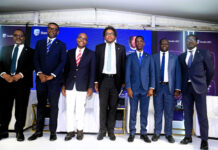
Meanwhile, as part of activities marking the 40 years of the death of Nigeria’s former military ruler, His Excellency, Hifikepunye, the former President of Namibia who was the winner of 2015 Mo Ibrahim leadership prize and Lord David Richards, former Chief of Defence, United Kingdom are among the top Keynote speakers expected at the commemorative conference to mark 40th anniversary of the demise in office of General Murtala Ramat Muhammed, Head of State and Commander-in-Chief of the Armed Forces of the Federal Republic of Nigeria from July 29, 1975 to February13, 1976. The conference which holds today in Abuja, under the distinguished chairmanship of President Muhammadu Buhari GCFR, with the theme “Regional Security and State Building: Portents and Prospects