
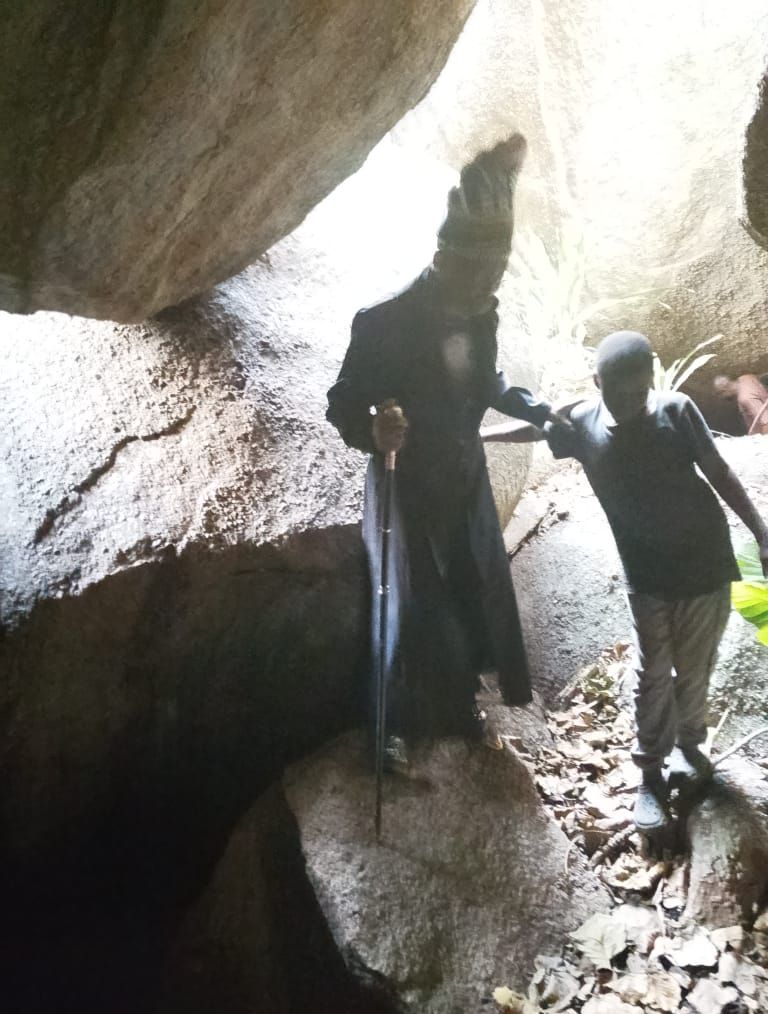

In the quiet, undulating landscapes of Ikere Ekiti, a remarkable discovery is stirring excitement among historians, tourism experts, and adventure seekers alike. Hidden for generations within the imposing formations of Ugele Rock lies what may well be one of Nigeria’s most intriguing natural and historical wonders—an ancient rock shelter settlement now stepping into the light.
The revelation came almost by accident. What began as a routine inspection ahead of the much-anticipated Easter Monday Hiking Experience slated for April 6, 2026, quickly transformed into a moment of profound significance. Explorers navigating the rocky terrain stumbled upon a formation that defied expectations—not merely a cave, but a sprawling, structured environment that bears striking resemblance to a human settlement.
Inside the rock formation, nature appears to have sculpted an intricate network of interconnected spaces. These include chambers that evoke images of rooms, parlours, halls, and even communal meeting areas. The sheer organisation of these spaces has prompted experts to describe the site as a “hidden rock city”—a term that captures both its scale and its mystery.

Despite its grandeur, the site has long existed in quiet obscurity. Known to local inhabitants but never formally documented, Ugele Rock remained outside the gaze of researchers and global audiences. That narrative is now changing rapidly.
Read Also:
The breakthrough moment was made possible through community collaboration, spearheaded by the Chairman of Ikere West LCDA, Festus Ige Olorunfemi. His engagement with residents ensured both access to the terrain and local participation in the exploratory effort—an approach now being hailed as a model for grassroots-driven discovery.
What makes the find particularly compelling is not just its natural beauty, but its potential historical significance. Members of the exploration team insist that the formation goes beyond a simple geological curiosity. “This is not just a cave. This is a settlement,” one observer noted, underscoring the structured and purposeful appearance of the spaces within.
As word spreads, calls are mounting for urgent archaeological investigation and preservation efforts. Experts argue that, with proper research and development, Ugele Rock could stand alongside some of the world’s most celebrated cave settlements—offering insights into ancient habitation patterns while boosting Nigeria’s cultural tourism profile.
Already, attention is turning toward Ekiti State as a region rich with untapped heritage. The forthcoming hiking event is expected to draw visitors eager to witness the discovery firsthand, potentially marking the beginning of a new chapter for tourism in the area.
For now, Ugele Rock stands as both a mystery and a promise—a silent testament to the stories hidden within Nigeria’s landscapes, waiting patiently to be uncovered. What lay concealed for generations may yet redefine the cultural and tourism future of Ikere Ekiti and beyond.