
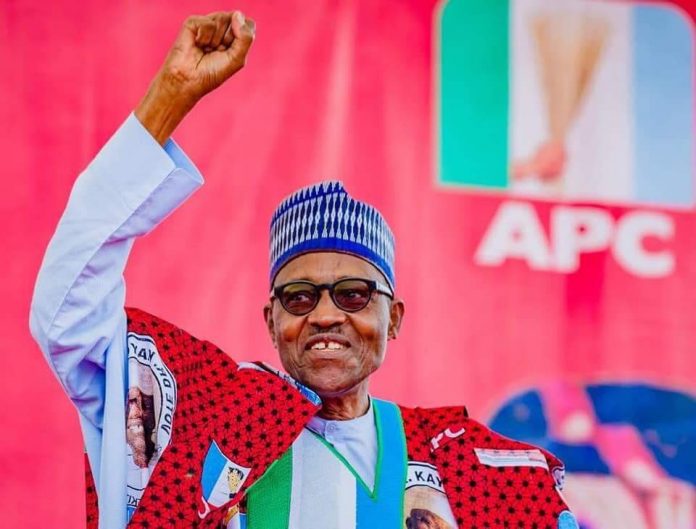

Late last month, the All Progressives Congress (APC) marked six chequered years in office without fanfare. Three months earlier, the party also marked eight years in existence as a political party. Fittingly, no celebration was attempted on both occasions. The suspicion is that both anniversaries would have been celebrated had the party felt confident about its achievements. Instead, it retreated into its shell and brought a rabbit out of the hat in President Muhammadu Buhari’s bombshell television interview and Democracy Day address. The party was barely two years old when it took office in 2015, an unprecedented feat for a political toddler. And in the face of steep opposition, it also won re-election four years later. These are milestones deserving of celebration for an eight-year-old party.
Sadly, the precociousness that brought the party into office and the political genius and chutzpah that saw it aspiring to national leadership at two years of age and winning presidential election and re-election with such daring and adeptness have been woefully inadequate in helping it to responsibly manage the enormous power at its disposal. Every challenge it faced – from insurgency to banditry and kidnapping, and from economic crisis to EndSARS protest, not to talk of the Southeast and Southwest self-determination/secession conundrums – has been met with incompetence, clumsiness, ideological vacuity and dismal lack of foresight and surefootedness on its part.

The party is supposed to be the most ideological in Nigeria, if not in Africa, going by its claims and posturing. But it has ended up as an organization destitute of ideology. Its only claim to principles has been its sometimes practical but nevertheless ad hoc approach to governance. If it makes sense, regardless of lacking consistency with its manifesto, it will promote it. Beyond that, the party has simply trudged along, groping its way into an uncertain future, hesitant about what kind of legacy it should envision for itself or bequeath the country. The public naturally presumed ideological purity for the party, believing without evidence that the party’s extravagant claims had indemnified them against being duped. They also hoped that the party’s ambitions would be escalated into grander ambitions for the country. Instead, the party has collapsed into internecine conflicts and disseminated barbarous antagonisms across the country, corrupting and weakening every sinew, and poisoning the lifeblood and muscles that sustain the nation.
A celebration would have enabled the APC to renew their contract with the electorate, sell their ideas of how to recreate the country from the ashes of despair and discontent, and instill hope in a greater and inspiring tomorrow. But if the party could not celebrate because it is also facing its own despairing identity crisis and brutal internal struggle for control of both the levers of the party and its soul, then perhaps the president would want to roll out the drums as a modest celebration of his own success in personifying the resilience of a country that stands strong in the face of daunting crises.
Read Also:
However, as the president’s Arise Television interview showed last Thursday, his grasp of the existential crises facing the nation remains rudimentary, his snide remarks about who dictates what to the party inflict wounds on loyal party hierarchs, and his panaceas for reclaiming the country from mediocrity remain exasperatingly simplistic. Every leader needs a deep mind that can call to deep, a mind labyrinthine in its reach and network, a mind capable of grasping the complexities of national challenges as well as proffering answers and solutions that are no less complex and visionary than the problems are entangled. That kind of mind is, however, lacking.
From all indications, there are no guarantees that the APC would glide into the future stronger than it has shown the capacity to do, despite the president’s exultation last Thursday over the so-called rebuilding of the party, a rebuilding that now appears to be emptying the party of its soul, weakening its hope, and damaging its resolve. In fact the danger for him, much more than his party, is that he may end up being reviled in the Southeast – but he probably does not care – dismissed and derided in the Southwest, disapproved in much of the Middle Belt, received with mixed feelings in the Northeast, and ignored in the Northwest. Both the president and his party have just two brutally short years to repair the damage to their image and persons. Whether they will make amends is not quite as clear as whether they can.
The president’s interviews and Democracy Day address sum up the entire body of his life’s work and person. That summation is not flattering. Contrary to what many people think, not only is it clear that the president is in far greater control of the policies and character of his government, he is also enthusiastic about them, and has openly shown he personifies them, despite his illness and seeming detachment. He speaks of democracy when everything he does wars against it, including his inability to read and appreciate the import of the EndSARS protests. On Friday, he belatedly decided to jaw-jaw with leaders of the Southeast, though he had spent the better part of his years in office undermining the influence and authority of APC leaders in various zones, including the Southwest, and even threatening them. Above all, he has boasted more attachment to Niger Republic and defended the extraordinary commitment of Nigerian resources to that country on the lamentable excuse of familial connections and unsubstantiated business advantages. And he has subscribed to and sanctioned an unconstitutional and unlawful return to grazing routes and reserves though the policies were never enacted nationally even in the First Republic that he extols as a paragon of law and order.
For some 16 years, the Peoples Democratic Party trifled with democratic principles and acted as if party leaders were both immutable and infallible. But despite their frivolity, they never substantially threatened democracy. On the contrary, partly because hawks and non-democrats accompanied the Buhari administration into office, it has taken only a few years for the administration and the APC to demolish democracy’s building blocks, enthrone regional and ethnic exceptionalism as the guiding principle of state, and displayed inestimable contempt for democrats, other ethnic groups, religions and civil society. In addition to their brinkmanship, they would have declared martial law in order to have a better grip of statecraft had they been sure they would not either come to grief or unite the opposition against themselves. The president said he hoped the APC would go on and on beyond 2023, and he believed that he and the party had done enough to elicit and sustain popular confidence. If only wishes were horses. Having turned Nigeria into a regimented people forced to goosestep behind him, having shortsightedly engrossed the Fulani worldview while displaying cavalier attitude to other nationalities, and having submerged Nigerians in debt to, in his argument, remedy the nation’s infrastructural deficit, it remains to be seen whether the people would place premium on their stomachs or on their freedoms, especially as neither goal is being placated by the president’s purposeless leap into the democratic and economic void which he has created and nurtured.