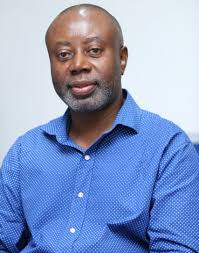

Dr. Chido Onumah was born on April 10, 1966, at a pivotal moment in Nigeria’s history—a period marked by the nation’s ongoing quest for identity, unity, and development. While his birth may have appeared ordinary to those beyond his immediate family, the trajectory of his life over the past six decades has proven anything but.
Today, as he marks his 60th birthday, Dr. Onumah stands as a compelling symbol of steadfast commitment to justice, accountability, and truth. Celebrating him is, therefore, not merely an acknowledgment of age, but a recognition of a life devoted to principled engagement, courageous truth-telling, and impactful institutional work.

Dr. Onumah began his early education at Army Children School, Apapa, before proceeding to Awori Ajeromi Grammar School for his secondary education. He later attended the University of Calabar, where he earned a Bachelor of Arts degree in Philosophy in 1991. It was during this period that he cultivated a deep appreciation for critical thinking, ethical reasoning, and intellectual inquiry—values that would later define his distinctive voice in journalism and advocacy.
In 2002, he furthered his academic pursuits at the University of Western Ontario, Canada, where he obtained a Master of Arts degree in Journalism. During his time there, he distinguished himself by winning the prestigious Jerry Rogers Writing Award and the William C. Heine Fellowship for International Media Studies. Demonstrating a lifelong commitment to scholarship, he later earned a Ph.D. in Communication and Journalism from the Universitat Autònoma de Barcelona in 2019. His career thus reflects a rare blend of professional practice and academic excellence.
Dr. Onumah’s early professional years were marked by extensive experience across prominent media platforms in Nigeria and beyond. He trained at The Guardian in Lagos and went on to serve as a political and human rights correspondent for Sentinel and The News during a time when such reporting demanded exceptional courage. He also held editorial and research roles across West Africa, including serving as Associate Editor at Weekly Insight in Ghana and contributing to the West African Human Rights Committee, where he led investigations into human rights violations and advocated for detained journalists and political prisoners. His international journalism engagements included work with Africanews Service in Nairobi and Africa Observer in New York, reflecting a career shaped by purpose and global perspective.
By the early 2000s, Dr. Onumah had established a strong international presence. At the Panos Institute in Washington, D.C., he managed Africa Programs, where he contributed to the development of journalism curricula and trained emerging reporters in conflict-sensitive, diversity-focused, and human rights reporting. He also facilitated collaborative initiatives between African and Caribbean journalists, particularly in reporting on HIV/AIDS, fostering timely and impactful public health communication.
Read Also:
Following the establishment of Nigeria’s anti-corruption agency, he returned home to join the Economic and Financial Crimes Commission (EFCC). There, he led the Civil Society Unit and coordinated the Fix Nigeria Initiative. In this capacity, he played a critical role in promoting transparency and accountability by training journalists in investigative reporting, organizing ethics workshops, and building strategic partnerships with civil society organizations. His work also involved simplifying complex international anti-corruption frameworks into accessible tools for public understanding, effectively bridging governance and civic education.
Between 2008 and 2010, Dr. Onumah served as Research Assistant to Mallam Nuhu Ribadu at St Antony’s College, University of Oxford, and later at the Center for Global Development in Washington, D.C. During this period, he contributed significantly to global anti-corruption advocacy, including speechwriting, report preparation, and research on financial crimes involving politically exposed persons.
A defining feature of Dr. Onumah’s global impact is his leadership in Media and Information Literacy (MIL). In 2004, he became Coordinator of the African Centre for Media & Information Literacy in Abuja, where he has championed initiatives aimed at fostering informed citizen participation and critical engagement with information. His work seeks to empower individuals to analyze, evaluate, and responsibly create media content.
On the global stage, Dr. Onumah has played influential roles as Co-Chair of the Global Alliance on Media and Information Literacy (GAPMIL) and Coordinator of the Pan-African Alliance on Media & Information Literacy (PAMIL). In collaboration with UNESCO and various national education ministries, he has contributed to the development of policies and curricula that integrate MIL into formal education systems. As a UNESCO consultant since 2010, he has been instrumental in shaping global MIL frameworks and ensuring Africa’s representation in international discourse. He has also served as a Graduate Assistant and Visiting Lecturer at the Universitat Autònoma de Barcelona, where he teaches courses in travel journalism, multiculturalism, international reporting, and media literacy.
Beyond academia and policy, Dr. Onumah remains actively engaged in volunteer and advocacy work. He serves as a Board Member of the Whistleblowing International Network (WIN), promoting transparency and the protection of whistleblowers, while also supporting initiatives that advance digital inclusion and cross-cultural learning through the World Computer Exchange.
His published works reflect Nigeria’s complex socio-political landscape. From Nigeria is Negotiable to We Are All Biafrans, Time to Reclaim Nigeria, and Remaking Nigeria: Sixty Years; Sixty Voices, his writings interrogate issues of nationhood, democracy, and justice. He has also edited volumes focusing on children, youth, journalism, and public intellectual discourse.
Dr. Onumah’s contributions have earned him numerous accolades, including the Kudirat Initiative for Democracy Award for excellence in journalism and the Clement Mwale Prize for courage, alongside several academic honors in Canada.
At 60, Dr. Chido Onumah exemplifies a life of purpose, integrity, and enduring impact. His journey underscores the power of consistency, intellectual rigor, and principled advocacy in driving meaningful societal change.
Happy 60th Birthday, Dr. Chido Onumah.