
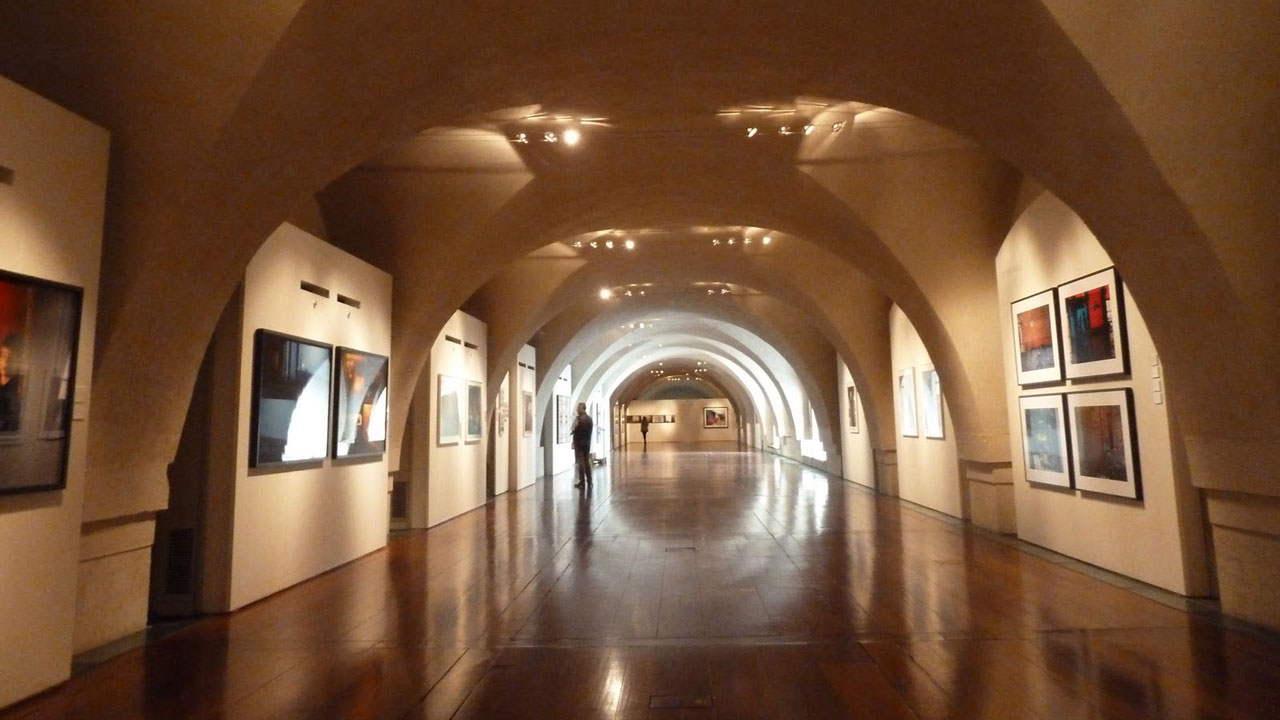


Every art fair is a marketplace like any other, and with annual editions in London, Marrakech and New York, the 1-54 Contemporary African Art Fair is also a travelling show with a focus on commerce over aesthetic, social or cultural importance – as it ought to be.
For this year’s London edition (October 4-7th) at Somerset House galleries, 130 emerging and established artists from 43 galleries were chosen from 21 countries across Europe, Africa, the Middle East and North America.

The vast array of artists working in many different mediums and from distinct cultural backgrounds makes for a big bazaar that is also an exhaustive account of the art works being made by African artists, a fair amount of which are Nigerian in a long list that includes Taiye Idahor (Tyburn Gallery, UK), Zina Saro-Wiwa (Tiwani, UK) and Lakin Ogunbanwo (whatiftheworld Gallery, South Africa).
Modupeola Fadugba’s 1922 (Gallery 1957, Ghana) is from her very engrossing series which interrogates the political and personal ramifications of shared water bodies like pools and (not mentioned but by extension, beaches).
Based on on-site research with a team of geriatric synchronised swimmers in New York called “Harlem Honeys and Bears”, Ms Fadugba has elegantly married abstract depictions with realistic images of her subjects over canvas she has treated with roughly hewn cardboard and burns to give distinct texture and colour whose combined effect is that of affecting fragility especially when her subjects are the elderly.
What to the uninformed viewer might be works of frail beauty, with a little background information, becomes a laudable insistence of the vitality by a section of any population that is otherwise marginalised.
Peju Alatise‘s Death And The King’s Alaso-Ofi is a work of high imagination and execution that critiques the decay of the Nigeria’s textile industry by the unchecked importation of Chinese products which has lead to the closure of manufacturing plants like Aswani, ABC wax and UNTL – and the loss of livelihoods by indigenous cotton farmers, weavers, tailor’s, fashion and interior designers.
The work itself defies easy description; each of the three metal panels (with just two on display at the fair) are covered with equally shaped squares that depict a network of imageries and miniatures that include wax prints and looms, the majority of which is the reddish-brown of rusted brass giving the work a stark beauty.
Read Also:
Based on the intricate metal and wood joinery, as well as the painted prints, Death And The King’s Alaso-Ofi is very much a “sculptured-painting” and the title’s heavy allusion to Wole Soyinka’s most majestic play “Death And The King’s Horseman” goes a long way to emphasise Alatise’s theme of sustaining long-held cultural practices. But Alatise’s own words remain stronger than interpretations and allusions: “you get this counterfeit shit from China and they’re still using designs made by local designers making it nostalgic for you to buy this crap. I’m not dissing importation, I’m saying it’s not sustainable”.
Co-founded In 2015 by Dolly Kola-Balogun and Abdullahi Umar, Retro Gallery is one of two Nigerian galleries (along with SMO Contemporary Art) at this year’s fair. Based in Abuja, the fast growing gallery presented three artists – Duke Asidere, Adetomiwa Gbadebo and Uche Okpa Iroha- in its first ever appearance at the London edition of 1-54 Contemporary Fair.
Okpa-Iroha’s striking black and white photographs about life in mainland Lagos is from his “Isolation Series” which, in the words of Joshua Jonathan, head of communications at Retro has “sold quite well” and does indeed showcases the great eye that has earned him the Seydou Keita Prize for photography (in 2015 and 2016). Asidere’s drawn portraiture are energetic deconstructions that show a tasteful partially to shades of yellow and are primarily concerned with the empowerment of women. The four day fair is also a tale of discovery for international art buyers and lovers who may know Lagos to be the country’s hub for fine art and Abuja for folk art.
The 1-54 fair goes a long way to address the age-old problem of poor representation of African artists in international markets and especially in London which remains a global capital for art and is a convenient destination for galleries from major European and American cities.
Some problems still persists. Works of technical virtuosity and significant cultural importance by artist from the African continent still fetch considerable lower amounts compared to those by European and American artists. This is acutely felt by a gallery like Retro which is based in Nigeria and sells works by artists who live and work in the country.
“Part of the solution is having African owned galleries, African owned exhibitions, African promoted shows” says Ms Kola-Balogun citing Art X Lagos as an example. Started by Tokini Peterside and now in its third year, Art X Lagos is now Africa’s leading art fair and will this year run from November 2-4th.
What is undoubted is that the excitement and regard generated by all editions of 1-54 Contemporary African Art Fair will continue to be valuable in propagating works by the continent’s artists.
Source: G Entertainment