
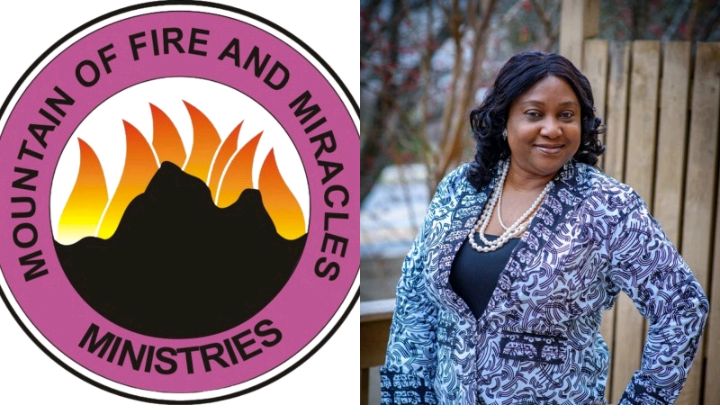

An unexpected court ruling, a resurfaced video, and a wave of reactions have combined to keep a controversial dispute between a religious ministry and one of its fiercest critics firmly in public view.
For weeks now, conversations within religious circles—both in Nigeria and the diaspora—have been dominated by the outcome of a legal battle involving the Mountain of Fire and Miracles Ministries (MFM) and outspoken critic Funke Ashekun.

The case, which played out in a United States court, ended with a decisive ruling in favour of the church. Ashekun was ordered to pay $300,000 in damages, bringing to a close a long-running dispute that had steadily gained attention across online platforms and religious communities.
But even as the dust from the courtroom begins to settle, a new twist has reignited public interest—an old video of Ashekun, recorded before the judgement, has resurfaced, offering a stark contrast between past confidence and present reality.
A Battle Beyond the Courtroom
Before the ruling, Ashekun had been vocal in her criticism of MFM and its leadership, often framing her position in deeply spiritual terms. In the resurfaced video now making the rounds online, she speaks with unwavering certainty, declaring that the legal battle was divinely inspired and that victory would be hers.
Those assertions, widely shared again in the wake of the judgement, have sparked a fresh round of reactions—particularly among members of the church and supporters of its General Overseer, Daniel Olukoya.
Read Also:
For many within that circle, the court’s decision is seen not just as a legal victory, but as vindication after what they describe as a prolonged period of allegations and public criticism.
Reactions Trail the Verdict
The ruling has continued to generate debate, with opinions sharply divided. Supporters of MFM argue that the outcome reinforces the importance of accountability, especially when public statements and accusations are involved. Some have pointed to the resurfaced video as evidence of what they consider misplaced confidence.
On the other hand, observers outside the immediate circle caution against reducing the situation to a simple narrative of victory and defeat. They note that the case highlights a broader issue—the intersection of faith, free expression, and legal responsibility in an increasingly digital age.
Beyond the Headlines
While unverified reports of health concerns involving Ashekun and her husband surfaced shortly after the judgement, attention has largely remained fixed on the legal and reputational implications of the case.
Within MFM, sources suggest that the ministry is moving forward, choosing to focus on its activities rather than the controversy. A senior church official, speaking anonymously, described the ministry as resilient and undistracted, emphasizing its continued growth and global reach.
A Cautionary Tale in the Digital Era
As conversations continue, the episode serves as a reminder of how quickly narratives can evolve—and how past statements can resurface to shape present perceptions.
In an era where digital footprints are nearly impossible to erase, the Ashekun case underscores a simple but powerful lesson: words spoken in certainty today may be revisited under very different circumstances tomorrow.