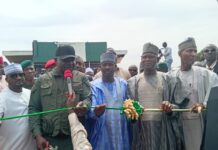


Zainab Ahmed, Minister of Finance

• Says Nigeria Can’t Stop Fuel Subsidy By Fiat
• As IMF Retracts, Clarifies Rating Is About ECA, Not SWF
Minister of Finance, Mrs. Zainab Shamsuna Ahmed, has reacted to last Thursday’s poor rating of Nigeria’s Sovereign Wealth Fund (SWF) operated by the Nigeria Sovereign Investment Authority (NSIA) saying, the rating is misleading and inaccurate because the NSIA has even received commendation from President Muhammadu Buhari on account of the Agency’s transparency and probity.
On Thursday in Washington, as part of the ongoing Spring Meetings, the IMF Fiscal Monitor publication released at the launch of this years Global Stability Report on a Chapter on “Curbing Corruption” ranked some 32 Sovereign Wealth Funds worldwide where the Nigeria’s SWF placed 31 position ahead only of Qatar’s in what the publication attributed to corruption and lack of transparency in the operation of the Funds.
The publication, however, named Ghana ‘s Fund as the second best transparently ran fund in the world, after Colombia’s. The Fiscal Monitor publication attributed its source for grading as Natural Resource Institute 2017 and Worldwide Governance indicators.
Read Also:
But reacting to the grading in Washington on Thursday night, Ahmed also said that the Nigerian Sovereign Investment Authority (NSIA) had been doing very well in managing the Sovereign Wealth Fund, adding: “I would say that the Sovereign Wealth Fund has been doing well if you look at where we started and where we are right now.“We have achieved a lot of progress building more fund from where we met it and by actually utilising the savings of the SWF on projects that are visible. We have improvements to make but the movement is positive,” she further posited.
Also in another development, the IMF yesterday apologised to the NSIA for dragging its name to the rankings, explaining that what it meant was the Excess Crude Account (ECA)- the Nigerian Government fiscal budgetary expenditure rule account regime, where savings from fixed budget oil price are kept as buffers to contend future shocks.
According to the IMF Nigeria Senior Country Representative, Mr. Amine Mati, the misrepresentation was unfortunate and assured that the Fund would take stock to correct the mistake during the course of the Spring Meeting. He said: “In view of recent local media reports, I would like to clarify that the reference to the SWF included in Figure 2.16 of the IMF’s Fiscal Monitor showing a low ranking for Nigeria does not refer to the NSIA.
“The NSIA is a Sovereign Wealth Fund that has worked extensively with development partners to ensure it is applying transparency practices that are aligned with the Santiago Principles of transparency, good governance, accountability and prudent investment practices.
“The figure in the IMF’s Fiscal Monitor reports a score prepared by the Natural Resource Governance Institute (NRGI), which assesses the corporate governance and transparency of SWFs around the world, using a methodology outlined in the referenced NRGI publication. “For Nigeria, that SWF reference focuses on the Excess Crude Oil account, which requires greater transparency on the rules governing deposits, withdrawals and investment.”
Nigeria’s ECA has declined from a height of over $20 billion in 2005 to less than a billion as at last month, with only about $2 billion of the sum invested in the SWF. The ECA is a joint three-tier of government arising from oil proceeds. The States in the Federation normally demand that withdrawals be made from the account to augment low revenues distributed monthly at the Federation Accounts Allocation Committee (FAAC), where Federation revenues are collated and distributed among the Federal, States and Local Governments.
Also reacting to the IMF recommendation for the removal of subsidy on petroleum products in Nigeria, because subsidies are mired in corruption, Ahmed said Nigeria may heed the advice, but not by fiat, because there was need to sensitise the masses to get their buy-ins. She said: “I will say it is a good advice but I would say also that we have to implement it in such a manner that is successful and sustainable.
“
We are not in a situation to wake up one night and remove subsidy. We have to educate the people; we have to show Nigerian citizens what the replacements of those subsidies will be.“So, we have a lot of work to do and we have to understand that you don’t remove large amounts of subsidy just in one day. It has to be gradual and the public has to be well-informed on what you are trying to do,” the minister further said.