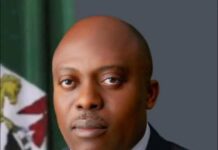

Kayode Ajulo, an Abuja-based constitutional lawyer, speaks with OLAJIDE OMOJOLOMOJU on the recently concluded 2019 general elections in the country and other matters of national importance
What is your impression about the just-concluded series of the 2019 general elections?

Our laws recognise that our elections are not perfect, that’s why they talk of substantial compliance. I am not saying we should give room for impunity, but it is just to start with that.
Our politicians are the same. It is only in this clime, Nigeria, that somebody will be beating you and he will be screaming more than the person being beaten. Another thing I think we need to stop is for our politicians to continue to disrespect our courts. Now that we are gradually getting over the election, the whole thing will shift to the courts. The media should help to ensure that we do not allow these politicians to continue to cast aspersions or discredit the last hope of not only the common man, but the last hope of everybody in this country.
Before, we used to say the judiciary is the last hope of the common man, but our experience has shown that it is the last hope of even the rich, the well-to-do. I believe we should not discredit it; we should not mess up the judiciary. Recently, the tribunal in Osun State graciously declared that it is the candidate of the Peoples Democratic Party, PDP that won the election. You can see the accolades, the fine prose used to praise the judiciary and I wonder if the judgment had gone the other way, they will continue to abuse, curse and even say so, so judge has collected money.
Some of these people are not aware of what goes on in the courts. The courts have precedents to follow; I am not saying this because I am a lawyer. I think the media should remind them that there is a procedure; we have our laws for such instances where you are casting aspersions. Our law of contempt is still strong and very potent. I think it is a matter of caveat emptor, buyers please beware.
What is your position on the decision of the Independent National Electoral Commission, INEC, concerning inconclusive elections and supplementary elections?
The matter of Osun tribunal is still in court, so I won’t want to go into details. But I know that no law can stop me from shedding light on the judgment.
The Electoral Act is so clear about the issue of inconclusiveness in our lexicon and practice of elections. I am one of those who have not been happy about that, but since that is the law, our constitution states it clearly as to how you can win in an election. If in the new Electoral Act, we just believe that we need to fine-tune it for the development of our electoral space, so be it. All the inconclusive elections are always like that because we have to understand that INEC has the right to postpone elections and to declare some elections inconclusive, particularly where the total number of those who are yet to vote is higher than the difference between the two leading candidates.
The question now is at what point can we have inconclusive elections? Are we talking of those who refused to come out at all, or those who have been accredited? Because that is another thing entirely. Do we have to use the number of those registered or the number of those people with PVCs, but who failed to come out on Election Day? That’s another thing. I think those are the things the court needs to look into.
Then finally, are we talking about some people who were really at the polling units, who because they have realised that they were losing out and refused to allow the election to take place? These are the things the court needs to look into. For instance, people have been talking about one of the politicians in Akwa Ibom State that he got the certificate by duress.
The results of the elections indicated that only two parties, the APC and PDP, are the only parties that won substantial votes and many Nigerians are wondering why the country cannot adopt two-party system like we had in the Third Republic when we had the defunct National Republican Convention and Social Democratic Party. What is your take?
I will not canvass that we should go back to the era of SDP and NRC. Mind you, the only essence of electoral process is trying to keep to the giving of fundamental human rights of choice of association and so on. By the time we agreed that we should allow people with only two choices, I think that is stifling their constitutional rights. It is so clear; people are allowed to form political parties once they meet the requirements. As at today, not less than 70 of those political parties need to go. We don’t even need INEC to deregister them before they disband themselves. It is the law, that if you cannot fulfil certain conditions, particularly after elections, you should remain disbanded.
It is only in Nigeria that we always want somebody to take initiative or somebody to force us to do something.
In the United Kingdom till today, you see that, they have no written constitution, but the Prime Minister knows when to resign. He needs not be told. The Queen knows what she is supposed to get herself involved in and what she is not supposed to get involved in. She knows most of their rules and regulations, though not in written form. This is unlike our own that is written down. Must we wait until somebody takes the initiative?
Read Also:
It is expected that out of nothing, you will see that the wish of the people is important. If we want to limit the peoples’ choice to two, we may say, Dr. Olusegun Mimiko wouldn’t have emerged as governor of Ondo State. What of the people in All Progressives Grand Alliance, APGA, the current Anambra State governor wouldn’t have been there. Then recently, we won’t have heard of Young Progressives Party, YPP, a platform used by Ifeanyi Uba to win senatorial seat.
Winning of election and political development is a step, gradually things will improve, but we should allow people to have a choice. Not all of us can agree with the leadership of the APC or the PDP, but with plethora of choices, several political parties you can go into, people will have choices.
Nigerians are not complaining that they don’t like what we are having, but at the end of the day, water will find its level. And like I said all those parties that cannot win any seat and who failed to fulfil the requirements of the law should consider themselves disbanded.
Another feature of the last elections is violence. How do you think we can curb violence in future elections?
I have been speaking on this for a long time, since 2003. I can show you all the letters and all the policy papers I have been writing to INEC. We can only curb violence in our elections if there’s deterrent. Tell me, how many people in this country that we can say have been punished or successfully prosecuted when it comes to election violence?
And I have been saying this; in Nigeria any crime committed during elections seem to be wearing immunity. And I believe it is the duty of government to say that enough of these things. And I believe this is possible, it only requires the political will to ensure that those who are caught doing this are punished. You can see on our social media, a commissioner being arrested, a deputy governor being arrested, though he has immunity against prosecution, he doesn’t have immunity from being investigated. If he is investigated, then they can wait for when he leaves office for him to be prosecuted. If Nigeria can do this, the issue of election violence will abate.
Comparing the 2015 general elections with the 2019 general elections, how will you rate INEC’s performance in the two elections?
I have been trying to tell Nigerians this. The process of election starts not on the day of casting ballots. It started the day the time table is issued. It is a process. The process stops after the final affirmation of the court. Election is still on as to my own understanding. The electoral umpire is bound to make some mistakes and that is why we have to go to court of first instance. The law recognises that this court may make some mistakes and so we have the Appeal Court. After the Appeal Court, we go to the Supreme Court. It is then we can say that election has ended. As at now, it will be too early to adjudge INEC as having done well or not.
President Muhammadu Buhari has just won a second term in office. What do you think should be his focus during his second term?
One of the things that endeared him to the people is his anti- corruption policy which he promised Nigerians.
The second one is improving the economy through the building of infrastructure which he had started. The third one is security. All he needs is to place more premiums on these programmes and not deviate. Just imagine the trains coming down from Lagos to Akoko in Ondo State, then to Okene and to Abuja, then to Sokoto and Borno. You are so sure that the pot holes on our roads will reduce. And just imagine when the power sector is doing well, many industries will spring up. You just imagine the number of employment if our infrastructure is working well.
I think these are the things that we are expecting. And let me say that out of nothing, the president needs to look at some of the promises of his rival, the PDP candidate, Atiku Abubakar, and see whether there is any lofty idea from him, like the issue of restructuring. I will be the happiest man, the day I see Nigeria restructured. I think this is one of the things that Alhaji Abubakar used to get some Nigerians to go with him. He was talking of restructuring in the South, but even in Lokoja here, he cannot say that. He can’t go to Minna or Sokoto and talk of restructuring.
Moving forward, what reforms do you think we can have in our electoral process to bring about improvement?
A lot and if you remember, immediately after the elections I said we still need something like another Justice Uwais panel. I believe one of what the things the President should do even if now is to constitute some stakeholders in our electoral system to come up with some reforms.
Things change, what happened in 2007 is different from now. There is clamouring for electronic voting. I think there is the need to set up a committee and to call on all Nigerians to come and present papers and let them say how we should reform our electoral system. This is because in this year’s election, there was violence.
One of the features of this year’s election is accusations, counter-accusations which I believe little transparency will douse. I don’t see why in future elections, we cannot use our ATM cards, our National Identity cards to vote. All that is needed is to put data of everybody into the system. And this system updates itself. These are the things we need to get right.