
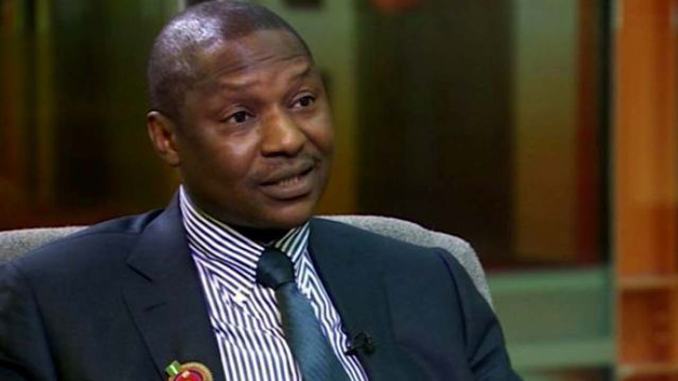

Former Attorney-General of the Federation, Abubakar Malami, is now at the centre of a sweeping probe that could unravel some of the most controversial financial decisions of the last administration.
Security operatives are zeroing in on at least five transactions—spanning over $1 billion—marked by opaque agreements, disputed settlements, and eyebrow-raising legal fees.

At the heart of the investigation is the $496 million payout to Global Steel Holdings Ltd over the Ajaokuta Steel concession. The deal is raising red flags because the company had reportedly abandoned its compensation claims years earlier—yet walked away with nearly half a billion dollars.
Then there is the shadowy disposal of forfeited assets. Billions of naira in properties recovered by the Economic and Financial Crimes Commission were allegedly sold off under questionable circumstances, with claims of verbal directives and no clear paper trail.
Read Also:
The controversial $419 million Paris Club refunds saga is also back under the spotlight. Consultants, whose work remains hotly disputed, were handed promissory notes in a deal fiercely resisted by state governors—fueling allegations that the system was gamed from within.
Equally troubling is the $200 million Mambilla power deal, where Malami allegedly committed the federal government to a costly settlement with Sunrise Power without full approvals—despite earlier positions questioning the legitimacy of the contract.
And in what critics describe as a “legal windfall,” investigators are probing the $17 million paid to local lawyers for facilitating the transfer of $321 million in Abacha loot—funds that had already been traced and secured before their involvement.
Across these deals, a pattern is emerging: hurried settlements, inflated figures, and decisions taken behind closed doors.
Under the administration of Muhammadu Buhari, Malami was one of the most powerful figures in government. Now, that influence is under intense scrutiny.
With a security agency set to interrogate him, insiders say the probe could open a deeper inquiry into how public funds were negotiated, managed—and possibly mismanaged—at the highest levels.
The question investigators appear determined to answer is simple: who really benefited?