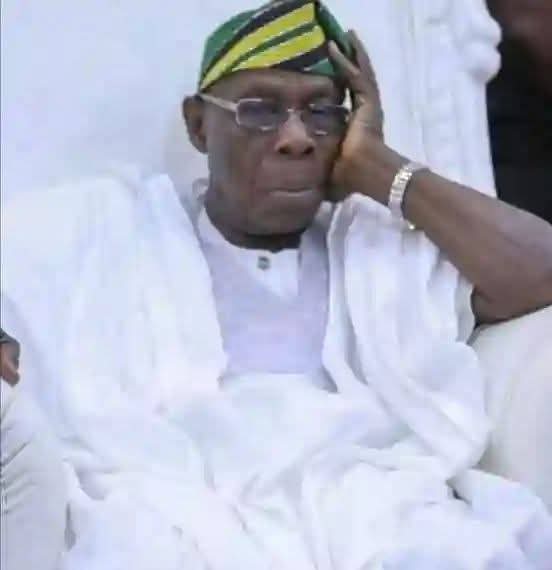

I have long known Chief Olúṣẹgun Ọbasanjọ to be many things – a soldier of fortune, a master tactician, and a political fox whose cunning was only rivaled by his unreliability. But above all, I have known him to be a saboteur of the very soul of Nigeria. For history, in its rare generosity, handed this man three monumental opportunities to reset a broken nation’s compass. And thrice, he squandered it – for ego, for vendetta, for self.
In his first coming, as a military head of state, he held the reins of power at a critical moment – post-Murtala assassination, a nation on edge. What did he do with that gift? He created states, yes, but entrenched a bloated structure without fiscal foundation. He launched Universal Primary Education – an inspiring policy on paper, but one poorly implemented and soon abandoned. His second and third comings as a civilian president were even more regrettable: eight full years of superficial economic fireworks masking deep-rooted decay. Beneath the GSM revolution lay debt, privatization fraud, and institutional weakening.

Rather than build a nation greater than himself, Ọbasanjọ built a self larger than the nation.
“Nearly all men can stand adversity, but if you want to test a man’s character, give him power.” – Abraham Lincoln
Where he should have empowered institutions, he empowered cronies.
Where he should have fostered democracy, he pursued a third term.
Where he should have built a legacy, he left a lingering shadow.
My generation that inherited his mistakes is still paying for them today.
Yet in the quiet hour of his twilight, a humbler, quieter son of Yorùbá land has risen – not with slogans, but with substance. Bọla Ahmed Tinubu, without pretence or theatrics, is doing what Ọbasanjọ never could: reforming Nigeria from its foundation.
In just over two years, Tinubu has not only made bold moves, he has touched Nigeria’s most sacred cows.
Fuel subsidy?
Removed in a sentence.
Exchange rate distortions?
Collapsed into one.
He didn’t wait for a honeymoon or hide behind committees. He acted.
He signed into law the Student Loan Act, giving hope to children the system had long ignored.
He activated the Renewed Hope Infrastructure Fund to power national roads, rail, and ports.
He declared food security a national emergency, digitalized port systems, restructured Nigeria’s tax system through the Oyedele committee, and revived the EFCC – not to witch-hunt, but to restore institutional integrity.
He may not have thrilled crowds like Ọbasanjọ. But he is building a nation – not a monument to himself.
“Do not go where the path may lead, go instead where there is no path and leave a trail.” – Ralph Waldo Emerson
Read Also:
Let us also be circumspect of those now parading themselves as messiahs under the cloak of political coalitions – be it in ADC, Coalition fronts, or the yet-to-be-unveiled ADA. Many of these actors are recycled actors from Ọbasanjọ’s disastrous theater of governance.
Abubakar Atiku and Nasir El-Rufai, the former as Chairman and the latter as DG of the Bureau of Public Enterprises, presided over the reckless sale of Nigeria’s national assets, our collective patrimony, at giveaway prices, to friends and fronts, under the banner of privatization. These men, though polished in speech and rich in ambition, were arrowheads of a government that traded reform for ruin.
Today, one returns under the banner of ambition, the other, burning with vengeance for not being invited to partake in this current administration. Neither deserves the privilege of proximity to power again. For to hand them the reins once more would be to invite termites to the last plank of our national foundation.
“Those who do not learn from history are condemned to repeat it.” – George Santayana
And so, Ọbasanjọ watches – alive, yes, but slowly being buried by the achievements of a man he long mocked. For every reform Tinubu enacts, it echoes the silence of what Ọbasanjọ failed to do. It is not death that haunts a failed statesman, but the growing shadow of the leader he might have been.
It is not the eulogies of today, but the verdict of tomorrow that writes true legacy. Tinubu, through pain and unpopularity, may yet write one worth reading.
“A man’s worth is not measured by the applause of his time, but by the architecture of the future he helps build.” – Marcus Aurelius (paraphrased)
What grieves me, more than the ruins of Ọbasanjọ’s governance, are those still imprisoned by the illusion of his greatness. To eulogize him is to dishonour the scars he left on Nigeria’s body. To resurrect his protégés is to invite history’s shame a second time.
May no man who despises the burden of true reform ever again taste the sweetness of power.
May we never again mistake AMBITION for VISION, or VENGEANCE for STATESMANSHIP.
May we no longer measure LEADERSHIP by VOLUME, but by VERIFIABLE VALUE.
“He who opens a school door, closes a prison. But he who opens a nation’s wounds and walks away, builds a prison without bars.” – Victor Hugo
In Finality.
The work has begun.
It is hard.
It is unpopular.
But it is necessary.
Tinubu is not a MESSIAH, and he has never CLAIMED to be ONE. But he is a BUILDER, and in a nation of ruins, builders are more valuable than gods.
Let us protect this FRAGILE RENEWAL, and GUARD AGAINST those who come bearing golden tongues but rotten hands. For history is watching, and this time, it must not be disappointed.
©TayọLawaL
ManTee Communication.
[email protected]