

An NGO, Alliance for Africa (AfA) on Monday urged the Senate to pass the Gender and Equal Opportunities Bill (GEOB) before it.
“The Bill supports equal participation and representation of women and men in all decision making processes,’’ the Executive Director of AfA, Ms Iheoma Obibi, said at a press briefing in Enugu.

Obibi urged the Nigeria government to emulate African countries that had addressed the under representation of women in political leaderships.
She said that these countries promoted gender equality in the political sphere and in decision-making processes at local and national levels.
“AfA insists on political parties bridging the gender gap by mainstreaming gender in their internal party policies.
“Take concrete actions to demonstrate government’s commitment to actualizing 35 per cent Affirmative Action (AA) in all government institutions, structures and decision-making positions.
“Demonstrate a clear road map of implementing and achieving the Sustainable Development Goals (SDGs), especially goal five on Gender Equality,’’ Obibi said.
The AfA executive director however, noted that the present political dispensation had the lowest representation of women in public office and called for an improvement in 2019 general elections.
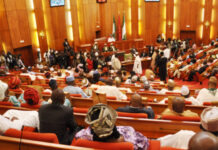
Obibi said that in the Nigerian parliament as presently constituted, women represented a dismal 5.6 per cent in the House of Representatives and 6.5 per cent in the Senate.
This, she said, was obviously very far from the 35 per cent Affirmative Action (AA) provided for in the National Gender Policy (NGP) 2006.
Read Also:
“This trend flows from the national level to the state and down to the local levels, where few women take the lead in local government chairmanship and councillorship.
“We note that in other progressive democracies in Africa, countries like Rwanda, women make up 63.8 per cent in the lower House of Assembly and 38.5 per cent in the Senate.
“In South Africa, women represent 41.9 per cent and 35.2 per cent respectively. In Burundi, women represent 36.4 per cent in the lower Assembly and 41.9 per cent representation in the Senate.
“Even, Zimbabwe has 31.5 per cent and 37.5 per cent respectively in the lower and upper house.
“Nigeria as a member of the UN signed and ratified various international instruments, treaties and conventions without reservation.
“These instruments have always emphasised that member nations put in place all the necessary mechanisms needed to eliminate gender discriminations, ensure equality and human dignity to all, men and women alike,’’ Obibi stressed.
She said that AfA was working with the UN Women Funds for Gender Equality (FGE) on full implementation of 35 per cent Affirmative Action (AA) in public governance in the five South-East states.
Obibi said that the project had recorded some successes with three elected female politicians as local government chairmen and member, state houses of assemblies.
She added that 11 female politicians had also been appointed members occupying decision-making positions in their respective states.
The AfA director said that it recognised the contributions of stakeholders insisting on Affirmative Action (AA) towards equal representation of women and men in public life necessary for a functional democracy.
Obibi said that AfA also recognised the advancement of women’s rights as a central issue to achieve political, economic and social justice.