
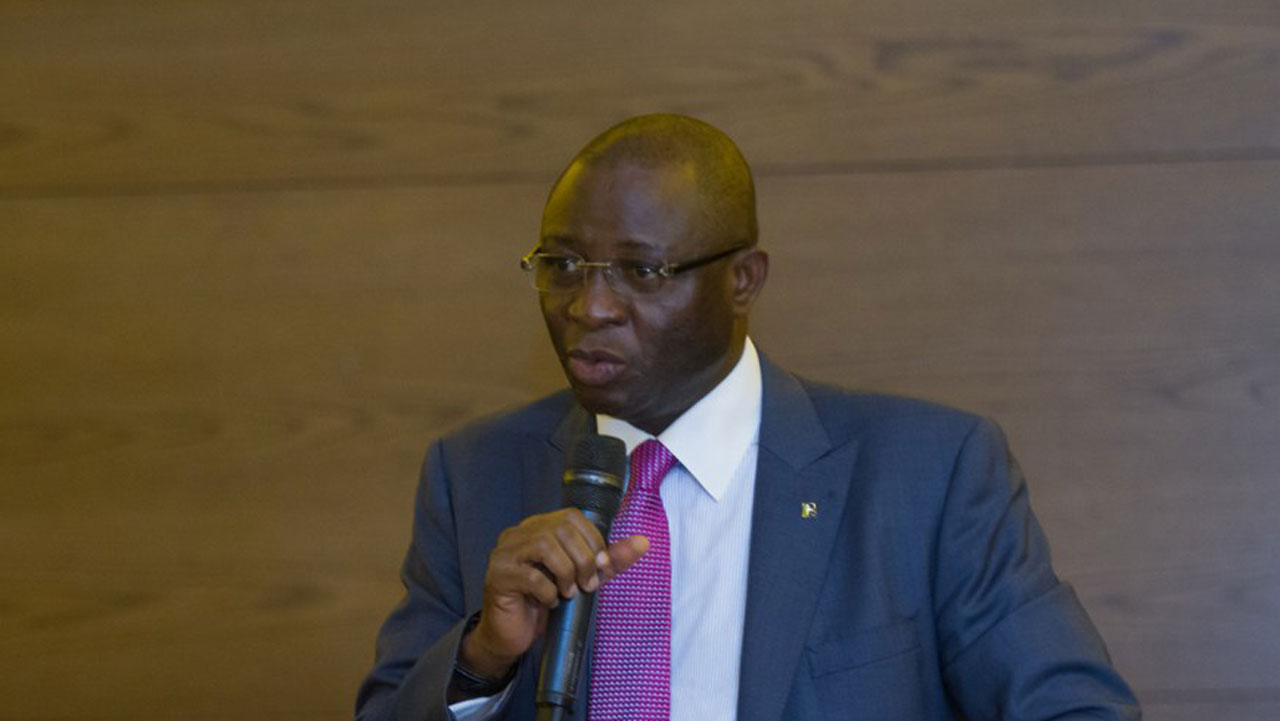


CEO of the Infrastructure Bank, Adekunle Oyinloye

Nigeria has fallen alarmingly short on the $127billion estimated required investment to bridge the country’s infrastructure deficit.
With the five-year short term plan investment of $127 billion proposed by the National Integrated Infrastructure Masterplan (NIIMP), less than 10 per cent $11.5billion (N5.5 trillion) had been budgeted for capital projects in the last four years.
The NIIMP projects that Nigeria will need an average of about $25 billion yearly, or five per cent its Gross Domestic Product (GDP) for five years, to enable the nation to kick-start its infrastructure renaissance.
A breakdown showed that N1.1 trillion was budgeted in 2014; N6 billion in 2015; N1.75 trillion in 2016; and N2.24 trillion in 2017, totalling N5.5trillion, far below the estimated required investment to address the nation’s infrastructure gap.
The NIIMP further projects that a total investment of $2.9 trillion would be required to build and maintain infrastructure in Nigeria, over a 30-year forecast.
The Managing Director/Chief Executive Officer, The Infrastructure Bank Plc, Adekunle Oyinloye, disclosed this at the weekend, where he featured as the guest speaker at the 2018 Annual Corporate Dinner of the Association of Professional Women Bankers (APWB). He spoke on the theme, “Funding Infrastructure Development in an Emerging Economy.”
Developed by the Federal Government, NIIMP provides a starting-point and a roadmap for building a world-class infrastructure stock that will not only guarantee sustainable economic growth and development, but also boost the nation’s recovery from the worst recession experienced in the past two decades.
Read Also:
According to Oyinloye, the sheer size of funding required to meet the infrastructure deficit, and Nigeria’s current economic climate is indicative of the reality that on-budget government funding sources have become grossly inadequate to bridge the infrastructure deficit.
He maintained that the traditional method of delivering capital infrastructure projects favoured by the public sector has to make way for alternative innovative infrastructure delivery methods that are agile, flexible, robust and integrated towards the fight back to economic stability via infrastructure construction and maintenance.
The bank chief, who disclosed several steps taken by government to address and create favourable environment to attract fresh funds, estimated that about 48 per cent of the funding required to bridge the yawning infrastructure deficit is to be sourced from the private sector.
He said the value proposition for private investments in infrastructure is premised on the expectation that greater private sector involvement will result in improved infrastructure service delivery to public users, as well as the availability of additional funding to ease the financial burden on the government.
Similarly, in a keynote address, the Managing Director/Chief Executive Officer, FBN Quest Merchant Bank, Kayode Akinkugbe, who noted that enormous opportunities exist if infrastructure gap is addressed, also stressed the need for sustainable development, even as infrastructure gap would hit N2 trillion by Year 2024.
Chairman of the occasion, President and Chairman of Council, Chartered Institute of Bankers of Nigeria (CIBN), Uche Olowu, noted that infrastructural-led growth is sustainable if government and the private sector played their role effectively.
He commended the women bankers on the roles played to mentor the younger people to build a career in the banking sector, urging banks to ensure that competency framework is driven in a logical manner.
Earlier, Chairperson, APWB, Mercy Oluwatoyin Ojo, said the association seeks to explore ideas, gain knowledge and opportunities using the culture of integrity, transparency, accountability, high ethical value and professionalism to drive its course.
She noted that the association has also been engaging the general public on financial literacy, promoting financial inclusion among the banked and unbanked.
Source: G Business