
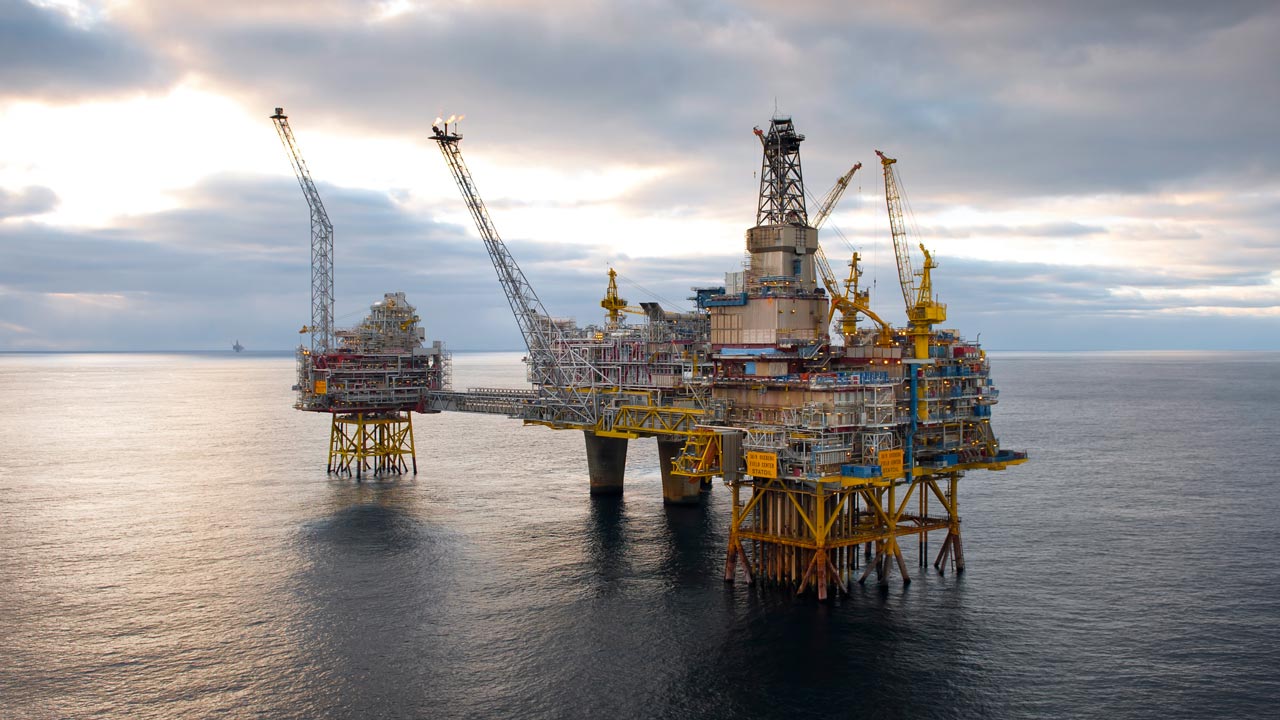


[FILE PHOTO] Oil and Gas

Increased production by Nigeria and Iraq above the agreed quota by members of the Organisation of the Petroleum Exporting Countries (OPEC), in February, saw compliance level hitting 79 per cent last month, three per cent above January’s 76 per cent.
According to S&P Global Platts survey, Saudi Arabia’s continued output discipline, and Venezuela’s struggles under U.S. sanctions led OPEC’s crude oil production in February modestly lower to 30.80 million barrels daily (b/d).
The figure is a 60,000-b/d drop from January, and is OPEC’s lowest output level since March 2015, when Gabon, Equatorial Guinea, and Congo joined the organisation, while Qatar was still a member.
Despite the fall, OPEC still has more cutting to do to fully comply with its supply accord that went into force in January. The 11 members with quotas under the deal achieved 79% of their committed cuts in February, and remained 170,000 b/d above their collective ceiling. This is a slight improvement on January’s 76%, with Nigeria and Iraq producing far in excess of their cap, according to Platts calculations.
Venezuela and Iran, both under U.S. sanctions, and Libya, where instability continues to impact output, are exempted from the deal.
According to the data, Nigeria, which was exempted from the previous deal, but agreed to a quota under the current accord, pumped 1.88 million b/d in February, the survey found, 190,000 b/d above its cap.
President Muhammadu Buhari had last month said Nigeria could consider a reduction in crude oil production in support of efforts to shore up the price of the commodity.
A statement by the Senior Special Assistant to the President on Media and Publicity, Garba Shehu, had quoted Buhari as saying: “as a responsible member of the OPEC, Nigeria is willing to go along with the Saudi initiative in limiting output so that prices would go up.”
Nigeria has started production from new field Egina, though the oil minister, Ibe Kachikwu, had suggested that he may seek to have those barrels classified by OPEC as condensate, which is not subject to the quotas.
Assay of the crude from the field, however, show an API gravity of 27.5, significantly heavier than typical condensates.
Read Also:
Nigeria also considers Agbami grade as a condensate, while S&P Global Platts and some other secondary sources used by OPEC to monitor production classify it as crude.
The agreement, which runs through June, calls on OPEC and 10 non-OPEC allies, including major producer Russia, to cut a combined 1.2 million b/d in supplies to help shore up oil prices.
The February output figures will be reviewed by a six-country monitoring committee of the OPEC/non-OPEC coalition, which meets March 18, in Azerbaijan, to discuss market conditions and assess compliance with the deal. The committee is co-chaired by Saudi Arabia and Russia.
Saudi Arabia, OPEC’s largest producer, has made good on its pledge to lead the coalition by example, slashing its output to 10.15 million b/d in February, the survey found. That is 160,000 b/d below its quota of 10.31 million b/d and the kingdom’s lowest output level since May 2018.
Energy minister, Khalid al-Falih, has signalled that the kingdom may go even lower in March, to 9.8 million b/d.
Venezuela, whose oil production has been declining for years due to underinvestment, technical problems and labor issues, pumped 1.10 million b/d in February, down 60,000 b/d month on month, as it has struggled to sell its crude since US sanctions were imposed in late January.
At the end of February, Venezuela had 10.8 million barrels of crude sitting dockside without a buyer. The country’s output is down 910,000 b/d in two years and the lowest since an industry strike in late 2002 and early 2003, according to Platts survey data, with analysts projecting further erosion due to the sanctions.
Iran managed to keep production steady in February, at 2.72 million b/d, the survey found, as several buyers in the month took advantage of sanctions waivers the US granted to eight countries to purchase Iranian crude.
The waivers expire in May, and the Trump administration has not provided any indication whether they will be extended or amended.
Iraq produced 4.67 million b/d in February, according to the survey, 160,000 b/d above its quota.
The country has consistently lagged in compliance with its committed cap, both under the current deal and under the previous accord, which ran from 2017 to 2018. Iraqi officials have sought exemptions from the deal, saying their war-torn country needs oil revenues to rebuild from its devastating fight against the Islamic State. But other members have pressured the country — largely to no avail — to conform with its quota.