
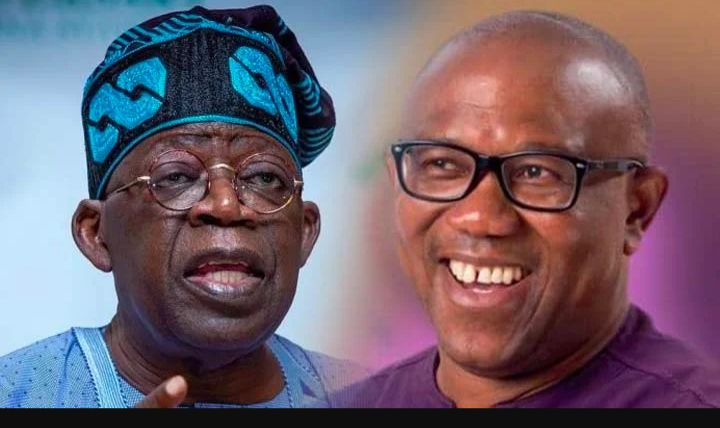

The 2023 presidential race took a sharper, more confrontational turn as Peter Obi openly dismissed the long-peddled “it’s my turn” narrative championed by Bola Ahmed Tinubu, declaring bluntly that Nigeria’s presidency is “not the turn of anybody.”
Speaking at a Labour Party retreat in Abuja, Obi tore into Tinubu’s now-famous “Emi Lokan” (it’s my turn) slogan, reducing it to what critics increasingly describe as entitlement politics dressed up as ambition.

“There is no place where Christians buy things cheaper, there is no place where Muslims buy things cheaper,” Obi said, dismantling the familiar playbook of religion and ethnicity that has long shaped Nigeria’s elections. “It will not be by turn. It is nobody’s turn.”
In one sweep, Obi positioned himself as the anti-establishment candidate—rejecting zoning, backroom deals, and political inheritance—while framing the election as a test of competence, not connection.
Read Also:
The former Anambra governor didn’t stop there. He took an indirect jab at the political class, arguing that corruption in Nigeria isn’t some abstract monster but a leadership failure sitting right at the top.
“If a leader is not stealing, and the family around him are not stealing, we will reduce corruption by 70 per cent,” he said, pointedly contrasting his record in Anambra, where he insists public funds remained intact throughout his eight-year tenure.
Obi’s remarks signal a campaign strategy built on moral contrast—pitching discipline against decadence, and merit against what many see as a recycled power structure.
But beneath the rhetoric lies a deeper political clash: a rising outsider narrative colliding head-on with a veteran power broker who believes his time has finally come.
As both camps dig in, one thing is clear—the battle for Nigeria’s presidency is no longer just about votes. It’s about who gets to define the rules of the game.