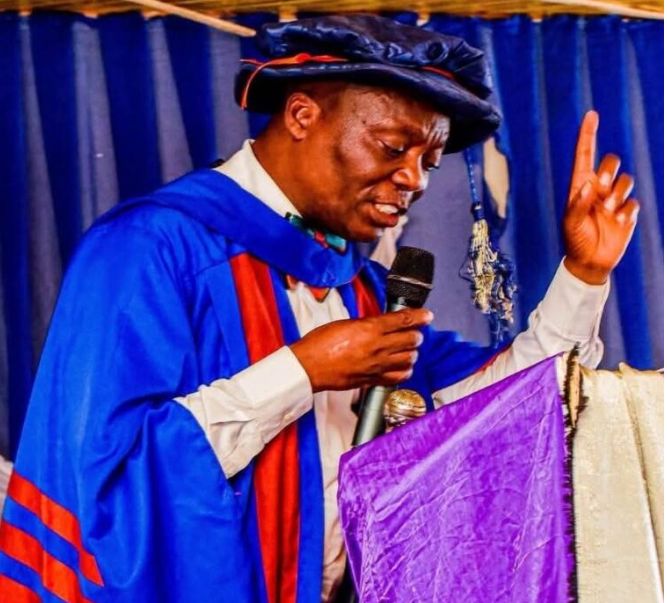

The Director-General of the Ekiti State Bureau of Tourism Development, Wale Ojo-Lanre, has urged newly admitted students of the International Institute of Journalism (IIJ), Ekiti Campus, to embrace development journalism as a way of distinguishing themselves from untrained citizen reporters dominating the digital media space.
Ojo-Lanre gave the charge while delivering a matriculation lecture titled, “Development Journalism: The Responsible Pathway for Rookie Journalists in the Age of Phone Journalism,” during the institution’s matriculation ceremony in Ado-Ekiti.

He noted that journalism is undergoing a major transformation driven by technology and social media, warning that the widespread use of mobile phones for news dissemination has become both an advantage and a threat to credible journalism.
According to him, the rise of citizen journalism has enabled virtually anyone with a smartphone and internet access to publish information, often without adherence to ethics, verification and professionalism.
He cautioned that the trend has fuelled fake news, propaganda, blackmail, rumours and reckless communication, stressing that trained journalists must rise above such practices by upholding the core values of the profession.
“Journalism is not noise, abuse, gossip or reckless publication. It is a disciplined public service built on ethics, verification, fairness, balance and public interest,” he said.
Read Also:
The former Nigerian Tribune journalist described development journalism as a form of reporting focused on social progress, community welfare and institutional accountability.
He explained that development journalism goes beyond reporting events to examining their impact on people and society.
Using practical examples, Ojo-Lanre said a development journalist should not merely report the construction of a road or commissioning of a hospital, but should investigate the real benefits to the people, including accessibility, affordability, maintenance and service delivery.
He also recounted his personal journey into journalism, revealing that despite already holding a degree in History and pursuing a Master’s degree, he enrolled at IIJ in 1997 after discovering that professional journalism required formal training beyond writing skills.
According to him, the experience taught him the difference between being a writer and being a professional journalist.
“A writer may impress, but a journalist must verify. A writer may entertain, but a journalist must inform responsibly,” he said.
He congratulated the matriculating students for choosing professional training, noting that admission into IIJ marked the beginning of their transformation into certified journalists.
Ojo-Lanre further stressed that social media popularity and fluency in English should never be mistaken for professional competence.
“A phone is not a newsroom. A phone is only a tool. It does not teach ethics, balance, verification or media law. That is why professional training is important,” he added.