
I must confess that one of the cities that has not received adequate attention in Nigeria is Ibadan. When I was growing up in Eastern Nigeria in the 1970s, we used call this ancient city IBADANNI, that is the Igbo pronunciation.
I later came to love Ibadan. To start with, we must credit the Great Awo for establishing the first television station in Africa in Ibadan. It was a hallmark achievement, unprecedented in Africa. Again, the first skycreper, the Coconut Building, was also in Ibadan, just as both the first university was not just in the ancient city, it also gave us the first university teaching hospital. And quite astonishingly, Nigeria’s first modern stadium was made possible by Awo in Ibadan. In a rather strange way, it was Igbo wards that made most of these fantastic institutions popular. For instance, Prof K. O. Dike converted what was known as a College University with its certificate coming from London, into an internationally recognized university of universally acclaimed standards. Two, little was known about the stadium until Dick Tiger Ihetu’s world title bout on August 10, 1962 when he defended his belt by not just knocking out Grene Fulmer of America but equally beating him to stupor. As fate would have it, Nigeria’s first head of state, General Aguiyi Ironsi, an Igbo, was brutally assassinated in Ibadan. But that blood sucking episode also produced a Yoruba national hero in the person of Colonel Francis Adekunle Fajuyi who refused to betray Ironsi and he paid the supreme price! The Challenge Bookshop and the National Library in the heart of the city of Ibadan served as the earliest and easily the best contributors to cademic and knowledge development in Nigeria.

Indeed, Ibadan was a city of pace setter. Although Enugu Rangers were Nigeria’s first team to play to the final of any CAF organized competition in 1975, it was Shooting Stars that actually brought the first African club shield to Nigeria after they lifted the CAF Confederation Cup in 1976. Shooting Stars are based in Ibadan.
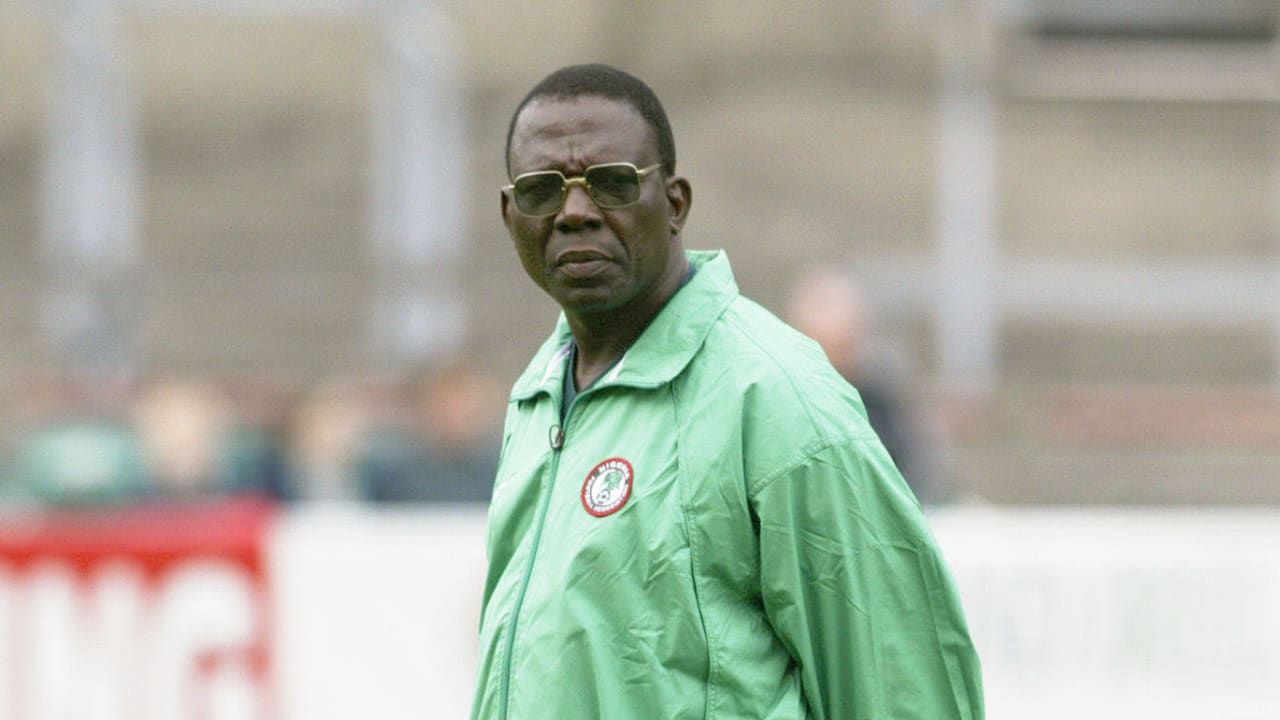
And this brings us to the man who has managed Shooting Stars more than any other coach. He is Adegboye Onigbinde. Onigbinde lives in Ibadan. Because of him, I travelled to Ibadan on several occasions both formally and informally. As a coach, Onigbinde from Osun State has handled Shooting Stars seven times. He led them to the final of the CAF Champions League campaign in 1984 but dramatically lost to Zamalek of Egypt. That was two years after he had, for the first time, taken Nigeria to the final of the Nations Cup in Cote d’Ivoire (in 1984). Until Stephen Keshi’s Nations Cup glory in South Africa in 2013, Onigbinde’s feat was the biggest and most memorable by any indegenious coach.
About 10 years later, Onigbinde produced a soccer magic. A Cameronian team had visited Owerri for a CAF Champions League encounter in 1994. The game was 1 -2 against Heartland. Onigbinde was contracted to rescue the Owerri based team. And he actually wrecked Rasing in Cameroon during the return leg match. It was 2-3 invafour in of Heartland. However, Onigbinde refused going to Tunisia for the ill fated September 28 game where the team had a plane crash on its way back to Nigeria.
You see, Nigeria has refused to accord Ibadan its deserved place. Number one, Ibadan is more than qualified to be a state. It was just a bit above two years ago that an Ibadan boy, Comrade Seyi Makinde, emerged as governor of Oyo State. Take a note of national institutions in Kaduna and compare it with what is obtainable in Ibadan – you will see a starttling difference. Ibadan, just like Enugu, although better than the Coal City, suffers terribly from national neglect. And you know what, Nigeria is usually the worst for it anytime Ibadan is neglected.
Check it out, as nobody cared about the tragedy in Ibadan on July 29, 1966, a confusion was embraced and that led to a contraption and contradictions which ultimately made the civil war possible.
In 1984, Onigbinde, an Ibadan Boy, brought silver home from a Nations Cup outing. Rather than commending him we condemned him. The result was Eagles inability to qualify for the next edition of the Nations Cup in Egypt in 1986. Again, Onigbinde went to the World Cup Finals in 2002 and attempted to rebuild the national team. After the World Cup, he was sacked. The effect was that Nigeria missed the 2006 World Cup in Germany.
As far as Nigeria refuses to pay attention to Ibadan so long as the country will continue to dither. Nigeria’s evil art of jumping protocols had its roots in Ibadan. It was on July 29, 1966 during the ethnic cleansing called counter coup when more than 200 Igbo army officers were slaughtered. Ironsi died and the next in command was Brigadier Babafemi Ogundipe. He attempted taking over command but northerners in the army treathened to deal with him and he fled for dear life. Then Yakubu Gowon who was 10th in ranking, was forcefully installed as head of state and commander in chief. From there all the monsters bedevilling Nigeria got fed and their tentacles have continued to haunt the country. In Ibadan on July 29, 1966, indicipline became the order of the day. Impunity was celebrated. Morality was debased even as right triumphed over wrong and the bleeding never stopped since then.