

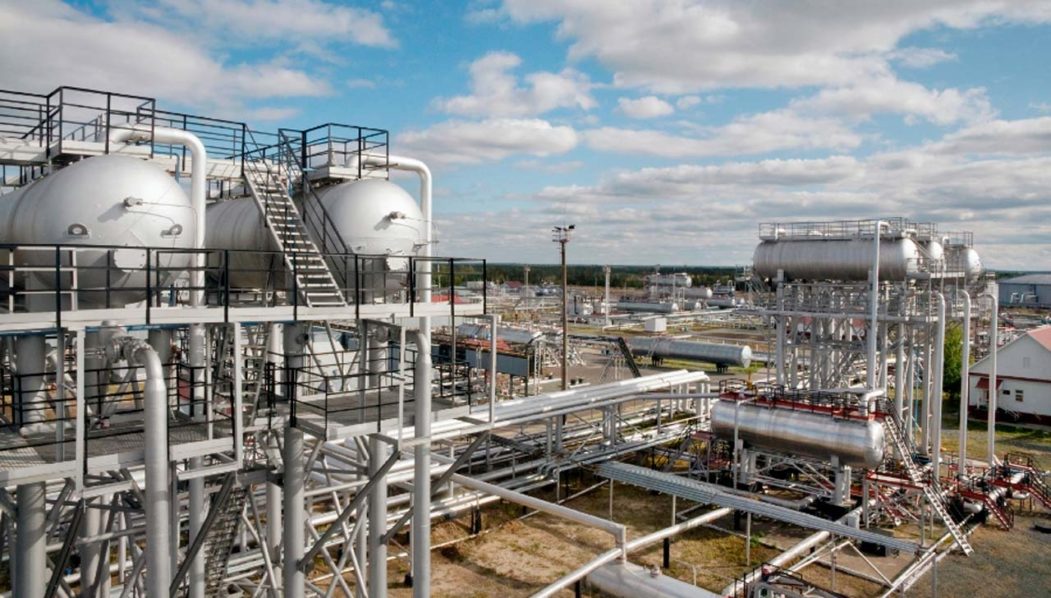
A gas plant PHOTO: MYNAH Technologies

The Chairman Board of Governors, the Petroleum Club, Lagos, Godswill Ihetu, has said the Petroleum Industry Bill (PIB), if passed into law would address inefficiencies, and ensure strong regulations in the Oil and Gas industry.
Speaking at a workshop on PIB organised by Petroleum Club in Lagos recently, he noted that the reform of the petroleum industry, which was supposed to take the sector to greater heights commenced in year 2000.
The objective of the reform was to ensure that the management of Nigeria’s petroleum resources was in line with global best practices.
Ihetu said: “since Year 2000, the process has encountered one obstacle or another.
The continued delay of the passage of the Petroleum Industry Bill (PIB), as the policy reform document came to be known, created a climate of policy uncertainty in the management of the petroleum sector in Nigeria.
This lack of policy clarity led to a reduced level of new investments, which went elsewhere.
Read Also:
“In addition, regulations were weak and outdated, and needed to be strengthened and updated. Hopefully, this new PIB, when it becomes a law, will address these shortcomings.”
He argued that ‘one of the reasons for the delay in passing the Petroleum Industry Bill was the sheer size of the document.
“However, the 8th National Assembly decided to break up the document into four sections, namely: the Petroleum Industry Governance Bill (PIGB), the Petroleum Industry Administration Bill (PIAB), the Petroleum Industry Fiscal Bill), and the Petroleum Host Communities Bill (PHCB).
Last month, the National Assembly finally passed the PIGB, which, I understand, has been transmitted to Mr. President for his assent,” he added.
The professionals at the workshop also insisted that proper accountability must also be in place for PIB to effectively work in the country. They argued that the stakeholders must be accountable to the general public, adding that excessive government control must also be checked.
Specifically, they argued that the Petroleum Equalisation Fund (PEF), is also is not needed, adding that effective implementation of the bill is very important.
Resource persons at the programme included: Prof, Wumi Iledare, Osten Olorunsola, Dr. Adeoye Adefulu, and Adeyemi Akisanya.
Source: G Business