
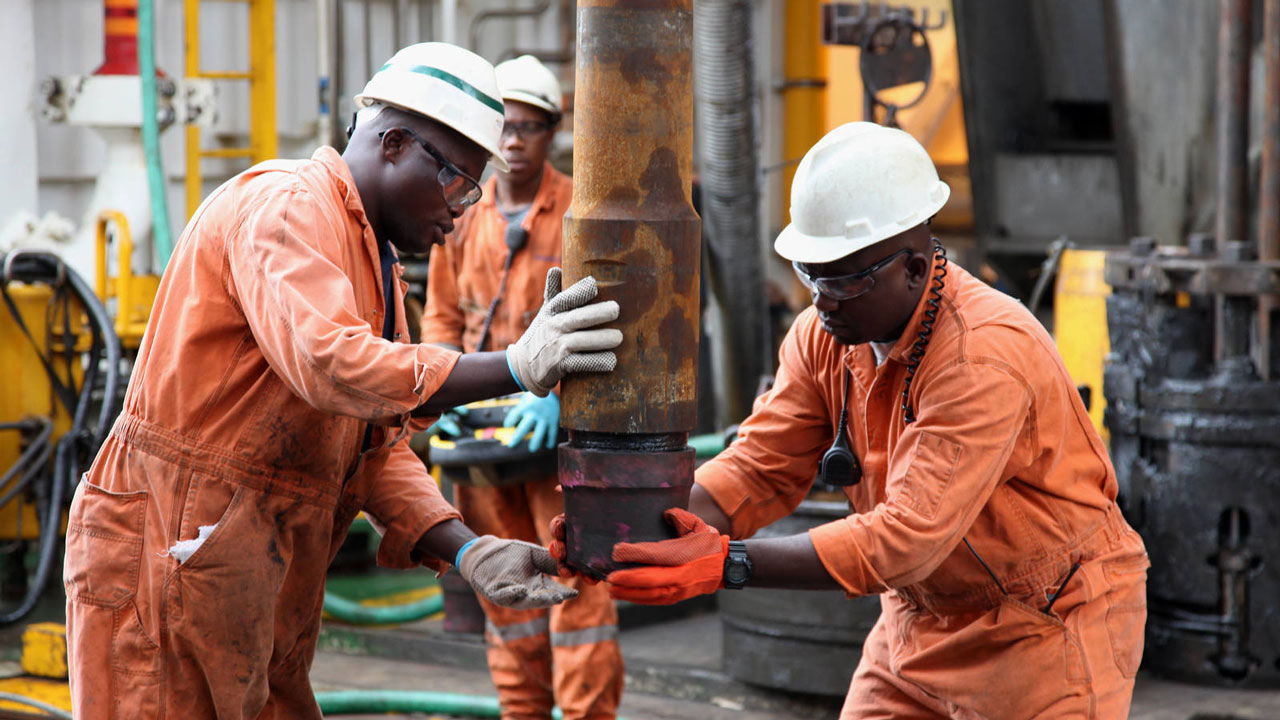


Oil worker

Experts in the financial services industry have reiterated that regulatory and policy choices, as well as the forthcoming general elections, and some global economic developments, particularly crude oil pricing, remain key determinants to Nigeria’s growth expectations in 2019.
The experts, at a Breakfast Panel Session, organised by the Nigeria – British Chamber of Commerce (NBCC), in Lagos, deliberated on Nigeria’s economic outlook, while making projections for the year.
According to them, Nigeria needs good monetary and fiscal policy regulatory environment to achieve a favourable growth, adding that the country is building inherent deficits by pilling up recurrent expenditures rather than making profits for the economy.
The Chief Executive Officer, Rand Marchant Bank Nigeria (RMBN) Stockbrokers Limited, Abiola Adekoya, said to drive the projected economic growth, it is pertinent to have a successful general election.
Read Also:
“The election is very critical to the economic outlook of Nigeria, because it seems that businesses and operations will be muted in the first half of 2019, and we think that most of those businesses are going to be active in the second half of 2019, precisely after the elections.
“Commodity pricing, especially crude oil, would be the most dominating global factor that we need to consider. This is so because the Nigerian economy is very closely correlated to the pricing of crude oil, and I think that it would impact a lot on our projections, like the budgets,” Adekoya said.
In a keynote address, a renowned economist, Doyin Salami, was optimistic that Nigeria’s economy could grow by 2.5 per cent, but only if the country achieves a successful election, while it may fall below 1.5 per cent if the elections generate more heat than the economy can bear.
He also projected a 2.5 per cent rise on inflation at the end of 2019, if the elections are unsuccessful, noting that the nation’s cost recovery on fuel would remain a challenge if production numbers remain the way they are now.
“Nigeria’s global banking is about fractional banking and reserve banking. Banks should be restricted from doing businesses that would raise foreign currencies and by that, they would hold the reserves.
“Everybody has got to understand the value chains of the various sectors in which they all play and appreciate where the opportunities are, and understand the roles technology can play. Many Nigerian businesses are lacking behind when it comes to using the analytical data to drive businesses,” he added.