

Religious relations in Nigeria have remained a sensitive national issue, often drawing international attention amid concerns over sectarian violence and mutual distrust between faith communities.
In recent years, debates around religious freedom intensified after the United States at different times raised concerns about religious violence in Nigeria and considered designating the country as a Country of Particular Concern (CPC). The discussions highlighted allegations of attacks against Christians in parts of the country, prompting responses from religious leaders and policymakers.

While such claims have generated controversy, they have also brought renewed attention to the broader challenge of religious tolerance in Africa’s most populous nation.
A Divided Religious Landscape
Nigeria is home to nearly equal populations of Muslims and Christians, and relations between the two groups have historically oscillated between cooperation and tension.
In many communities, the two faiths coexist peacefully. However, in some areas, political rivalry, ethnic divisions and extremist violence have fueled narratives portraying the two religions as opposing camps.
Religious leaders from both sides have occasionally reinforced these divisions through rhetoric that critics say deepens suspicion between adherents of the two faiths.
Ayodele’s Approach to Interfaith Relations
Against this backdrop, the founder of the INRI Evangelical Spiritual Church, Primate Elijah Ayodele, has emerged as one of the clerics advocating greater interfaith engagement.
Ayodele has for years maintained close relations with Muslim communities and clerics. Observers of his ministry note that Muslims have frequently attended programs at his church, sometimes wearing Islamic attire such as hijabs, without facing discrimination.
The cleric has also participated in Ramadan-related events and lectures where he addressed Muslim audiences on issues of faith and peaceful coexistence.
During Ramadan periods, he is known for sharing food and relief items with Muslim faithful, distributing items such as rice, chickens and financial support to members of nearby communities.
Read Also:
A Different Perspective on Religious Violence
When international debates about alleged “Christian genocide” in Nigeria gained prominence, Ayodele publicly expressed a different view.
According to the cleric, the violence affecting communities in parts of the country is not limited to one religion. He argued that both Christians and Muslims have been victims of attacks and that the issue should therefore be viewed as a broader humanitarian and security challenge.
His comments generated mixed reactions from sections of the Christian community, with some critics accusing him of downplaying the plight of Christian victims. Nevertheless, the cleric continued to emphasize the need for unity between the two religious groups.
A Symbolic Gesture
One of Ayodele’s most talked-about initiatives was his decision to build a mosque—an unusual step for a Christian cleric.
The project drew widespread attention, with supporters describing it as a symbolic gesture aimed at promoting religious harmony, while critics questioned the propriety of the move.
Despite the controversy, the mosque was completed and has reportedly begun operations.
Recognition and Influence
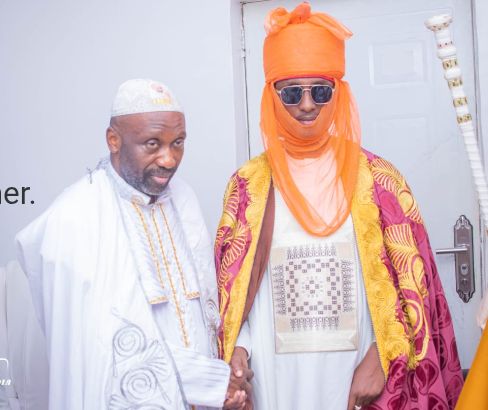
Ayodele’s efforts have also attracted recognition from traditional institutions. Recently, the Arewa Gamji Emirate Royal Council in Kaduna conferred on him the title of Wambai Gamji, citing his advocacy for religious tolerance and peaceful coexistence.
Supporters say the honour reflects a growing appreciation for interfaith dialogue in a country where religion plays a central role in social and political life.
The Larger Conversation
Nigeria’s complex religious landscape means that initiatives aimed at bridging divides often provoke strong reactions.
Yet analysts note that sustained engagement by religious leaders remains crucial in easing tensions.
Whether through dialogue, humanitarian support or symbolic acts of unity, efforts that encourage cooperation between Muslims and Christians continue to shape the conversation about peaceful coexistence in Nigeria.
For Ayodele and others promoting interfaith understanding, the goal remains the same: fostering a society where religious identity does not become a source of division but a platform for mutual respect and harmony.