
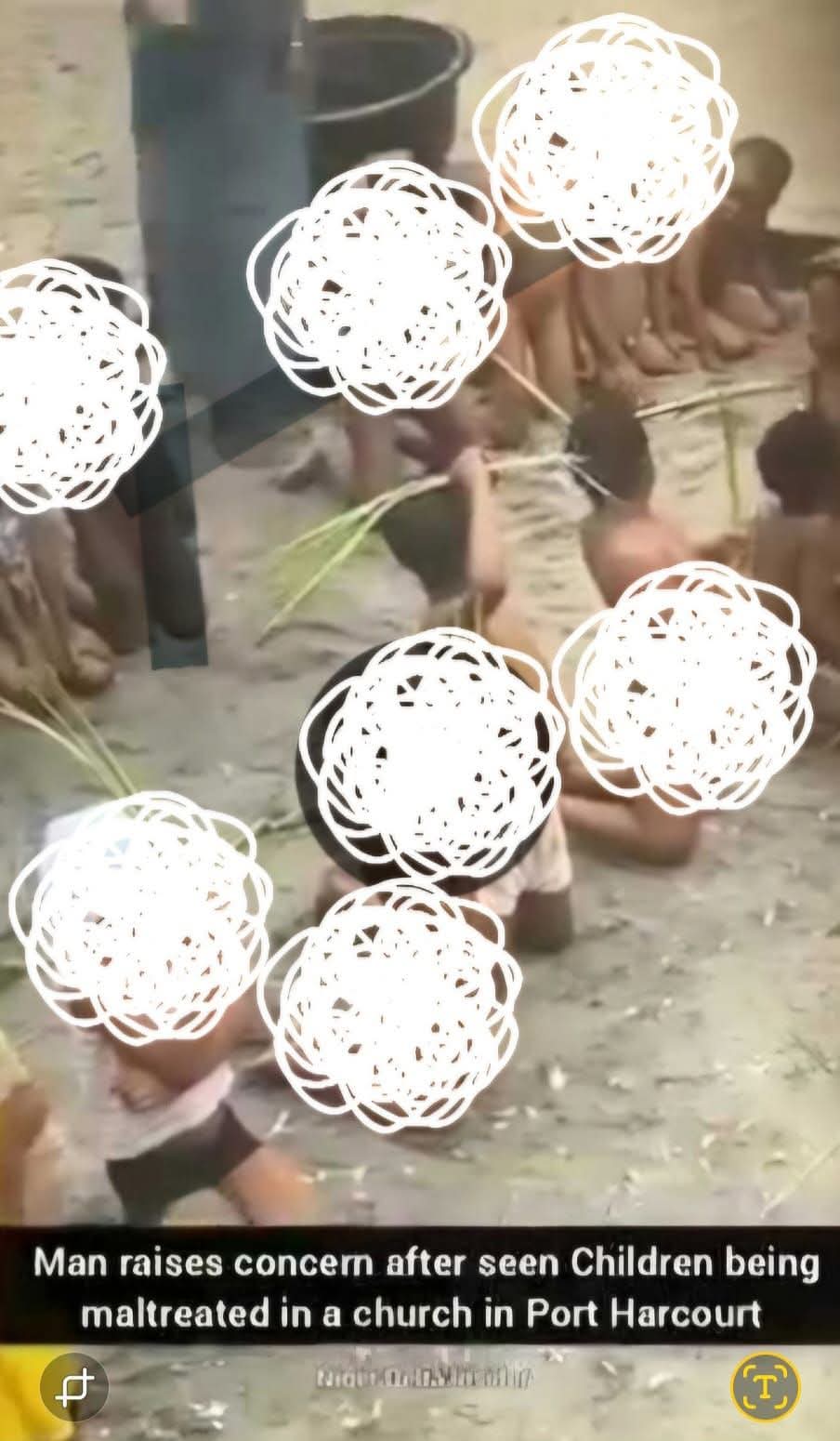

In Nigeria, anyone who encounters the shocking viral images revealing the appalling treatment of vulnerable, innocent, unclothed toddlers—both boys and girls—allegedly from Port Harcourt, and remains unaffected or indifferent to the grim injustices wrought by religion in this nation, Nigeria, has, in effect, become complicit in this horrific violation against children. The Nigerian landscape is marked by three distinct groups of religious adherents:
1. The gullible, brainwashed, and misinformed believers (mostly poor people in squalor; they can die or be suicide bombers for their ministers, marabouts, and clerics).

2. The knowingly ignorant and learned followers. (such as PhDers and rustic professors; their levels of academic attainment are dwarfed by religious stupidity).
3. Those who manipulate both categories for personal advantage (specifically, politicians who use them as disposable tools for personal gains).
These three groups embody some of the most dangerous players within Nigeria’s religious sphere. They’re the evils plaguing and stultifying Nigeria’s growth and development.
It perplexes me how African religious leaders have managed—whether intentionally or through negligence—to wield faith as a tool that stifles critical thinking in our everyday lives. The common understanding is that religion was meant to guide human conduct in harmony with divine principles and godliness.
Read Also:
Yet, from Nigeria in Africa to Rome in Europe and Afghanistan in the Middle East—excluding Asia and the Americas—we witness the perversion of religion to reshape human thought. Faith often instills fear in the vulnerable, amplifying perceived threats and weaknesses while overshadowing the potential strengths and opportunities that belief can offer. Is it any surprise that more individuals are gravitating away from established and traditional faiths toward philosophies like practical stoicism and humanism that care for humanity?
Contemporary Nigerian religions frequently covertly foster hatred, family strife, greed, and a relentless quest for immediate and insatiable satisfaction. Nigeria’s religions often sexualize women and children, preying upon the minds of the impressionable.
It’s disheartening to observe numerous young people enthralled by the sermons of their “Pastors” and “Alfas,” where women are reduced to mere tools or objects to satisfy immoral cravings. I’ve heard a “pastor” crudely proclaim that a wife is simply her husband’s possession, suggesting she should yield to his every whim without question. Many women sit in silence, accepting this demeaning narrative from the pulpit, a perspective I find profoundly derogatory and misogynistic. A wife can honor her husband as the leader of the family without forfeiting her dignity. Likewise, a husband can steer his wife without diminishing her worth. Genuine partnerships thrive on love, support, and relationships based on mutual respect, free from man’s tyranny.
These ministers and spiritual marabouts have disrupted and destroyed the fabric of countless lives, leaving behind relationships and homes in disarray.
In our modern spiritual landscape, we encounter a troubling environment where these religious bandits and unscrupulous individuals exploit unsuspecting devotees from their deceptive platforms. Those religious ghouls, allegedly in Port Harcourt, Nigeria, must be fished out and brought to justice. Unless African nations take concrete steps to regulate religious business practices and protect the vulnerable, society will continue to bear the heavy burden of the remnants of brutal British neocolonialism, and jihad often masquerading as religion across the continent of Africa.
Yahaya Balogun writes from Arizona, United States of America.