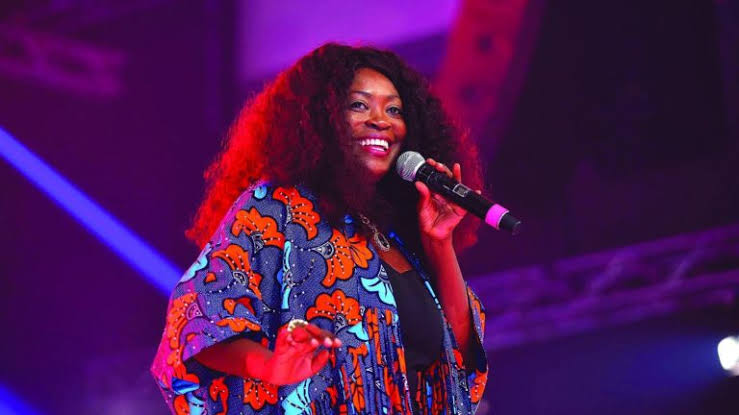

Olayinka Davies born on the 16th of July 1970, a Nigerian vocalist, dancer, lyricist and judge of reality show- Nigerian Idol, had an early romance with arts in her childhood.
Her father is from Benin Republic/Sierra Leone, Lisabi clan who moved to Lagos because he was originally from Nigeria.
Her mother is from Ikorodu, Lagos State and paternal grandmother from the royal family in Shagamu.
These origins affect her musical influences. She remembers that her father had a guitar. She grew up to the sounds of Sam Cooke, Johnny Cash, Elvis and Jimmy Dean, these were the music her father listened to.

As she grew older in the 70s and 80s, the radio at her grandmother’s house was always tuned to Radio Lagos which played a variety of African music from Manu Dibango (Cameroun – Makossa), Mmaman Shatta (traditional Northern Nigerian musician), Dan Maria Jos (Northern Nigeria), Orlando Julius (Southern Nigeria – highlife), Hadjia Funtua (Northern Nigeria), Victor Uwaifo (Southern Nigeria – Joromi), Fela (Southern Nigeria – Afrobeat) to mention few.
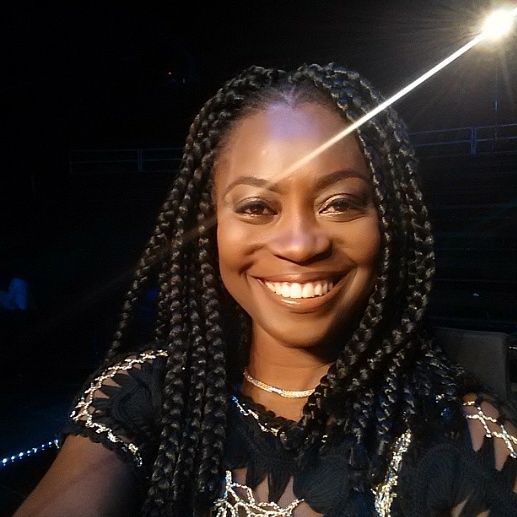
She also remembers watching the late TV personality, Art Alade (father of Dare Art-Alade) who had a popular television program called the Bar Beach Show featuring various musicians as well as his own resident band. It became obvious to Yinka that there was lack of female musicians – in the 80s, she listened to Salawa Abeni (Yoruba) and Dora Ifudu (popular musician in RnB genre) who was one of the female musician that influenced her.
Her first love was actually painting and sculpting; being a musician was not a priority for her initially. Easter Monday 1987 was when she started her journey into the arts. It was the day she visited the National Theater in Lagos to explore the opportunity of becoming a visual artist. She had a meeting with Abiodun Olaku, a renowned Nigerian painter. She got caught up in the ambiance of the National Theater.
She was later commissioned by late Bassey Effiong (Theater director) to paint the stage for the production of ‘Marriage of Anansewa’ by Efua Sutherland. It was during this project that she experienced how her 2 dimensional painting dreams began to evolve with their own movement, and both could take on a life of their own.
During her visits to the National Theater, being of an inquisitive nature, Yinka explored all the other venues in the complex to see what was going on. During her exploration, she stumbled on Elizabeth Hammond (Ghanaian dancer) who held dance classes – she became her inspiration to becoming a dancer. Elizabeth Hammond performed with the late Christie Essien Igbokwe, Silver prize winner at 6th Seoul Songs Festival, South Korea in 1983. As Yinka puts it, that was how she “gatecrashed” the various forms and areas of the arts.
Read Also:
In 1992, the organisers of the Fame music award spotted her as an all-round artist from her work in theatre, video, choreography, background vocals for various Nigerian artist, nominated and gave her their first Upcoming artist award.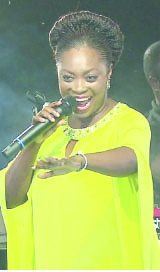
The management of a club in Lagos, Bread and Butter Jazz club involved her in the last presentation as a club in an effort to introduce a new renaissance artist called Lagbaja, she was heavily involved in the production of this artiste’s first album called Side by Side which was released in 1993.
She subsequently concentrated more on music because this demanded more of her time. It was during this period she also collaborated with Nigerian recording artistes such as Mike Okri (RnB), Shina Peters (Afro juju), Blackky (Reggae) and many others not only as a backup vocalist but also a choreographer for their music videos. Another great musician she worked with was the late Geraldo Pino (originally from Sierra Leone) and Etienne T Boy (Cameroonian) who worked with Pino.
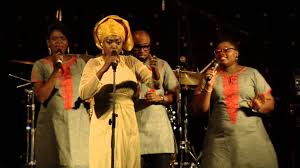
January 21, 1994 was a major turning point as she unfortunately had a collision with a taxi in Lagos when crossing the road. In her words she “crossed the road and hit a car”. This resulted in major surgery which severely affected her ability to dance. Late Hakeem Shitta led others to appeal for the fund to take care of her surgery.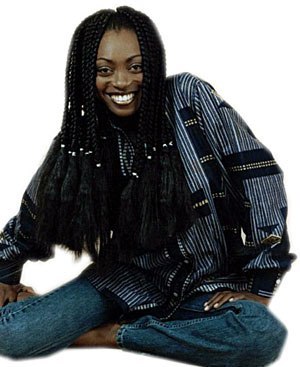
She was in between singing and dancing, doing a lot of background vocals for other musicians. Music to her was static in comparison with painting, sculpture, theatre and dancing where she felt she could fuel her energy to its fullest.
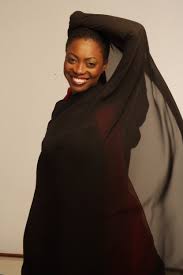
The dearth of female musicians on the Nigerian music scene and Yinka’s dedication to continuing her craft is that a woman must be seen, heard, respected and celebrated in Nigeria.
Yinka wants to be remembered as a Nigerian who is constantly seen, heard and respected. Consistency has been upper most in her cause.
She is determined to be a light, beacon and example to the upcoming Nigerian female artiste and perhaps this is why she did not concentrate on breaking into the international scene until now.
Like a mother hen, she wanted to be an inspiration to her female associates in the music industry and as these upcoming female musicians launch their careers she can now concentrate on her pursuit of breaking into the international scene.
To mention a few of the Nigerian female artistes she regards as associates, even though they are not necessarily her contemporaries in the music industry, there are Asa, Tiwa Savage, Omawunmi, Waje etc.
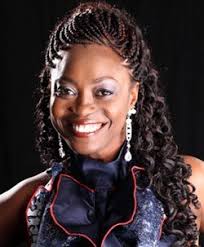
Yinka is a bridge from the old (where there were very few female musical role models) to the new Nigerian music scene where the female is asserting herself and claiming her rightful position.
Her style of music has been classified as “AFROJAZZ”. Some of her songs include; Dem go Hear, Kii S’ebi re, John3:16, Eko ile, En Francais, Emi n’lo, Black Chiffon.