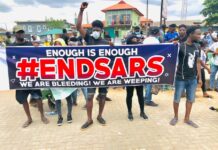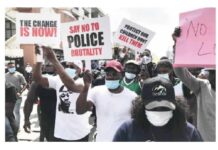
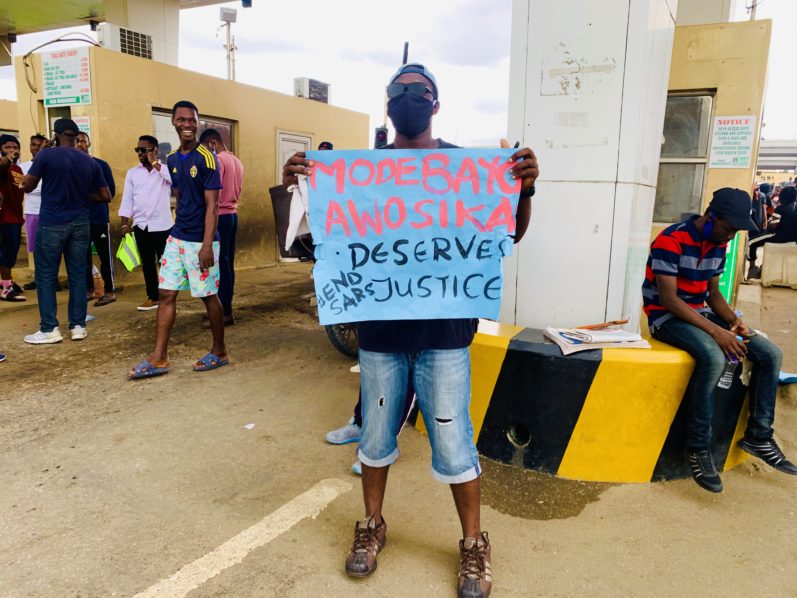

Youth-led demonstrations against police brutality in Africa’s most populous country came to a halt after October 20, 2020, when security forces shot at thousands of peaceful protesters gathered at the Lekki tollgate.
The crackdown was live-streamed on social media and Amnesty International said shortly after it had confirmed that at least 10 people had died.

The Nigerian army denied shooting live rounds, telling a judicial panel that only blank bullets were fired to disperse a crowd that had violated a curfew.
In a new report, Human Rights Watch (HRW) said it had interviewed 54 people, including victims and their family members, protesters, civil society members, doctors and journalists about the events that unfolded.
“Soldiers trapped the protesters, using a tactic known as kettling, then fired in the air and at the crowd,” the rights group said. Kettling is a crowd-control method that prevents people from leaving a certain area.
“After the soldiers left, police officers arrived and, according to multiple witnesses, began shooting at protesters who had not managed to flee,” said HRW.
Read Also:
The rights group was unable to confirm a death toll but witnesses told its researchers that they saw “what appeared to be at least 15 lifeless bodies and that military officers had taken away at least 11.”
Witnesses also reported that “the police shot at least two protesters and took their lifeless bodies away with them.”
HRW said it spoke to a doctor who saw three people who had their limbs amputated after being shot at Lekki.
Police and army did not respond to AFP’s request for comment.
The shooting was widely condemned internationally including by US then-presidential candidate Joe Biden, who urged the government and military “to cease the violent crackdown on protesters.”
A judicial panel was set up last year to investigate the bloodshed and wider allegations of police abuses.
The panel, HRW noted, has no authority to make binding decisions, but can make recommendations to the state government.
“If the recommendations are adopted, they can be enforced as a judgement of the State High Court,” said HRW.
It would then be up to federal authorities to “ensure that those implicated in abuses against protesters, including as a matter of command responsibility, are brought to justice,” HRW said.
THE GUARDIAN