

“My idea of education is not to reform students or amuse them or to make them expert technicians. It is to unsettle their minds, widen their horizons, inflame their intellects, and teach them to think straight, if possible. The object of education is to prepare the young to educate themselves throughout their lives.”
– Robert Maynard Hutchins, American educational philosopher (1899–1977).

Nigeria’s literary legend, Professor Chinua Achebe, was the first writer to use the expression, “This house has fallen” to describe Nigeria’s political situation during the post-independence era of the 60s. In his prescient book, A Man of the People (1966), which was published shortly before the first military coup in 1966, Achebe narrated how corruption, tribalism and nepotism of the first civilian regime brought about “the fall of our Government” and handed the country over to bloodthirsty and power-hungry military boys who ruined the fortunes of this nation. Thus, when Karl Maier, the influential American journalist decided to borrow Achebe’ metaphor as the title of his provocative book, This House Has Fallen: Nigeria in Crisis (2001), he was reaching back to a solid literary tradition that depicted a giant of a country in terrible decline.
Almost 50 years after Achebe, the metaphor of a fallen house continues to haunt us as Nigeria’s political and economic fortunes take a downturn, carrying with it the burden of a collapsed education system. To paraphrase Achebe, “Nigeria is the example of a country whose education system has fallen down; it has collapsed. This house has fallen.” Take a look at the statistics. The UNESCO 2012 Education For All (EFA) Global Monitoring Report notes that Nigeria has about 10.5 million out-of-school children, which is the largest in Africa in absolute terms. Experts say that this has further increased by at least 3 million in the last three years.
Nigeria has one of the poorest budgetary allocations for education in all of Africa. In 2012, our budgetary allocation for education was a paltry 8.7% of the total budget. Compare that with Ghana (31%), South Africa (25.8%), Cote d’Ivoire (30%), Kenya (23%) and Morocco (17.7%), where our Nigerian students now run to for interrupted quality education. In 2013 education got 9.86% of our national budget. In 2014 it was 10.2% and in 2015 it stood at 10.7% – the highest allocation since 1999. However, this is still a far cry from the 26% recommended by UNESCO. Of the budgetary allocation to education, 60% is spent on recurrent expenditure. The situation is more disturbing when we note that not all the funds appropriated for education are eventually released. According to the 2011 report of the National Bureau of Statistics, out of the N271.2 billion appropriated for education in 2010, only N234.8 billion (86.6%) was released.
The report of the Federal Government Needs Assessment of Nigerian Public Universities carried out in 2012 revealed, among other things, that there is acute manpower shortage and infrastructural deficits in our universities. In 2012 the total number of academic staff in 74 Nigerian public universities stood at 37,504. Instead of having 100% of university lecturers with PhDs, only about 16,127 representing 43% had PhDs. Of the 74 universities only seven had up to 60% of their teaching staff with PhDs. There were universities with less than five professors. Kano State University of Science and Technology that was only 11 years old at the time and churning out graduates had only one professor and 25 lecturers with PhDs, while Kebbi State University of Science and Technology established in 2006 had only two professors and five PhDs. In the end the report noted that, “These deficiencies have led to a situation in which many universities had to rely exclusively on part-time and under-qualified academics, with negative implications for quality education in these institutions”
Read Also:
Another major issue is the wide disparity in the lecturer-student ratio in Nigerian universities. In 2013 the lecturer-student ratio in National Open University of Nigeria was 1:363. Lagos State University had 1:144 and the University of Abuja had 1:122. Compare these ratios with Harvard University (1:4), MIT (1:9), Yale (1:4) and Cambridge (1:3) in the same year. It is not for nothing that these universities are among the top five in the 2015 Webometrics ranking of the world’s best 1000 universities. No Nigerian university made it on the list. Even in the 2015 ranking of the top 100 African universities, the first Nigerian university on the list – UNILAG – came 20th, with five South African and four Egyptian universities in the top 10. The six other Nigerian universities on the list are at the rung of the ladder.
Every year, captains of industry and employers of labour continue to wonder what to do with an increasing workforce of graduates who lack the requisite skills to fit into the globalised work environment. These graduates possess impressive diplomas and degrees, but unfortunately lack the capabilities to function. As a result of the collapse of infrastructure in our universities, many students in technical-oriented courses end up acquiring only theoretical knowledge without the practical component. During the years of internship where students are expected to acquire the field knowledge of their course of study, they are motivated by other concerns. Today, Journalism graduates want to work in high-flying banks, while Political science graduates want to work in the big oil companies. For these graduates it is the fat salary that determines where they should work, not their course of study or area of specialization. They are not bothered about job satisfaction. This is why as a society we have ended up with many square pegs in round holes.
Chinua Achebe lamented this in his 1983 monograph, The Trouble with Nigeria where he said that, “Nigeria is a country where it would be difficult to point to one important job that is held by the most competent person we have.” In the new world where merit and competence are the cherished values that drive job recruitment, Nigeria remains bogged down by mediocrity and nepotism. Whether it is in getting contracts, becoming a minister, having a political appointment, securing a decent job or having the law enforced in a legitimate case, what matters is not what you know but who you know. That is why Nigeria is one of the few countries in the world where excellence and hard work have no positive correlation with success.
If we blame the students we must also blame their teachers, many of who have failed to show good example. The unbridled quest for monetary reward has robbed many of our teachers of the commitment that should mark the teaching profession. Up till today, the sex-for-marks disaster continues unabated in our Ivory Towers. Education, which should instil learning and good character, ends up extinguishing virtue in our children. It is still in Nigeria that university lecturers play deadly politics to become vice-chancellors, just to corruptly enrich themselves. Let us not talk about the persistence of industrial strike action and how it has destroyed both the curriculum and academic calendar of our universities. Today, some lecturers hold as much as three teaching positions in different universities at the same time. How is it possible for anyone in this kind of situation to give his best?
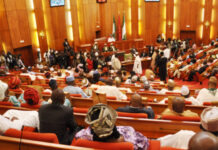
Let us go to the larger society. In a globalised world where many nations are building on the skills and capabilities of their workforce and empowering their educational institutions to deliver cutting-edge research results in order to extend the frontiers of human knowledge and social progress, our country is still lagging backward. Imagine that in 21st century Nigeria the qualification for becoming a senator or a minister is a Senior School Certificate. The result is a country where ‘ignorant’ people make laws and formulate policies for everyone. This twisted value and reward system is also why those who enter politics and make quick money are more respected than university teacher who have laboured for decades impacting the lives of their students.
When I reflect on these issues, I weep for Nigeria. In the 60s, our first generation university graduates favourably competed with their counterparts elsewhere in the world. Our universities produced scholars who later became world-class academics in various disciplines, but not anyone. This house has fallen. I am only 30 years of age, and in my relatively short span of life, I have seen such a dramatic decline in the standard of education. If the indices are alarming now the consequences will be disastrous in the future. We can only ignore the unfolding drama at our own peril.
* Ojeifo is a Catholic priest of the Archdiocese of Abuja ([email protected])