
CHIBUZO UKAIBE, writes on the underlining schemings ahead of the supplementary polls in some states.
The evolving power play in the governorship elections in Kano, Rivers, Benue, Sokoto, Bauchi States crystalises the thrilling political battle between forces of the old and new order.

The heavy plots and sub plots is a tale of sets of former long-time allies turned foes having a go at each other in a no-holds bared political slugfest.
The intricate and ever winding suspense, also reveals the anticipated struggle between the two major parties, the ruling All Progressives Congress (APC) and the opposition, Peoples Democratic Party (PDP) for retention or consolidation of strongholds ahead of the 2023 general elections.
Analysts believe that for the opposition party to remain afloat and withstand the possible battering that may come from the ruling party, it is essential that they, having seemingly lost the presidency, to gain as much strategic states as possible.
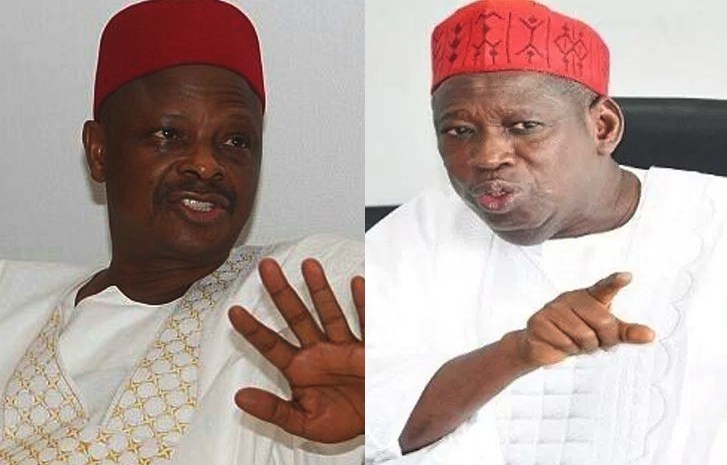
In Kano State, the incumbent governor, former governor, and candidate of the All Progressives Party (APC), Dr Abdullahi Umar Ganduje, is having a tough battle with his former boss, Sen Musa Kwankwaso of the Kwankwasiyya fame.
Their friction started barely months after the 2015 governorship election in the state. Kwankwaso had supported Ganduje, who served as his deputy for two terms to emerge governor. The feat was widely celebrated at the time because he was one of the few governors who decided to support his deputy to succeed him.
But the euphoria of that moment was short lived as they were to become fierce opponents, much like most political arrangements.
While Ganduje accused Kwankwaso of being overbearing, the latter accused the other of not being loyal to the political family through which the latter emerged. The face off degenerated to supporters of both camps having frictions, a situation which led to Kwankwaso’s exile from the state.
Series of attempts by the APC and Presidency to settle the matter met a brick wall. Kwankwaso defected to the PDP and swore to remove Ganduje. With his emergence as leader of the PDP in Kano State, Kwankwaso ensured his son-in-law, Abba Kabir Yusuf, emerged the party candidate.
As the results from the governorship election trickled in, it became obvious that Ganduje was struggling up till when the poll was declared inconclusive by INEC. Ganduje had polled 987,819, whereas, Yusuf had polled 1, 014, 474 leaving a difference of 26, 655 votes.
However, the total number of votes cancelled in 22 local governments areas including Gama ward in Nassarawa local government area is 141, 694 votes.
Interestingly, barely two weeks earlier, the President Muhammadu Buhari as the APC candidate, had floored his PDP challenger, former Vice President Atiku Abubakar in the state, a situation which gave fillip to the claims that the travails of the state governor might not be about party but more about a perception challenge regarding him.
The unfolding scenario has since sparked a lot of controversies and suspicions, attracting the intervention of Emir of Kano, Muhammadu Sanusi II, who called for peace and calm.
As it stands, the PDP is elated at having a foothold in such strategic state in the North. Kano is renowned as the commercial capital of the region, hence a major victory for the former ruling party.
For the APC it would be a major loss, especially after concerns had trailed the party’s mishandling of the Ganduje/Kwankwaso tussle on the one hand, properly address the allegations surrounding the incumbent governor.
While the scenario in Kano is different from that of Rivers State, the undermining theme is the tussle between two former political allies.
In Rivers, the election was suspended by INEC while election process was at the collation stages because of wide spread violence. However the two main characters in the tussle are the incumbent governor, Nyesom Wike and his estranged predecessor, minister of Transportation, Rotimi Amaechi.
They had both served in the administration of Dr Peter Odili and when Amaechi emerged governor, Wike had served as his chief of staff and subsequently as minister of state for Education. It was gathered that Amaechi and Wike enjoyed such political alliance.
The strain in their relationship however became manifest during the administration of Goodluck Jonathan, especially after Amaechi defected to the APC.
Wike, as minister and governorship hopeful who enjoyed the backing of Jonathan’s wife, Dame Patience, became the main opposition to Amaechi and his bid to produce his successor. Wike did, defeating Hon Dakuku Peterside in 2015.
From then on, the tussle between Wike and Amaechi got intense, creating an atmosphere of violence and killings in the state which came to a head during the last governorship election.
This is in spite of the fact that APC, due to intractable internal conflict, was barred by a court judgement from fielding candidates for elections in Rivers State. The state had witnessed a deployment of military in light of the volatility of the state, a situation which culminated in complaints and allegations that soldiers were acting the script of a party which the military high command has since denied.
Unlike Kano, the election in Rivers was declared suspended while the collation of results was being finalised. While the PDP claims it is already in the lead, the AAC which was adopted by Amaechi is also claiming victory.
Rivers has always been a PDP strong hold. And like Kano, it is the commercial nerves centre of the South south, which makes it as much a strategic state to have as a party ahead of 2023.
Sokoto State is also the centre of a battle between two former political allies. The tussle is between the incumbent governor, Hon Aminu Tambuwal and his predecessor Sen Aliyu Wamakko. Wamakko had after serving two terms ensured that Tambuwal, who was then the Speaker of the House of Representatives, emerged governor in 2015 under the platform of the APC.
But as the battle for 2019 approached, they grew apart politically. Driven by ambition to contest for the presidency, Tambuwal defected to the PDP but he lost the ticket to former Vice President, Atiku Abubakar. He immediately beat a retreat and secured the party’s governorship ticket for his reelection bid. He however enjoyed the support of former governor, Attahiru Bafarawa and deputy governor Muktar Shagari.
Read Also:
At this time, Wamakko as the leader of the APC in the state had adopted Alhaji Ahmad Aliyu and worked for his emergence as the candidate of the party for the governorship poll.
Rallies of PDP and APC as spear-headed by Tambuwal and Wamakko were massive such that it expectedly became difficult to predict which way the elections will go. This is more so that Sokoto, like Kano has been governed at different times by different parties since 1999.
So, when INEC declared the March 9 governorship election in the state inconclusive, it was almost anticipated. The State Returning Officer said the decision was because the 75, 403 cancelled votes in 136 polling units was higher than the 3, 413 margin difference between Tambuwal’s score and that of the APC candidate.
Prof. Fatima Muktar, Vice-Chancellor, Federal University Dutse (FUD), Jigawa, had declared that Tambuwal polled 489, 558 votes, while his closest rival, Alhaji Ahmad Aliyu of the APC scored 486, 145 votes. Pundits believe that the supplementary poll will be perhaps the ultimate battle between not just the Tambuwal and Wamakko, but a signpost of which party will retain the state ahead of 2023. While Sokoto is not known for it’s high revenue it is the seat of the Caliphate.
The battle in Benue is epic. While it is not so much in the mould of those of Kano, Rivers and Sokoto, the underlying theme in Benue is a long standing power play among influnencial politicians seeking to assert their dominance.
The tussle in this dispensation is between incumbent governor Samuel Ortom of PDP and the APC candidate Emmanuel Jime. However Ortom enjoys the backing of former Senate President, Sen David Mark, former governor, Gabriel Suswam, founding PDP member, Iyorchia Ayu. Jime is supported, quite formidably too, by the former governor of the state, Sen George Akume.
Benue, since 1999, had been governed by the PDP until 2015. An alliance between Akume and Ortom and a rejection of PDP because of combination of factors including none payment of salaries, saw APC emerge ruling party in the agrarian state.
Ortom, a former minister and national PDP treasurer, had defected to APC in 2014 and picked the ticket after then governor, Suswam denied him the PDP ticket. Interestingly, Jime had been primed for the ticket at that time. But his decision to forego the ticket then was compensated with the position of managing director of Nigeria Export Processing Zone Authority (NEPZA).
The relationship between Ortom and Akume went sore mid-way into the administration. They traded blames over the none payment of salaries and the security challenges and killings that ravaged the state.
Ortom returned to the PDP, teaming up with Mark and Suswam ahead of the polls. Akume and Jime continued from where they left off in 2014, as he emerged the APC candidate. All was set for a major electoral showdown. It proved to be the most contentious governorship poll yet in the state as INEC declared it inconclusive.
INEC said its decision was based on statistics it gave that 121,011 electorates were either not able to vote or election did not hold in their areas.
Making the declaration, the state returning officer, Sebastian Maimako, however, announced that Samuel Ortom of the PDP scored the highest number of votes of 410,576.
He was closely followed by Emmanuel Jime of the APC who polled a total number of 329,022 votes.
While the PDP believes the state is it’s natural base, the APC holds that it’s ability to win the state in 2015 can be replicated in 2019.
Benue, just like Kwara, is reputed to be pulse of the North central with regards to presidential election, because since 1999 which ever party wins the state has emerged ruling party at the centre.
While some described this scenario as mere coincidence, a reality in the battle for Benue is that whichever party clenches it would have a good head start ahead of 2023.
The unfolding events in Bauchi State also presents a spectacle of how political interests that aligned in 2015 came unhinged. In the build up to 2015, the incumbent governor, Mohammed Abubakar enjoyed the backing of Speaker of the House of Representatives, Hon Yakubu Dogara, to emerge winner under the platform of the APC.
The governor who rode on the popularity of President Buhari, shortly afterwards fell out with virtually all the federal lawmakers from the state led by Dogara.
However the tussle led defections by the law makers to the PDP, which until 2015 was the ruling party in the state. This defection saw the alignment between Dogara and the former minister of Federal Capital Territory (FCT), Sen Bala Mohammed who eventually became the candidate of the PDP.
The governorship election was however declared inconclusive.
The Returning Officer for the state , Prof Mohammed Kyari, said that the total registered voters were 2 , 323 , 603 , while the accredited voters stood at 1, 056 , 729.
According to him, the candidate of the PDP’s Mohammed got 469, 512 votes to defeat his closest rival, APC’s Abubakar, who came very close with 465, 453 votes.
He added that the total valid votes are 1,026,901, rejected votes are 21, 419 while the total votes cast are 1,048,220. Kyari of the Federal University of Technology, Yola , Adamawa State gave three reasons for his action.
He said : “First, that the margin of lead between the PDP and APC Candidates is 4, 059 votes . Secondly , the number of cancelled votes even without that of Tafawa Balewa Local Government Area which he had earlier cancelled was 45, 312.
“ Thirdly, the total number of registered voters in the affected areas are 139 , 240.”
The Returning Officer further said that: “Therefore , based on Section 26 Part 53 of the Electoral Act, I hereby declare this result inconclusive.”
He, therefore, directed INEC in the state to immediately conduct a re-run in the affected areas within 21 days.
The results of 19 out of 20 LGAs were so far announced by the various Collation Officers.
Bauchi like Kano has been governed by different parties since 1999, indicating that it’s political culture is highly unpredictable. Yet, it remains a strategic state for any party in the North east because of the massive votes it can attract ahead of 2023.
All eyes are primed on the states as they head into the supplementary elections. The expectation is that the polls will be free and fair.
Still, while the parties and political actors battle for the retention of these states, it is to be expected that when such interests re-align ahead of 2023, the friends will again become foes.