

AFTER his release from prison in 1990, Nelson Mandela was confronted by some African National Congress (ANC) leaders, including his feisty wife, Winnie, to permit vengeance against apartheid leaders who tormented, humiliated and murdered blacks. The leaders told him that the people had become restive and were poised for vengeance, and they were afraid they could no longer restrain them. Go and restrain them, Mr Mandela said testily, “That is why you are their leaders.” The leaders were afraid they could lose their credibility with the angry followers, and worse, that Madiba himself could end up losing his leadership. It was a risky decision, but Mr Mandela was convinced, partly based on his lifelong philosophy, that vengeance was not an option. Last Sunday’s Southwest All Progressives Congress (APC) leaders meeting in Lagos and their rejection of the region’s budding secessionist temper, sometimes carefully and elegantly couched in self-determination/sovereignty terms, reminds observers of how Mr Mandela doused the tension in South Africa after his release.
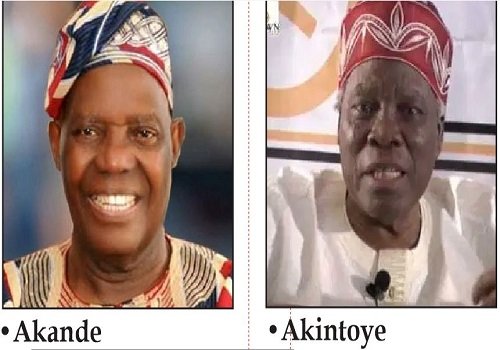
The Southwest leaders – for that is what they really are despite being largely APC – led by Bisi Akande, Bola Tinubu and Gen Alani Akinrinade, among others, displayed uncommon courage to swim against the tide in Yorubaland. Despite the careful rhetoric of Professor Banji Akintoye, historian and leader of a major Yoruba group, Ilana Omo Yoruba, and the rather impulsive actions and exertions of Sunday Igboho, not to say the cagey manoeuvres of Odua Peoples Congress (OPC) leader Gani Adams, the refrain in Yorubaland consequent upon the atrocities of Fulani herdsmen was for separation. The country had become a retrogressive force for the Yoruba, and the common man on the street was too angry to care about any patriotic feeling for Nigeria. To, therefore, go against the grain was a delicate and risky decision by the Southwest APC leaders.

There is no question that the leaders’ decision not to back secession is right. They may not be as representative as their party and status imply; and they may even be presumptuous to posture as speaking for the entire Yoruba, but few can deny that they are actually the most regarded and representative of the Yoruba and Southwest leaders. Prof Akintoye himself alluded to the fact of their unassailable leadership when he wrote a preemptive letter urging them to exemplify the Yoruba cause and project it in such a way that they would not lose their legitimacy. Said he a day or two before last Sunday’s meeting of the APC leaders: “Of the six states of the Yoruba southwest your party controls five of the state Governorships and State Assemblies. In this party also are most Yoruba high officials in the Nigerian federal government. Therefore the APC is the party that is in charge of the Yoruba wellbeing and future today. In the interest of our Yoruba nation and your own political future you cannot and must not continue to keep quiet while the Yoruba nation is seriously endangered by Fulani marauders, militia and terrorists that have invaded the Yoruba homeland for over five years raping, maiming, killing, kidnapping, destroying their farms and other means of livelihood and generally brutalizing your people.”
Read Also:
The APC leaders themselves have no illusion whom they represent or speak for. They know that while Prof Akintoye is a respected moral force in Yorubaland, he does not have the political savvy to galvanise the Yoruba for the cause he espouses so flamboyantly. They also know that both Messrs Igboho and Adams, regardless of their popularity, do not have the moral, intellectual and political force to organize the rebellion they romanticise. More importantly, the APC leaders have obviously sampled the opinion of traditional chiefs whom Mr Igboho, more than anybody else, deprecates, and were certain that they were undecided about secession. Finally, though they seemed to restrict their identity to the APC, but in fact speak for the whole Southwest, their intuition tells them that the failings, atrocities, parochialism and prejudices of the Buhari government do not reflect or wholly represent the convictions and perspectives of the core North whom President so unreflectingly favours. In addition, the APC leaders know that the little time left for the Buhari presidency is not beyond toleration to the extent of risking rebellion. They do not diminish the grievances of the Southwest – indeed no right-thinking person does – but they are acutely aware of the danger of sleepwalking into rebellion or secession.
When the altruistic Prof Akintoye and the voluble Mr Igboho began their crusades, the Southwest gave them favourable hearing because of the rightness and resonation of their cause. But as time wore on and Mr Igboho began his tirades against traditional institutions and religious icons, many south-westerners began to exchange wary glances and cringe. If anyone claimed to be fighting the Yoruba cause, they reasoned, surely he would be fully aware of the democratic principles and the lofty libertarian ideals that inspire and anchor their civilization and canonised their culture. It was, therefore, antithetical for a self-acclaimed freedom fighter to insist that any opposition to his ideas or ways of doing things was treason to the Yoruba cause. Yes, the Southwest has a good cause to resent the nihilism of herdsmen and other freelance criminals running rampant in their region, and they may not be too immodest to suggest that they would fair far better on their own than under the constricting and negating environment of Nigeria. But they also resent any freedom fighter who attempts to impose a fascist diktat on them. They flourish in opposition, and recognise its value; they would not be stampeded into goose-stepping behind megalomaniacs.
The declaration by the Southwest APC leaders has obviously put a dampener on any secessionist bid. It is this declaration that the rest of the country will hold as legitimate. Many freedom fighters, some of them promoting cultural atavism, will still continue to roam the Southwest, especially as herdsmen persist in their folly in league with a conniving federal government. But beyond their garish postulations of utopia, they will be unable to do more than rouse the poor and angry into frenzy. Of course this can still be dangerous, for as Prof Akintoye disguisedly warned, the APC leaders must be careful not to operate too far away from their followers. The leaders, in short, must seek ways of restraining a lethargic federal government that seems to have lost both focus and moral compass, a government unbelievably ignorant of the consequences of their acts of omission, a government many now believe is acting deliberately hegemonic when it once again spurned the opportunity to appoint, say, a Southeast general as Chief of Army Staff as successor to the late Gen Ibrahim Attahiru. The Southwest APC leaders will have to find ways of convincing the region that what is happening in Abuja is an aberration, not a deliberate ethnic and religious plan to subjugate the rest of the country. The leaders must also heed the advice of former United States Secretary of State Henry Kissinger who warned of the consequences of leaders losing touch with their base.
Neither the APC leaders nor the region’s freedom fighters can downplay the factors that have led to this mass alienation and rebellion. But, unfortunately, there is little anyone can do to educate a federal government that is determined to stick to its obnoxious politics. All anyone can do now is to see how best to arrest the damage and hope that the frustrations peaking in various parts of Nigeria would not soon trigger a major conflagration. No one trusts the federal government anymore; Southwest APC leaders must, therefore, calibrate the amount of trust, which their people still have in them, available to invest in the bad project in Abuja, a project that has caused so much distress for everyone who contributed immensely to engendering the change of 2015.