
Time to settle one of the most contentious issues out there. Space/time continuum? Nah. 2pac-Biggie? Nope. Ghana Jollof vs Naija one? Mba, Chale , not even close. By the way , there’s no such thing as Ghana Jollof but i digress.
The burning question is what is the greatest Juju album ever? Yup, that burning question. Fear not, Uncle Shola’s here . We’ll break this down nicely and methodically.
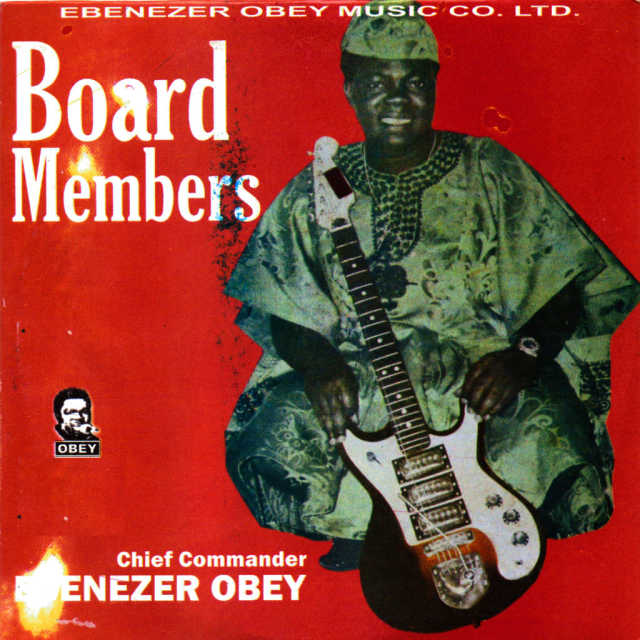
Oya let’s go. That title belongs to Obey’s 1972 Decca Records release WAP 38. Affectionately known as ‘Board Members’. Now, now, before you issue some sort of fatwa, or head to the Babalawo’s, or have the Osemawe have me publicly whipped, hear me out. Why would i risk excommunication, banishment, invites to the yearly Ogun festival and the flirty glances of them fine ondo gehs? And you know that Ondo gehs are fine like dat. There have been tons of incredible Juju musicians and albums out there.
In fact, I think the greatest /most popular Juju musician is always going to be KSA. Ondo’s favorite son. Without a doubt though, ‘Board Members’ is that album. Ebenezer Obey had been somewhat of a prodigy. Playing a multitude of instruments in bands including that of Fatai Rolling Dollar.

It surely must have been some lean times when he set out to form and lead his own band. Culturally, musicians were seen as little more than a step above beggars. Praise singers who needed patronage and the largesse of the wealthy in order to survive.
What artist doesn’t? From Michelangelo to Basquiat, artists have always needed patronage. Obey toiled on though. Putting together an ace band of musicians including Monday O John and Mutiu Kekere (prodigies in their own right) who formed the core of the international Brothers Band. The international Brothers were the first iteration of Obey’s life long ability to put together incredible musicians as his band members. The International Brothers morphed into The Inter-Reformers but the band’s sound was solidified at this point that there was little drop off. Except in the vocals division where the death of Oke Aminu in robbed Obey of his go-to sideman.
Juju music is a strictly Yoruba musical style. Rooted in Yoruba mysticism, proverbs, slangs and idioms. It’s quite difficult for anyone not well versed in the language to get the full scope of the genre. There’s that one Oyinbo guy, Olomitutu Christopher Waterman who wrote the definitive treatise on Juju music. I’ll do a blurb about him someday. So why, why would the scion of an Ondo woman give the nod to an Egba man and not an Ondo man? Well, simply put “Gaskiya ni ki a ma wi”.
On to the album. The album opens with a stinging guitar rendition of ” Edumare S’oro Mi da’Yo, Mo Wa S’ope” (The lord has made me happy, I’m very grateful). Never mind that Odolaye Aremu, that Fiditi boy and his pata olokun cohorts were singing it as “Edumare t’eba, mo s’ebe, a wa jo je”.
Obey is well known as a deeply religious man, so it’s no surprise that he starts off the album with praises to God. He very rarely strays from the sacred. He then rolls over into the theme of the album which is a series of shouts out. Like any good artist confident of his skills, he shouts out himself first. Over the guitar strains of the nursery rhyme Baa Baa Black Sheep, he bigs up himself as “Obey, Obey , commander baba”. Essentially, I’m Ebenezer Obey, the commander, I’m the man. He does it so subtly and without any pretense that it does not come off as boastful. It comes off as just pure fact, and boy it sure was.”Bi eniyan ko ba yin mi, ma si yin ara mi”. He then steps up and gives his band members some massive big ups. Starting with the band ‘Captain’ Samson Ogunlade, then he shouts out Vasco da Gama (not that Vasco da Gama) not the explorer, not the Bolojo artist either. Then he gives love to Israel Adio, Ayodele ‘The Director’, Oke Aminu, his ace vocalist and preeminent sideman. He then shouts out Mutiu Kekere his formidable talking drummer. Mutiu Kekere had been lauded a few months before for braving a fire and trying to save the band’s instruments from a storage room while the band was on tour.. Next, Gabriel Adedeji bassist and agogo player gets some shine. Next up, Giwa Ojo “Arigidi” gets his flowers, then Matthew Baba L’egba. Akanbi Oloye then gets some love, and fittingly, Monday Obafemi John his prodigious guitar player rounds out the band’s shout out section.
The album then kicks into a section waxed for the socialite/world traveler/ bon-vivant Moshood Olabisi Ajala and his …ahem… “wife” Alhaja Shade. Ajala was a Nigerian bloke who trotted all over the globe on a scooter starting around 1957. There were many twists and turns to his story, but there’s no doubt that he lived a pretty interesting life. marrying, divorcing, shacking up and all sorts. He was an extra in the Hollywood film ‘White Witch Doctor’ with Robert Mitchum. He apparently got the role because he’d befriended a certain Ronald Reagan who helped him get the role. How much of Ajala’s stories are actually true or not doesn’t even matter anymore. His popularity and legacy were assured in Nigeria. Commander slyly goes into a double entendree with the line “Alhaja to se Obokun fun Alajala”. I have a feeling that the “Obokun” Obey was singing about was not soup, but more of the certain delicacies slightly south of the navel. If you know, you know.The incredible lead fret works of Monday John on the track is notable for using a Yoruba folk song “Oluronbi” on it. Yoruba songs borrow liberally from parables and folk tales quite a bit. So this wasn’t really a radical departure.
Read Also:
The album then effortlessly segues into the shout out section for Bode Osinusi and Laide Oropo. It opens with another well known Nigerian popular ditty. ‘I Remember When I Was A Soldier’ layered over Vasco DaGama’s samba beat and Gabriel Adedeji’s fine walking bass lines. Obey launches into some fine praises for Bode Osinusi and also for Olaide Oropo. He heaps plenty of praises on Oropo’s Ijebu heritage. “Oropo o. Omo alagemo meridinlogun, Ita Ntebo ni Ijebu Ode. Ijebu ode o ajagbalura. Omo afi’di p’ote mo’le.” That oughta make any Ijebu man’s head swell with pride.
Are we there yet? Nah homies, plenty more to come . Uncle Shola’s fittin’ to dissertate on this joint. So stay strapped in your seats, we taking off. On to side 2. Side 2 opens with a fitting salute to the Board Members which earned the album it’s title. Over the appropriate strains of the old Nigerian national anthem, ‘Nigeria We Hail Thee’, and a borrowed passage from the Cuban classic ‘El Manicero’ the band launches into some massive shouts out for some Lagos socialites. These were the movers and shakers of a prosperous, forward looking, hip, young and rich city. Obey praises Yinka Rhodes “Barrister lawyer”, Sanyaolu, Agoro, A person named Adeyera ‘currency controller’ and Sikiru Shitta Bey. If you’re of a certain age, the name Shitta-Bey should mean something to you. That name is yuuuge in Lagos. If you know, you know.
I’m just a simple village boy, so you Lagos fancy people, feel free to chime in. Give us more info on who these folks were. So, one thing about Yoruba people, we love to party. We love to dance and have fun. In fact, there’s a whole culture around Yoruba merry making. It’s simply called “Faaji’ which means enjoyment with ease. It’s the guiding principle of the unique social activity known as ‘Owambe’. Again, if you know, you know. It’s a cultural institution worthy of dissertations beyond what a simple boy like me can offer. Let me cue Kofessor Ola Adeoye and Doki Femi Adebajo. The fountainheads of Owambeism.
The genesis of the word has to do with the beads that ladies used to wear around their waists back in the day. Chai! That joint need to come back with a quickness. Any musician worth his/her salt knowshon that you have to have a section of your songs dedicated to “The Breakdown”. What is The Breakdown you ask? It’s that section in any Yoruba song where the vocals take a back seat and the instrumentalists take center stage . It’s the point in any song where you are allowed to lose complete self control, trash around madly or if you know what’s up, you just ” ko m’ole”. It’s also the point where you roll up to the stage and start making it rain on the musicians. Whether you’re being praised, serenaded or not, this is your time to get down. Ehm, you Yoruba people are something else sha.
The first real breakdown on this album was a tease. Commander and the band lay down a little bit of it, just enough to keep everyone focused. Then the second breakdown kicks in over the strains of a Christian hymn that finds Commander returning to his scared roots. ‘Nipa Ife Olugbala Ki Y’o Si Nkan’. He reintepretes it as “Oruko Wo Lo Dun To Yi, Sanyaolu”, the the band launches into one of the most delicious breakdowns in Juju music. “Omo ya o ye o, omo ya o ye. O ba tete p’ami o gbe mi pon l’ekan. Omo ya o ‘ye”. There’s never been a better ‘ Ebere m’ole ke mu number breakdown in music. Walahi, talahi, no lie. You tired yet? Me neither. Let’s keep rocking. The band then eases up a bit and a couple of Yoruba folk songs come into play.’L’abe Igi Oronbo’ (under the orange tree) and ‘Potopoto’.
Tagging Malioetainments regarding ‘Potopoto’.
The segue between the previous breakdown and the next one is so seamless that it hits before you realize what’s up. “B’ere ba d’ere, e ba mi pe Bisi o ko wa jo”. Commander finds a way to return to his sacred roots with a tasty little guitar work borrowing the chorus from ‘Swing low , sweet chariot”. How he made it “werk”, I do not know. Boy does it ever. Commander also slyly lets folks know that he’s still tops with his lyrics ‘Aije sun ekun, ko ni se oju aja”. He also skillfully incorporates Haruna ishola’s line ‘Omolanke to duro de railway, kia kia ni yio p’are’.
The album closes out masterfully with Obey’s band making sure that their patrons were adequately recognized. I mean, musicians are one step above beggars anyways. Remember? They close out with a coda that thanks a ‘Cash Madam’ and Chief Funsho Oyename of Remo Carpets. I’don’t know who Cash Madam was. Soa Olaribigbe, Banjo Ayeni. what say you? There’s a part on this track that floors me. It’s the part where Obey sings ” Ki ni mama alaso n ta to yo egba dani? Ta bi ewure nje lace ni? That part kills me because my late great sainted mother was an Iya Alaso . In fact, she was known as Iya Ibeji Ondo at Gbagi market. We Yorubas don’t think there’s anything wrong with straight up doing adverts on your albums. Actually, it seems to be a requisite in some cases. Obey deftly gives props and pays his bills. All the while the music keeps grooving.
The album closes out with the shouts “cash, cash” . “A’pe ka’nu’ko. owo, owo”. Yoruba language is delicious sha. A’pe ka’ nu’ ko is kind of an onomatopoeia because it describes the shape that your mouth forms when you say the word ‘owo’. So, the long and winding review leads us here. to what I consider simply the greatest Juju album ever.
It’s one of those albums that you play all the way through, flip over, and play all the way through again. Kinda like Dylan’s ‘Nashville Skyline’ Pink Floyd’s ‘Dark Side of the Moon’ or Hendrix’s ‘Axis Bold as love’.