
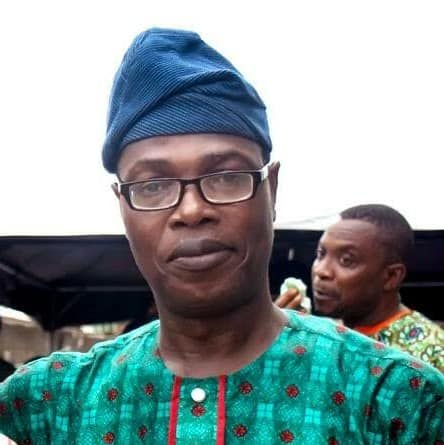

How will you feel brother, if tomorrow, God forbid, you find Pastor J. F. Kumuyi, the pacifist, in the thick of a fight in Alaba Market?
Embarrassed? Confused? Whatever you feel, you won’t be alone. And you won’t be the first.
Jesus’ disciples felt the same way that memorable day back in Palestine. It was on hallowed ground and amidst hard-headed bureau de change operators.
Jesus lost his temper. And for several violent minutes he could not retrieve it.
“And they came to Jerusalem. And he (Jesus) entered the temple and began to drive out those who sold and those who bought in the temple, and he overturned the tables of money changers and the seats of those who sold pigeons; and he would not allow anyone to carry anything through the temple…” (Mark 11: 15-17).
But this is underreporting. The encounter was more violent. Let’s read John’s own account:
“The Passover of the Jews was at hand, and Jesus went up to Jerusalem. In the temple he found those who were selling oxen and sheep and pigeons and the money-changers at their business. And making a whip of cords he drove them all, with the sheep and oxen out of the temple; and he poured out the coins of the money-changers and overturned their tables. And he told those who sold the pigeons, “take those things away’” (John)
Beautiful! I mean the graphic detail. Good reporting. Many facts come out clearer here. Jesus was evidently in Jerusalem for the yearly Passover celebration. Then the items sold within the temple were listed: oxen, sheep and pigeons. Then while other accounts merely said Jesus drove them out, this one tells us what he used; horsewhip (koboko) em, well, well actually “a whip of cords”. But this was over 2,015 years ago, mind you. You did not have the synthetic cords common nowadays. The cords must have been made of plant or leather material.
Jesus did not stop at bawling at the erring businessmen. He whipped — and probably ran after some of them. And many housewives (abileko) and husbands (baaleele) went away with welts or worse which their spouses had to treat at home with hot water and balms.
Jesus did two other violent things: He “poured out the coins of the money-changers”.
What din those coins must have made. And what greater harm can you do a mallam than scatter his naira, pound and dollar bills to the winds? And one thing about coins is that they roll. At the end of the commotion, a fresh problem would have arisen over who owned what. Many coins had roamed several cubits away from their owners to join others or stay apart. A hell of a row must have arisen over ownership claims.
And Jesus upturned tables too. Not one, not two. At least several. Let’s face it. Those tables were laden with items. Upturning them must have required some muscle. Yeah, Jesus actually muscled up those tables! Sege!
Now, I wait for one good Christian to tell me that Jesus was not under the influence of the Holy Spirit during the episode.
I am not done.
I suppose it is logical to assume that Jesus’ cassock did not remain a neutral observer throughout the encounter. It flew and flapped in sympathy with Jesus’ movements and the prevailing wind situation.
And who doesn’t know what could happen to even a thick cotton material when it catches in a splinter of table wood or wooden coin box that the owner was trying to whip away from the angry prophet?
So, it’s safe to assume that Jesus ’apparel was never the same as it was before the cleansing exercise.
What I am trying to say in so many words is that a shoulder of Jesus’ cassock could have got torn in the melee.
And Jesus stood somewhat dishevelled — panting.
The Nazareen’s pacifist idealism had suffered a head-on collision with reality.
Forget all that stuff about turning the other cheek. If at all the son of Mary mouthed that joke in an unguarded moment of superfluous pacifism, while he was a younger man of 30, he knew better years later that “sometimes you have to fight to prove a point “
Force is inevitable to keep the peace in a world as brutish as ours. But like the temple episode, violence must be on the side of good.
We did not need to be there to know the immensity of relief that gaunt victims of Nazi Germany’s war camps felt when the Allied forces, wielding guns and bombs, finally fought their way through guns and bombs to reach and free them.
Peace must pack sufficient firepower to overcome Evil. Order needs sufficient force to withstand the onslaught of Chaos, otherwise, Order is overrun. And everything returns—ultimately— to the primordial state of Chaos.
That must not happen.
Every act that compromises societal peace — from corruption to Boko Haram terrorism — takes us some minuscule steps towards Chaos. If we fold our arms and resist not Evil, Evil will win and reign.
Peace must be powerful
That’s realism, the recognition of which “is the beginning of wisdom”.
I must admit that this piece is mainly in response to a Christian columnist’s call for help penultimate Friday over his dilemma on conflicting admonitions from the bible, Jesus, clerics and philosophers on how Christians should respond to violence, especially, Boko Haram violence. I’ll like to note too that the columnist’s branding of Oritsejafor’s call on Christians to defend themselves when attacked as “an eye for an eye” is unfair. “An eye for an eye” is retaliation (often in its crudest form). Defence (which includes repelling attack) is justifiedly protecting oneself from attack.
Even Kumuyi, the pacifist never admonished turning the other cheek. I must admit though, my inability to determine what Kumuyi meant by “fight back”. If he meant “repel attack’, then I disagree! And so does Jesus who even took the fight to the erring businessmen. God bless him.
That bit about loving your murderous enemy?
Don’t.
It’s Suicidal. I am sure not even Kumuyi loves Kabir Sokoto the way I love my dentist. If truly Kabir Sokoto masterminded the slaughter of innocent Nigerians on Anobi Yisa’s birthday, then his evil is Mephistophelean.
How can Kumuyi or Jesus for that matter love Mephistopheles?
Christians, don’t start trouble. But when trouble comes, handle it like Anti-riot Police Angels.
Powerful Peace must protect all innocent Nigerians of whatever faith, be they Hausa, Efik, Kanuri, Igbo, Ijaw, Fulani, Yoruba, Itsekiri etc wherever they are in the country. And go after all criminals of whatever faith be they Hausa, Efik, Kanuri, Igbo, Ijaw, Fulani, Yoruba, Itsekiri etc.