
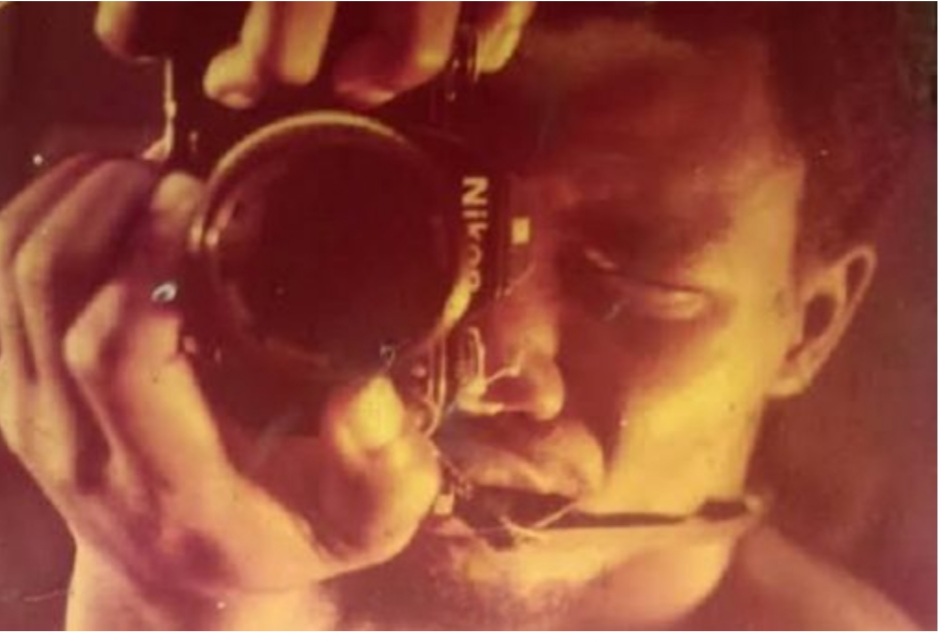

Ms Esther Oladimeji, Curator of the Hakeem Shitta Photo and Cultural Archive (HSPACA), has urged Nigeria to urgently preserve its arts and cultural heritage, describing documentation as critical to national memory, identity and global relevance.
Oladimeji, in an interview with newsmen on Monday in Lagos, highlighted the immense historical value of the Hakeem Shitta Archive, which documents Nigeria’s cultural, political and social life between 1981 and 1995.

She described the late Hakeem Shitta as an artist, photojournalist and cultural archivist whose work predated digital media and social platforms, capturing Nigeria’s artistic renaissance and political transitions before the internet age.
“Between 1981 and 1995, Hakeem Shitta meticulously documented Nigeria’s cultural evolution. His archive is a living record of who we were before the age of social media,” Oladimeji said.
According to her, the archive covers 180 theatre productions, 81 concerts, 67 exhibitions and 326 human-interest situations, including festivals, regattas, everyday street life and visual documentation of the 1993 presidential election period.
“HSPACA contains over 6,000 images of Nigerian poets, actors, dramatists, visual artists, dancers, filmmakers, essayists, and journalists.
“The archive serves as a crucial historical record of Nigeria’s creative memory, meticulously documenting the evolution of various artists and intellectuals over several decades.
“It is important to understand the specific, high-value offerings it has today in 2025.
“Based on the official HSPACA records, the archive is not just a collection of “old photos” but a foundational piece of Nigeria’s creative memory,” Oladimeji said.
Oladimeji called on government institutions, scholars and researchers within and outside the country to network and collaborate with the archive to preserve history in Nigeria’s arts and culture.
She said that HSPACA specifically offered over 6,000 Exclusive Cultural Portraits.
According to her, this is a vast library documenting every stage of evolution for Nigeria’s most accomplished poets, actors, musicians, and intellectuals—from their “breakthrough” moments to their educational background.
“Beyond photos, it preserves original stage posters, rare newspaper clippings (including Arts Illustrated Weekly), and event programmes that provide context photos alone cannot.
“The archive contains Hakeem Shitta’s own hand-drawn art and paintings, which capture everyday Nigerian life and cultural imagination.
“As a “Go-To” Research Portal, it is designed as a centralised library for curators, filmmakers, and scholars to source verified historical data for productions and exhibitions,” she said.
According to her, HSPACA, is a functional necessity rather than a passive museum:
Oladimeji said, “In 2025, with the global rise of African cinema and documentaries, filmmakers need authentic visual history.
“Government and producers should use HSPACA to ensure historical accuracy in their sets and stories
“Universities to make the archive a primary source for African Studies and Art History. When it becomes a required reference for students, it becomes a “must-have” tool.”
Speaking on digital experience versus static viewing, the curator said that the archive offers a searchable collaboration and access portal.
“It is a tool that researchers and creative agencies can actively seek out to build their own projects,” she said.
On heritage accountability, the curator said that the archive was to safeguard against the loss of history.
Related News
“The archive is an active resource for creators, it is not merely a story in the news but the tool people use to make the news,” she said.
On theatre and performance, Oladimeji said Shitta documented defining moments at the National Theatre and other major stages across Nigeria, preserving productions that would otherwise have disappeared.
Read Also:
She listed productions such as Kongi’s Harvest, The Lion and the Jewel and The Trials of Brother Jero by Wole Soyinka, as well as Kurunmi and The Gods Are Not to Blame by Ola Rotimi.
Other documented works include Marriage of Anansewa by Efua Sutherland, Midnight Hotel by Zulu Sofola, Moremi, Much Ado About Nothing by Shakespeare, and Things Fall Apart adapted from Chinua Achebe’s novel.
According to her, The King Must Dance Naked by Femi Osofisan was also captured, with over 50 major productions spanning indigenous, modern and international theatre preserved in the archive.
On music, Oladimeji said Shitta documented major concerts featuring Nigerian icons such as Fela Anikulapo-Kuti, Femi Kuti, King Sunny Ade, Sir Shina Peters, KWAM1, Queen Salawa Abeni and Christy Essien-Igbokwe.
She added that Evi-Edna Ogholi, Majek Fashek, Charley Boy, Tunji Oyelana, Bala Miller, Kokoro and Tony Okoroji were also extensively documented.
Read Also: Sokoto bombing: Nigeria remains stable, says Edun
According to Oladimeji, the archive includes international artistes such as Dizzy Gillespie, Burning Spear, King Yellowman, Miriam Makeba, Yvonne Chaka Chaka and French jazz violinist Didier Lockwood.
On literature and intellectual life, she said the archive holds rare images of Wole Soyinka, Chinua Achebe, John Pepper Clark, Ken Saro-Wiwa, Cyprian Ekwensi, Ola Rotimi, Femi Osofisan and Biyi Bandele Thomas.
She said activists and scholars such as Tai Solarin, Gani Fawehinmi, Zulu Sofola and Uche Chukwumerije were also documented, alongside visual artists including Ben Enwonwu and Abayomi Barber.
Oladimeji said theatre and film pioneers captured include Hubert Ogunde, Baba Sala, Chief Zebrudaya, James Iroha and Jagua, while Nollywood trailblazers such as Jide Kosoko, Liz Benson, RMD, Joke Silva and Olu Jacobs were featured.
She added that filmmakers Tunde Kelani, Tunde Oloyede and Segun Olusola, as well as media and cultural promoters like May Ellen Ezekiel and Ben Murray-Bruce, were part of the archive.
On politics, Oladimeji said the archive captured national figures including Chief Olusegun Obasanjo, Chief Emeka Odumegwu Ojukwu, Alex Ekwueme, Augustus Aikhomu, Ebitu Ukiwe and former Lagos Governor Lateef Jakande.
She said Shitta also documented culturally significant funerals, including those of Orlando Martins, Nigeria’s first internationally renowned actor, and Hubert Ogunde, regarded as the father of Nigerian theatre.
According to Oladimeji, the HSPACA serves as a primary historical source, preserving the golden age of Nigerian theatre, the rise of Afrobeat and highlife, and the country’s intellectual and political struggles.
She said Shitta meticulously labelled each photograph with dates, venues, credits and contextual notes, providing scholars with verified data for biographies, theses, exhibitions and cultural studies.
Describing HSPACA as an irreplaceable national treasure, she urged federal and state ministries of arts and culture to collaborate in preserving what she said does not exist anywhere else in the world.
Oladimeji advised journalists and photographers to emulate Shitta’s discipline, warning that undocumented work would be lost forever, reinforcing why African histories are often dismissed globally.
She said Shitta continued documenting despite multiple brain surgeries, producing artists’ directories even on his sickbed and preserving what would have been lost in Nigeria’s cultural history.
Oladimeji recalled that the prize for news photography at the Diamond Awards for Media Excellence (DAME)—Africa’s longest-running media awards program—is named the Hakeem Shitta Memorial Prize for News Photography.
This honor reflects his immense legacy as a documenter of Nigeria’s arts and culture, a role so significant that the iREP International Documentary Film Festival in 2017 officially described him as Nigeria’s “Alternative Archive.”
“Culture is transient. What we have must be cherished, documented and preserved for future generations,” Oladimeji said.
(Nation)