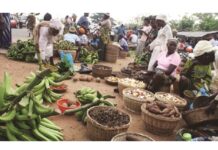
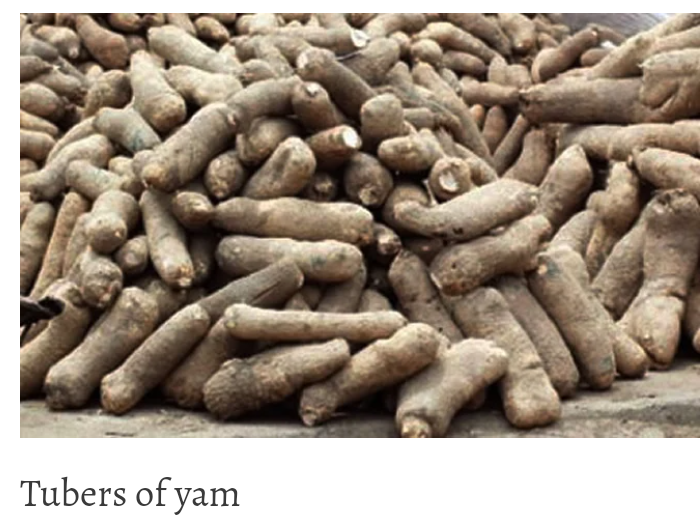

Since the past three years Nigeria has been leading globally in the production of yam, palm oil, cassava, maize and rice, the Federal Government has said.
Minister of Agriculture and Rural Development, Muhammed Mahmoud, disclosed this at the maiden edition of the National Agribusiness Stakeholders’ and Investment Summit in Abuja on Tuesday.

He told delegates at the summit that Nigeria’s agricultural potential was huge, with over 84 million hectares of arable land of which 40 per cent was cultivated, adding that the country’s population of over 200 million had made it Africa’s largest market.
“It is remarkable that in the past three years Nigeria has taken a leading role globally in cassava, yam, maize, palm oil and rice production,” Mahmoud said,
He added, “We are currently the largest producer of rice in Africa with a production level of over nine million metric tonnes from 2019. The Federal Government is investing in
the development of additional 10 large scale integrated rice mills
across the country.
Read Also:
“Their combined minimum capacity is 320MT per day, which when completed will enhance Nigeria’s self-sufficiency in rice production.”
The minister pointed out that the agricultural sector currently account for 24.14 per cent of the nation’s Gross Domestic Product and 75 per cent of the total non-oil exports.
On the impact of the sector in poverty alleviation, the minister said, “It is notable that through various empowerment support initiatives in
production, processing and marketing of agricultural commodities, we have lifted a total of 4,205,576 Nigerians out of poverty in the last two years.”
He said the government would continue to work for a sustainable and viable economic climate that would attract local and foreign investments.
“The Federal Government has deliberately designed agricultural investment incentives to support high level private sector participation,” Mahmoud stated.
He noted that while some of these incentives were in form of tax holiday, exemptions and reliefs, there were many that leveraged on specific government policies, performances of companies, as well as relevant international investment treaties.