
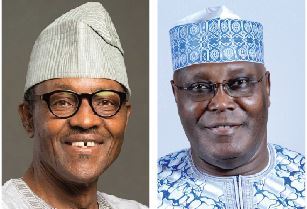

As Nigerians go to the poll today to elect either a brand new President or give the incumbent a renewed mandate of another four years, OLAJIDE OMOJOLOMOJU looks at the indices that would come to play in the presidential poll
Finally, the D-day is here, after days of character assassination, political shenanigan and undercurrent by the various political parties and their candidates for the office of President. As early as possible today, Nigerians are expected to troop out in their numbers to either elect a new President that would pilot the affairs of the most populous black nation on the surface of the earth for the next four years beginning from May 29 or renew the mandate of the incumbent President Muhammadu Buhari for another four years.

The 2019 presidential election will perhaps go down in history as the most keenly contested presidential election in the annals of election in Nigeria. The reason for this is not far-fetched: 73 candidates are on the ballot paper contesting for the number one citizen seat. This is unprecedented since the advent of democratic dispensation in the land.
Again, the intensity of the competition between the two front runners in the race, President Buhari and the candidate of the main opposition Peoples Democratic Party, PDP, former Vice President Atiku Abubakar, makes today’s election a titanic battle for the duo, who are both above 70 years and are of the Fulani stock.
But despite the huge number of contestants for the plum seat, it is, as it has always been, a two-horse race between the ruling All Progressives Congress’ Buhari and PDP’s Atiku.
Factors That Will Come To Play
Many factors will come to play to determine the winner of today’s election and the most important one is the choice of the vice presidential candidate of the two prominent front runners.
For Buhari, he is sticking with his Vice President, Prof. Yemi Osinbajo, a professor of law, pastor and former commissioner, who is from the South West, where the APC is in charge of all the six states; while Abubakar picked his running mate from the South East geo-political zone in person of former governor of Anambra State, Peter Obi.
But while the South-West governors are in one accord in their support for the Buhari/Osinbajo ticket, same cannot be said of the five South-East governors, the majority of whose body language suggests support for Buhari.
Another factor that would also come to play is the endorsement of the two leading candidates by various socio-political and ethnic groups. Perhaps, if elections are won based on endorsements, then one can safely conclude that Abubakar would emerge winners of the election; but then, endorsement is one thing, the reality on ground is another.
If you doubt that claim, flash back to 2015, when former President Goodluck Jonathan enjoyed sundry endorsements from different socio-political groups across the country and still lost the battle to the main opposition party candidate Buhari.
Some analysts were also of the view that the crowd attendance of the campaigns of the two front runners would also be indicative of who emerges winner today, but again, that is neither here nor there. Many people attended the campaigns on the hope of getting their own share of the largesse that is expected to come with such campaigns and as such, that could not be used as a parameter to determine who emerges winner at the end of today.
Another major factor that would come to play is the number of off-season governorship elections that had held since the last general elections. In all, since the advent of the Buhari-led APC administration, INEC has conducted seven off-season governorship elections.
The first was in Kogi State on November 21, 2015, which was won by the APC. This was followed on December 5, 2015 by the Bayelsa State governorship election, won by the PDP. The next one was the Edo State governorship election held on September 28, 2016 and was also won by the APC and almost one year later to the date of the Bayelsa poll, the Ondo State gubernatorial election held on November 26, 2016 and was also won by the APC
The next off-season election was that of Anambra State, held on November 18, 2017 and won by the APGA; while Ekiti and Osun states governorship elections held on July 14 and September 22, 2017 respectively and were won by the APC.
Looking at the outcome of these polls, where the APC won five out the seven off-season elections, one can conveniently conclude that the APC would be coasting home to victory in today’s election.
Also other off-season national and state assemblies elections gave victories to the APC in about 80 per cent. This will also play some significant part in deciding today’s winner.
Another deciding factor in today’s election is the gale of defections from and into the two parties. While the APC lost the Senate President, Bukola Saraki, former governor of Kano State, Senator Rabiu Kwakwanso and governors of Sokoto and Benue states, Tambuwal and Samuel Ortom respectively to the PDP, the defection of former governors of Akwa Ibom and Delta states, Godswill Akpabio and Emmanuel Uduaghan, also boosted the APC chances.
What The Numbers Say
According to available data from the electoral empire, the Independent National Electoral Commission, INEC, there are 84,004,084 registered voters (from an estimated population of over 200 million) across the country; a figure that shoots up with over 20 million from the 2015 figure and this figure is perhaps the highest registered voters for any election in Nigeria.
The increase may not be unconnected with the level of political education and awareness by INEC, as well as the realization of how important elections are to the general well-being of the citizenry.
Despite this huge number of registered voters, it is ironical that over eight million permanent voter cards have yet to be collected.
Zonal Figures Of Registered And Eligible Voters
According to INEC data, the North West geo political zone, with the highest number of states, takes the lead in the number of registered voters. It has 20,158,100 voters registered for this election.
The South West takes the first runner-up position with 16,292,212 voters registered. The North Central comes third with 13,366,070; while the South South with of 12,841,279 came fourth on the log.
The North East and the South East came fifth and sixth respectively with total number of registered voters for North East standing at 11,289,293, while the South East, with the least registered voters has 10,057,130 registered voters.
Based on these figures, one can assume that the Buhari/Osinbajo ticket has 36,450,312 total registered voters from their combine zones of North West/South West; while the Atiku/Obi ticket enjoys the support of 21,346,423 registered voters; trailing with a deficit of 15,1038,99.
Comparatively, these figures can make or mar the chance of either of the two leading candidates, especially against the background of states controlled by each of the two leading parties; the local structures available to each of them; and the prevailing sentiments of the electorate in each state of the four zones.
However, that is on paper. In reality, only 18,882,854 voters, about 03.43 percent of registered voters are eligible to vote in the North West; while in the South West, only 68.69 per cent of registered voters, that is 12,444,394 voters are eligible to vote.
In the North East, 10,402,734 voters, 92.62 per cent of registered voters qualify to vote today and in the South East, 88.04 per cent of registered voters in the zone, that is 9,071,939 voters are eligible voters in today’s poll. In the North Central and South South, 87.47 per cent and 86.14 per cent, that is 11.849,027 and 11,547,944 voters are eligible to vote in the two zones respectively.
Northwest/Southwest and Northeast/Southeast
Read Also:
Either by design or coincidence, today’s presidential battle is a straight fight between these four geopolitical zones, pitted against one another. The APC candidate and incumbent President Buhari is from Katsina State in the Northwest, while his running mate, Vice President Osinbajo, is from Ogun State in the South West, the two zones that command the highest number of votes; while the PDP candidate, former Vice President Atiku is from Adamawa State in the Northeast, with his running mate, Obi, coming from Anambra State in the Southeast.
In the Northwest, the APC controls six of the seven states, leaving only Sokoto State to the PDP and in the Southwest, APC controls all the six states in the zone, thus the APC is in control of 12 out of the 13 states in the two zones combined.
However, the return of Kwakwanso to the PDP, with his Kwakwansiyya Movement may whittle down the volume of votes that may come the way of Buhari in Kano State.
In Kaduna State, where President Buhari lives, the ‘bull in China sho’ syndrome of the state governor, Nasir el-Rufai, may also cost the President some votes, but looked sure to emerge winner of that state, but with less margin compared to 2015.
On the other hand, the APC is also in control of four out of the six states in the North East, leaving only Gombe and Taraba states in the hands of the opposition PDP, while in the Southeast, the PDP controls three of the five states, APGA is in charge of Anambra State, the home state of the PDP’s running mate and APC controls Imo. Thus, the PDP is in control of five out of the 11 states in the zones, while APC is in charge of five, including the home state of Atiku, the PDP candidate.
By simple arithmetic and on paper, APC with 17 states out of 24 in the kitty, against PDP’s six states in the four geo-political zones, could be said to be coasting home to victory, but in political calculation, things are not what they seem.
With the decimation of the Boko Haram insurgency, which had enabled some of the people who had become refugees in their land return home to rebuild and reconstruct their lives, the President is expected to perform better than Atiku in the North East zone.
Recall that he had always defeated the PDP in Atiku’s home state of Adamawa in his previous attempts at the Presidency; today is not expected to be different, despite Atiku being a ‘son of the soil.’ And with the array of intimidating politicians in Adamawa State rooting for Buhari, the likes of former military administrator of Lagos State, Brig-Gen. Buba Marwa (rtd), a former chairman of the Economic and Financial Crimes, Mallam Nuhu Ribadu, and the President’s in-law, Dr Halilu Modibbo, the state would be an interesting battlefield.
Despite all of these, the dynamics in these states could prove fatal to either of the two major candidates. For example, in the Southeast, Buhari enjoys the unalloyed support of the governor of Anambra State, Willie Obiano and that of Ebonyi State, David Umahi.
Despite the PDP’s running mate coming from the Southeast, its governors have not openly identified with the Atiku/Obi ticket, and the reason is premised on the fact that leaders of the Southeast were left out of the consultations leading to Obi’s emergence as Atiku’s running mate. This has alienated the PDP governors from the zone from the mainstream of the Atiku Campaign Organisation.
In the South West, the post-primary crises in Ondo and Ogun states would definitely leave an indelible mark on the outcome of today’s poll.
Both Governors Ibikunle Amosun and Rotimi Akeredolu, in defiance of their party, the APC, have directed their favourite candidates who lost out in the primaries to move enmasse to another party.
In Ogun State, while Amosun is running for Senate on APC platform, all his disciples are contesting on the platform of the Allied People’s Movement, APM, after losing out in the APC primaries; while in Ondo State, Akeredolu’s disciples are flying the banner of Action Alliance, AA.
This may, however, have a negative effect on the total number of votes Buhari may garner in these two Southwest states. However, both APM and AA do not seem to be contesting for the Presidency, but there is also the need to take into consideration the vehement opposition to Buhari’s second term by former President Olusegun Obasanjo. However, his electoral value to swing the state in favour of his new found party, the PDP, remains to be seen, especially, against the background of the crisis bedeviling the PDP in the state which remained factionalised.
North Central/South South
Two zones are left and these political analysts have come to regard as swing states: the Southsouth and Northcentral geopolitical zones.
The Southsouth voted the PDP in previous elections and today may not be different, but unlike 2015, when the President didn’t garner much votes from the zone, he is certain to get votes from Akwa Ibom State, where the immediate past governor, Senator Akpabio, has joined forces with the APC.
Although the PDP controls five of the six states in the zone and the APC one, the kind of support President Buhari enjoys from the governor of Cross River State, Ben Ayade, is like the support Obiano is giving the President.
Recall also that the immediate past governor of Delta State, Uduaghan, has also pitched tent with the APC and all of these joined together may likely give the President the mandatory 25 per cent votes from the zone.
Also, the tacit and rare support he has also gotten from the most unexpected quarters, the governor of Rivers State, Nyesome Wike, who is still smarting from defeat of his principal in the race to pick the PDP presidential ticket, Sokoto State Governor Tambuwal, will go a long way to swing some votes in the way of Buhari.
For the North Central, as always, it has always been a battle ground for presidential gladiators and today would not be different, rather, it would be more intensive. While the PDP is in charge in Kwara and Benue states, the APC holds sway in Kogi, Niger, Nasarawa and Plateau states.
Ordinarily, going by these indices, the zone ought to have been a walkover for the ruling APC, but one major issue that may be an albatross for the ruling party is the intractable herdsmen/farmers’ clashes in the Benue/Plateau, which had resulted in the death of so many people in the axis.
However, before now, the singsong had been that the herdsmen were having a field day because of President Buhari’s ethnic background of a Fulani man, but the emergence of Atiku, himself also a Fulani, has changed the narrative.
However, the huge loss of lives and destruction of property in the axis, up to Nasarawa State, may affect Buhari’s support base in the geopolitical zone, and reduce his votes, but, as usual, it will be battle royale in the three states and the margin of victory for whoever emerges victorious may be minimal.
For Kogi and Kwara states, it will be difficult to predict the outcome. This is due to the lack lustre performance of the Kogi State governor, Yahaya Bello, who many believed has not performed to expectation. This is also coupled with the fighting spirit of the ‘enfant terrible’ of the Nigerian Senate, Senator Dino Melaye, who will surely do everything to deliver Kogi State to his new found party, the PDP.
To say that Kwara State would be the main battleground in the North Central would definitely be an understatement. That is the home base of Saraki, the Senate President and the director-general of the PDP Presidential Campaign Organisation. Since his emergence as governor of the state in 2003, he has held the state in a grip and would not want to release his hold on the state.
However, he would have to contend with the forces who are saying ‘O To Gee’ (Enough is Enough) and are desirous of liberating Kwara from Saraki’s grip.
It is expected that Buhari will perform better in terms of votes polled in Niger, Edo, Delta, Rivers and Bayelsa states, just as he is also expected to make appreciable inroad to Akwa Ibom and Cross River states
From the above analysis, it is clear that President Buhari is up against a formidable opponent who will not give up easily but would definitely give him a good fight. However, available statistics and facts point to sure victory, even though slim for the incumbent President and the APC.